. 2011 Jun 20;24(6):950-9.
doi: 10.1021/tx200123z. Epub 2011 May 25.

Electrophilic components of diesel exhaust particles (DEP) activate transient receptor potential ankyrin-1 (TRPA1): a probable mechanism of acute pulmonary toxicity for DEP

Affiliations

Electrophilic components of diesel exhaust particles (DEP) activate transient receptor potential ankyrin-1 (TRPA1): a probable mechanism of acute pulmonary toxicity for DEP

Cassandra E Deering-Rice et al. Chem Res Toxicol. .

Abstract

Inhalation of environmental particulate matter (PM) is correlated with adverse health effects in humans, but gene products that couple detection with cellular responses, and the specific properties of PM that target different pathways, have not been fully elucidated. TRPA1 and V1 are two cation channels expressed by sensory neurons and non-neuronal cells of the respiratory tract that have been implicated as possible mediators of PM toxicity. The goals of this research were to determine if environmental PM preferentially activated TRPA1 and to elucidate the criteria responsible for selectivity. Quantification of TRPA1 activation by 4 model PM revealed that diesel exhaust PM (DEP) and coal fly ash PM (CFA1) were TRPA1 agonists at concentrations >0.077 mg/mL. DEP was more potent, and approximately 97% of the activity of DEP was recovered by serial extraction of the solid DEP with ethanol and hexane/n-butyl chloride. Modification of the electrophile/agonist binding sites on TRPA1 (C621, C641, C665, and K710) to non-nucleophilic residues reduced TRPA1 activation by DEP and abolished activation by DEP extracts as well as multiple individual electrophilic chemical components of DEP. However, responses to CFA1 and DEP solids were not affected by these mutations. Activity-guided fractionation of DEP and high resolution mass spectroscopy identified several new DEP-derived TRPA1 agonists, and activation of mouse dorsal root ganglion neurons demonstrated that TRPA1 is a primary target for DEP in a heterogeneous population of primary sensory nerves. It is concluded that TRPA1 is a specific target for electrophilic chemical components of DEP and proposed that activation of TRPA1 in the respiratory tract is likely to be an important mechanism for DEP pneumotoxicity.


Figures
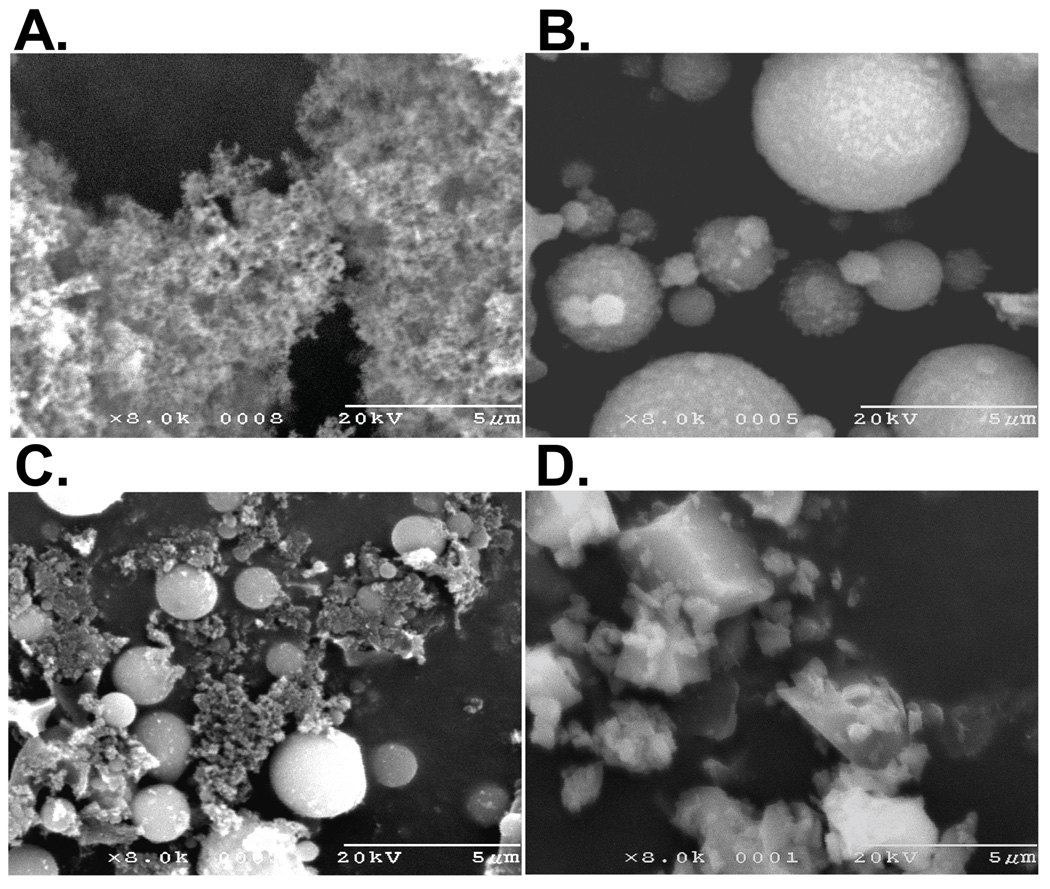
Figure 1
Figure 1
Scanning electron micrographs (8000X) for (A) diesel exhaust PM (DEP), (B) coal fly ash 1 PM (CFA1), (C) coal fly ash 2 PM (CFA2), and (D) crystalline silica/Min-U-Sil 5 (MUS).
Figure 2
Figure 2
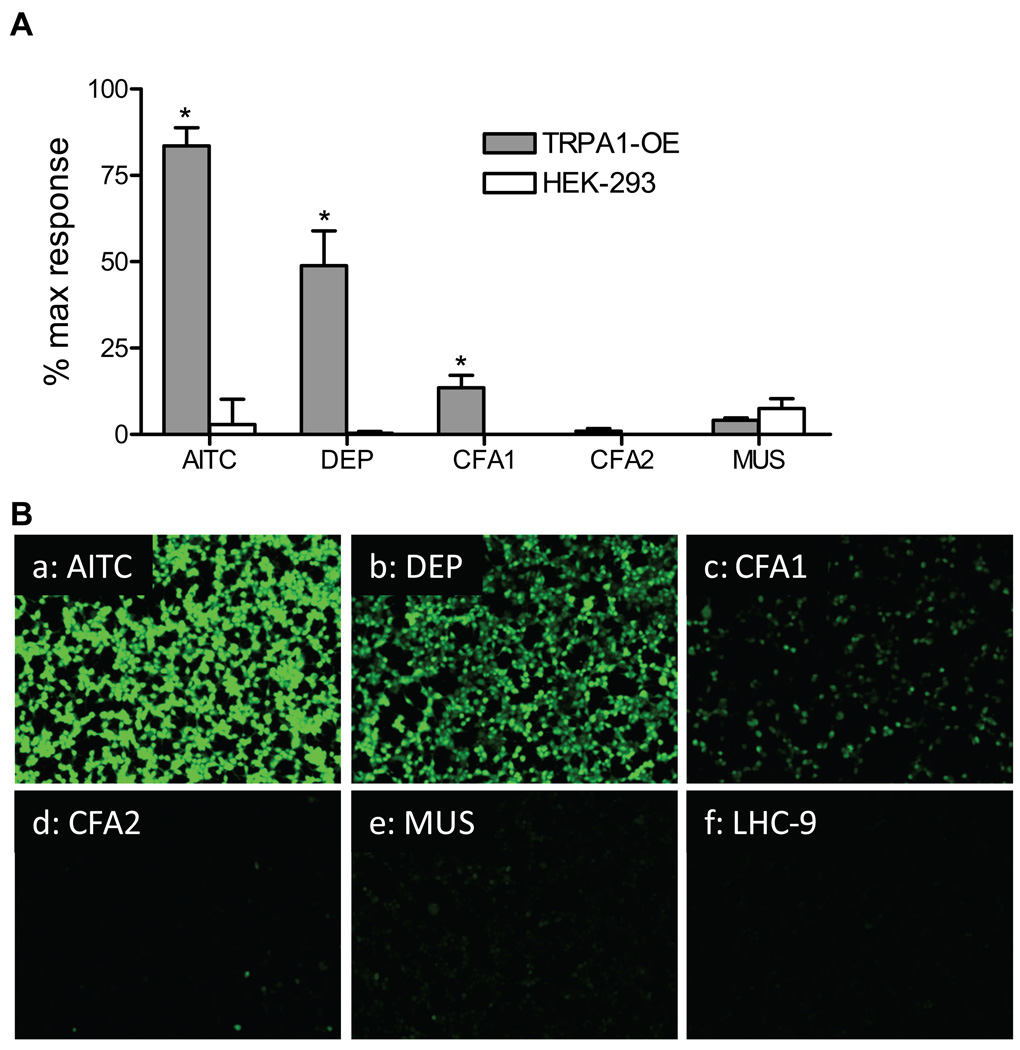
Activation of TRPA1 by PM. Human TRPA1 over-expressing HEK-293 cells and untransfected HEK-293 cells were treated with 150 µM AITC or diesel exhaust PM (DEP), coal fly ash PM (CFA1 and CFA2), and crystalline silica (MUS) to a final in-well concentration of 0.77 mg/ml. (A) Data are the percent maximum response elicited by ionomycin (10 µM) with the vehicle control subtracted. *Indicates p<0.05 using Student’s t-test (n=3). (B) Fluorescence micrographs of TRPA1 over-expressing HEK-293 cells treated with the various particles.
Figure 3
Figure 3
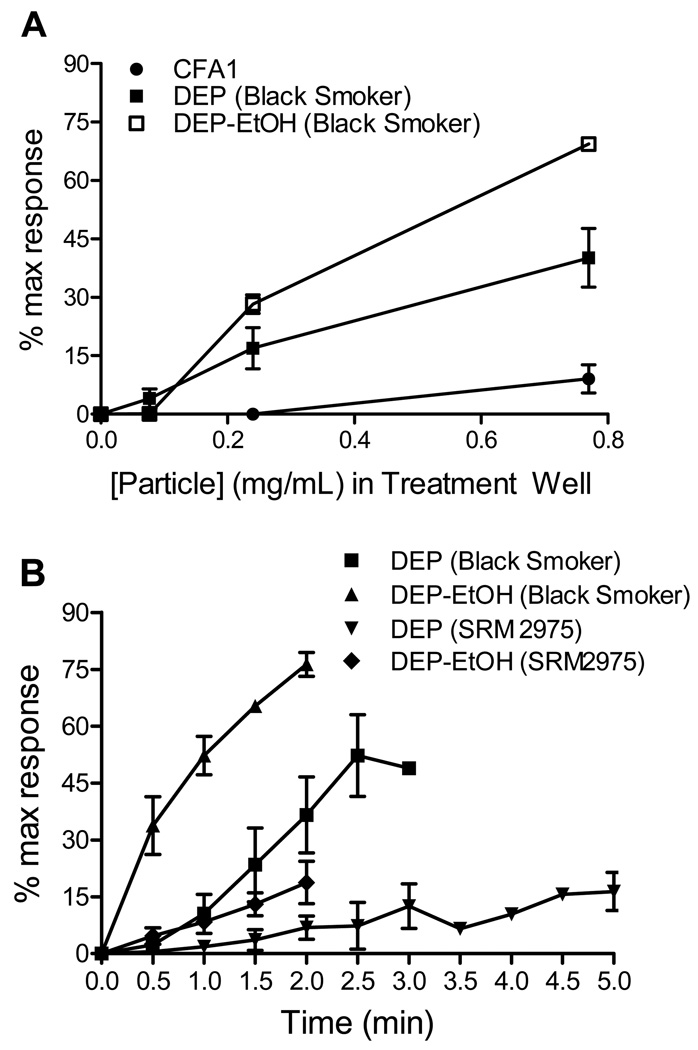
Dose- and time-dependent activation of TRPA1 by CFA1, DEP, and ethanol extracts of DEP. (A) TRPA1-overexpressing cells were treated with CFA1, DEP (black smoker) and DEP-EtOH (black smoker) with in-well concentrations of 0.077, 0.24, and 0.77 mg/ml or equivalent ethanol extract concentrations. Data from the 2 min time point are represented as the mean and SEM of at least 3 separate treatment wells. (B) TRPA1-overexpressing cells were treated with DEP (black smoker), DEP (SRM 2975), and DEP-EtOH (black smoker) using an in-well concentration of 0.77 mg/ml for up to 5 min with measurements taken at 30 s intervals. Data are represented as the mean and SEM of at least 3 separate treatment wells.
Figure 4
Figure 4
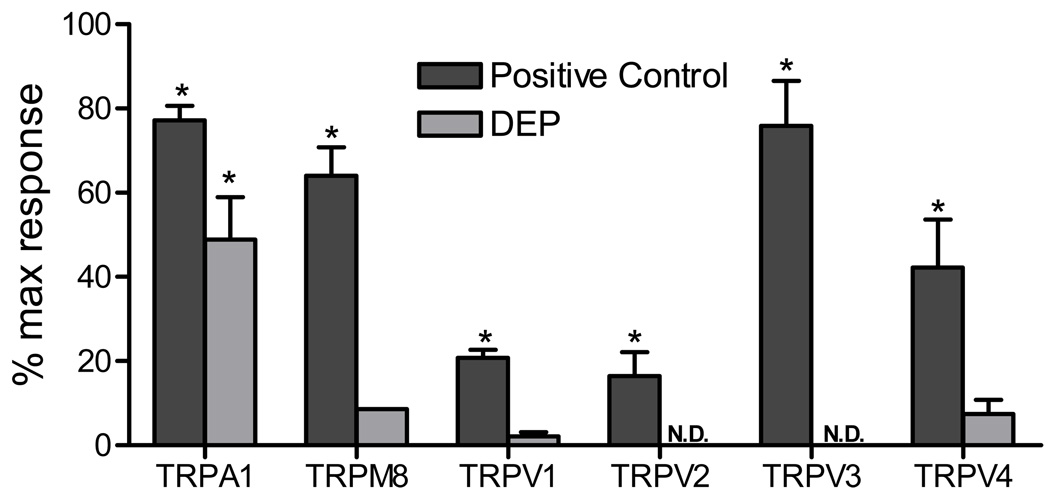
Activation of other human TRP channels by DEP. Over-expressing (TRPA1, M8, V2, V3, and V4), transiently transfected (TRPV1), and untransfected HEK-293 cells were treated with DEP (0.77 mg/ml in-well concentration) or a solution of a prototype TRP channel agonist at a concentration that yielded the maximum response relative to control HEK-293 cells. Agonists were TRPA1 – 150 µM AITC; TRPM8 – 20 µM icilin; TRPV1 – 20 µM nonivamide; TRPV2 – 100 µM Δ9-tetrahydrocannabinol TRPV3 – 300 µM carvacrol; TRPV4 – 12.5 nM GSK 1016790A. Data are the percent maximum response elicited by ionomycin (10 µM) with the vehicle control subtracted. N.D. = no response detected. *Indicates p<0.05 using ANOVA with Bonferroni correction (n=3).
Figure 5
Figure 5
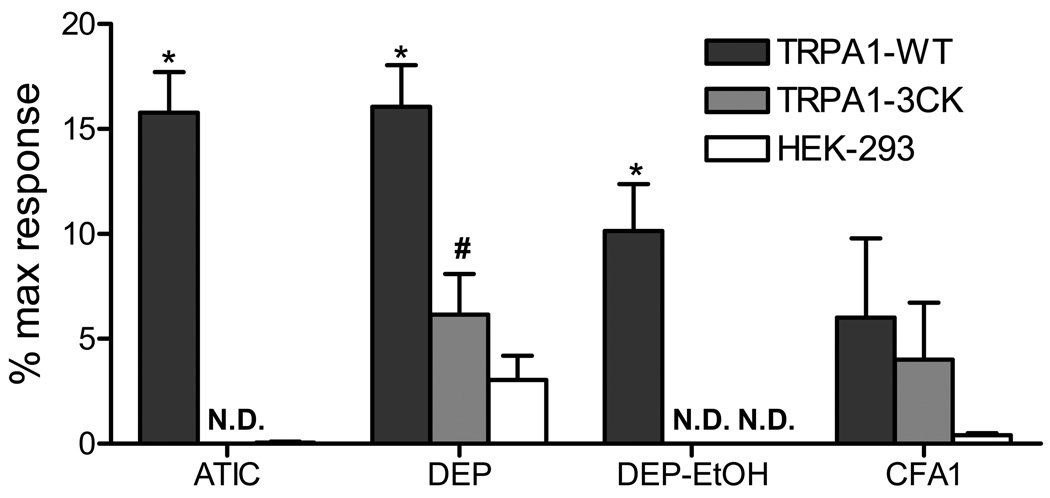
Mutation of C621, C641, and C665 to A and lysine K710 to A of TRPA1 (the TRPA1–3CK mutant) inhibits DEP-induced calcium flux. HEK-293 cells were transiently transfected with human TRPA1 or the TRPA1–3CK mutant and treated with 150 µM AITC, suspensions of DEP or CFA1 to a final in-well concentration of 0.77 mg/mL, or an equivalent concentration of DEP-EtOH extract. Data are the percent maximum response elicited by ionomycin (10 µM) with the vehicle control subtracted. N.D. = no response detected. *Indicates significant (p<0.05) calcium influx compared to HEK-293 controls, and # indicates a significant reduction in TRPA1–3CK mutant transfected cells compared to wild-type TRPA1 using ANOVA with Bonferroni correction.
Figure 6
Figure 6
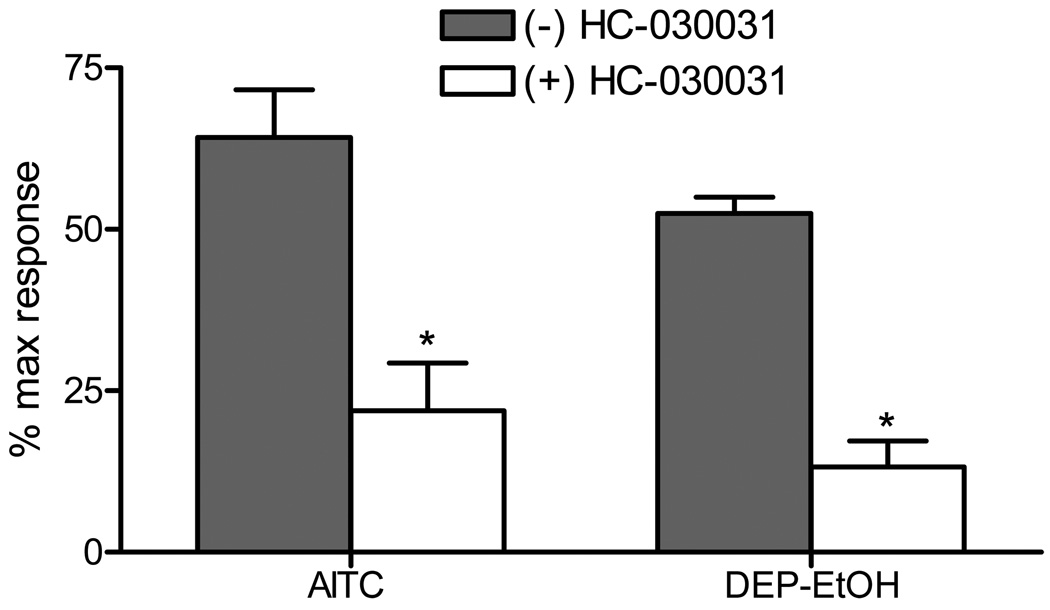
Activation of TRPA1 by DEP-EtOH in mouse DRG neurons. DRG were treated with 50 µM AITC or the DEP-EtOH extract prepared from a 2.3 mg/mL suspension in the presence or absence of the TRPA1 antagonist HC-030031 (50 µM). Data are represented as percent maximum response as elicited by KCl (50 mM). Each data point is the mean ± SEM response from DRG cultures of four separate animals. *Indicates significant inhibition by HC-030031 (p<0.05 using Student’s t-test).
Figure 7
Figure 7
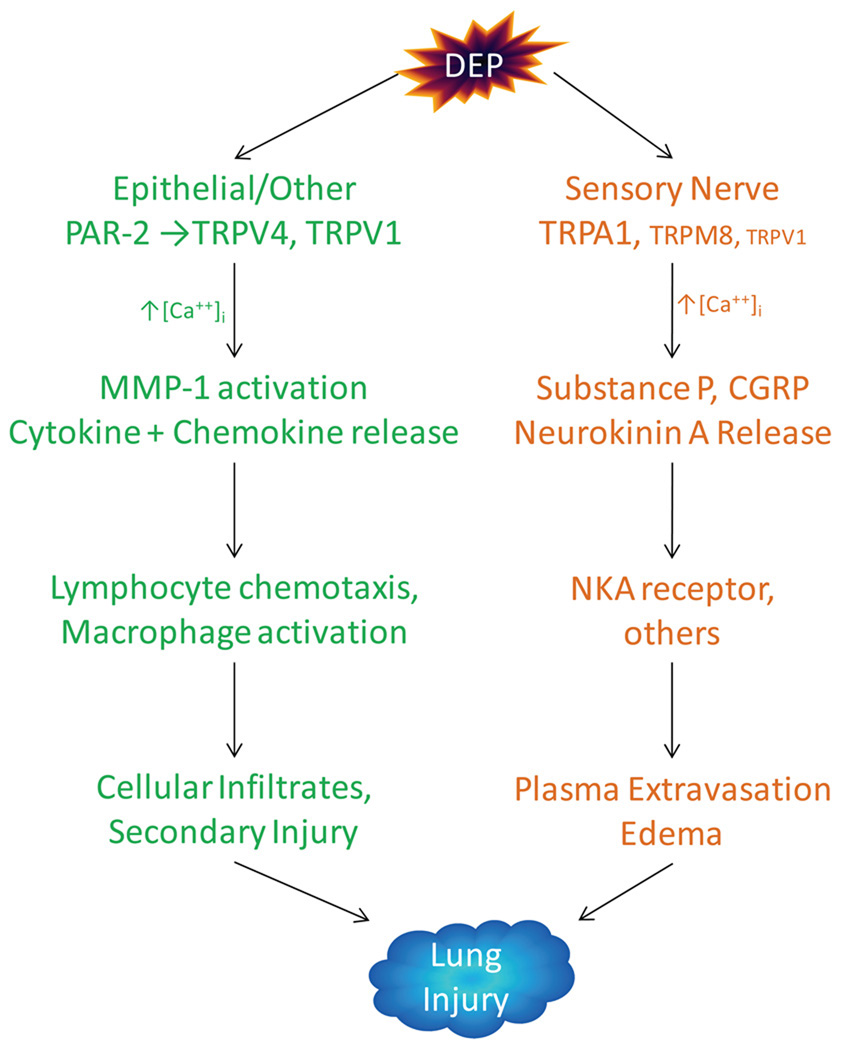
Hypothetical scheme outlining possible contributions of different TRP channels shown to be activated by DEP and different lung cell types to DEP-induced pneumotoxicity. This scheme integrates relevant data and concepts from Li et al. (48), Hazari et al. (3), Teles et al. (7), Agopyan et al. (12, 13, 52), Veronesi et al. (–16), Oortgiesen et al. (17), Sabnis et al. (18), and this study.

References

    1. Hammond DM, Dvonch JT, Keeler GJ, Parker EA, Kamal AS, Barres JA, Yip FY, Brakefield-Caldwell W. Sources of ambient fine particulate matter at two community sites in Detroit, Michigan. Atmospheric Environment. 2008;42:720–732.
    1. Mauderly JL. Current Status of the Toxicology of Diesel Engine Exhaust - and the ACES Project. ZBL Arbeitsmed. 2010;50:412–417.
    1. Hazari MS, Haykal-Coates N, Winsett DW, Krantz QT, King C, Costa DL, Farraj AK. TRPA1 and Sympathetic Activation Contribute to Increased Risk of Triggered Cardiac Arrhythmias in Hypertensive Rats Exposed to Diesel Exhaust. Environ Health Perspect. 2011 - PMC - PubMed
    1. Nassenstein C, Kwong K, Taylor-Clark T, Kollarik M, MacGlashan DM, Braun A, Undem BJ. Expression and function of the ion channel TRPA1 in vagal afferent nerves innervating mouse lungs. The Journal of Physiology. 2008;586:1595–1604. - PMC - PubMed
    1. Kobayashi K, Fukuoka T, Obata K, Yamanaka H, Dai Y, Tokunaga A, Noguchi K. Distinct expression of TRPM8, TRPA1, and TRPV1 mRNAs in rat primary afferent neurons with aδ/c-fibers and colocalization with trk receptors. The Journal of Comparative Neurology. 2005;493:596–606. - PubMed

Publication types

MeSH terms