


Bionomics of the malaria vector Anopheles farauti in Temotu Province, Solomon Islands: issues for malaria elimination
- PMID: 21592366
- PMCID: PMC3123245
- DOI: 10.1186/1475-2875-10-133
Bionomics of the malaria vector Anopheles farauti in Temotu Province, Solomon Islands: issues for malaria elimination
Abstract
Background: In the Solomon Islands, the Malaria Eradication Programmes of the 1970s virtually eliminated the malaria vectors: Anopheles punctulatus and Anopheles koliensis, both late night biting, endophagic species. However, the vector, Anopheles farauti, changed its behaviour to bite early in the evening outdoors. Thus, An. farauti mosquitoes were able to avoid insecticide exposure and still maintain transmission. Thirty years on and the Solomon Islands are planning for intensified malaria control and localized elimination; but little is currently known about the behaviour of the vectors and how they will respond to intensified control.
Methods: In the elimination area, Temotu Province, standard entomological collection methods were conducted in typical coastal villages to determine the vector, its ecology, biting density, behaviour, longevity, and vector efficacy. These vector surveys were conducted pre-intervention and post-intervention following indoor residual spraying and distribution of long-lasting insecticidal nets.
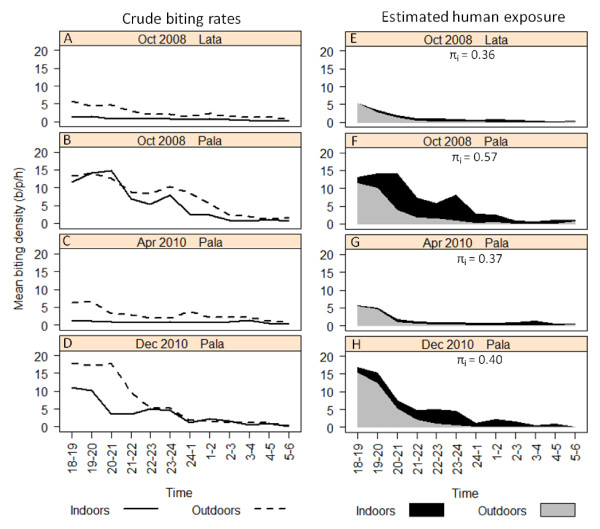
Results: Anopheles farauti was the only anopheline in Temotu Province. In 2008 (pre-intervention), this species occurred in moderate to high densities (19.5-78.5 bites/person/night) and expressed a tendency to bite outdoors, early in the night (peak biting time 6-8 pm). Surveys post intervention showed that there was little, if any, reduction in biting densities and no reduction in the longevity of the vector population. After adjusting for human behaviour, indoor biting was reduced from 57% pre-intervention to 40% post-intervention.
Conclusion: In an effort to learn from historical mistakes and develop successful elimination programmes, there is a need for implementing complimentary vector control tools that can target exophagic and early biting vectors. Intensified indoor residual spraying and long-lasting insecticide net use has further promoted the early, outdoor feeding behaviour of An. farauti in the Solomon Islands. Consequently, the effectiveness of IRS and the personal protection provided by bed nets is compromised. To achieve elimination, any residual transmission should be targeted using integrated vector control incorporating complementary tools such as larviciding and/or zooprophylaxis.
Figures
References
-
- Bhattarai A, Ali AS, Kachur SP, Mårtensson A, Abbas AK, Khatib R, Al-mafazy Aw, Ramsan M, Rotllant G, Gerstenmaier JF, Molteni F, Abdulla S, Montgomery SM, Kaneko A, Björkman A. Impact of artemisinin-based combination therapy and insecticide-treated nets on malaria burden in Zanzibar. PLoS Med. 2007;4:e309. doi: 10.1371/journal.pmed.0040309. - DOI - PMC - PubMed
-
- Hii JLK, Birley MH, Kanai L, Foligeli A, Wagner J. Comparative effects of permethrin-impregnated bednets and DDT house spraying on survival rates and oviposition interval of Anopheles farauti No. 1 (Diptera: Culicidae) in Solomon Islands. Ann Trop Med Parasitol. 1995;89:521–529. - PubMed
-
- Over M, Bakote'e B, Velayudhan R, Wilikai P, Graves PM. Impregnated nets or DDT residual spraying? Field effectiveness of malaria prevention techniques in Solomon Islands, 1993-1999. Am J Trop Med Hyg. 2004;71(Suppl 2):214–223. - PubMed
Publication types
MeSH terms
LinkOut - more resources
Full Text Sources
Medical
