


HIV infection and sexual risk behaviour among youth who have experienced orphanhood: systematic review and meta-analysis
- PMID: 21592368
- PMCID: PMC3114697
- DOI: 10.1186/1758-2652-14-25
HIV infection and sexual risk behaviour among youth who have experienced orphanhood: systematic review and meta-analysis
Abstract
Background: Previous research has suggested that orphaned children and adolescents might have elevated risk for HIV infection. We examined the state of evidence regarding the association between orphan status and HIV risk in studies of youth aged 24 years and younger.
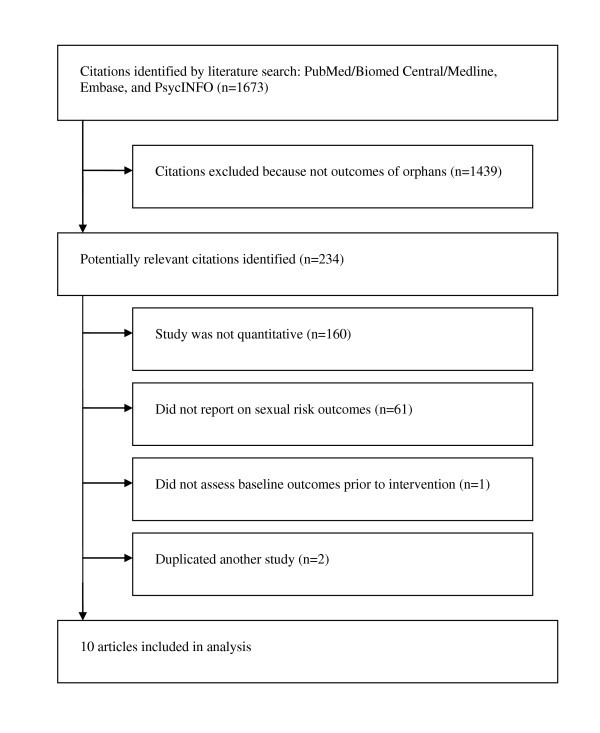
Methods: Using systematic review methodology, we identified 10 studies reporting data from 12 countries comparing orphaned and non-orphaned youth on HIV-related risk indicators, including HIV serostatus, other sexually transmitted infections, pregnancy and sexual behaviours. We meta-analyzed data from six studies reporting prevalence data on the association between orphan status and HIV serostatus, and we qualitatively summarized data from all studies on behavioural risk factors for HIV among orphaned youth.
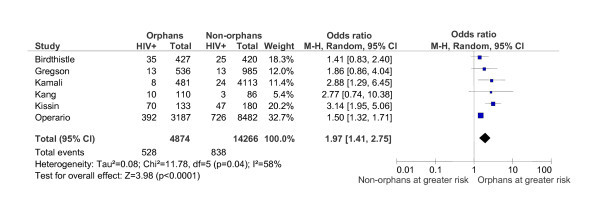
Results: Meta-analysis of HIV testing data from 19,140 participants indicated significantly greater HIV seroprevalence among orphaned (10.8%) compared with non-orphaned youth (5.9%) (odds ratio = 1.97; 95% confidence interval = 1.41-2.75). Trends across studies showed evidence for greater sexual risk behaviour in orphaned youth.
Conclusions: Studies on HIV risk in orphaned populations, which mostly include samples from sub-Saharan Africa, show nearly two-fold greater odds of HIV infection among orphaned youth and higher levels of sexual risk behaviour than among their non-orphaned peers. Interventions to reduce risk for HIV transmission in orphaned youth are needed to address the sequelae of parental illness and death that might contribute to sexual risk and HIV infection.
Figures
References
-
- Foster G, Levine C, Williamson J, (Eds) A Generation at Risk: Orphans and Vulnerable Children. New York, NY: Cambridge University Press; 2005.
-
- UNAIDS, UNICEF, USAID. Children on the Brink 2004: A Joint Report of New Orphan Estimates and a Framework for Action. New York, NY; 2004.
Publication types
MeSH terms
Grants and funding
LinkOut - more resources
Full Text Sources
Medical
