. 2011 May 19:11:56.
doi: 10.1186/1471-230X-11-56.

Clinicopathologic characteristics and treatment outcomes of hepatoid adenocarcinoma of the stomach, a rare but unique subtype of gastric cancer

Affiliations

Clinicopathologic characteristics and treatment outcomes of hepatoid adenocarcinoma of the stomach, a rare but unique subtype of gastric cancer

Sun Kyung Baek et al. BMC Gastroenterol. .

Abstract

Background: Gastric hepatoid adenocarcinoma (HAC) is a special type of gastric cancer that morphologically mimics hepatocellular carcinoma. In this study, we performed an evaluation of clinicopathologic characteristics, treatment outcome, and prognosis in patients with gastric HAC.

Methods: We consecutively enrolled patients with pathologically proven gastric HAC at Seoul National University Hospital between January 1996 and December 2008 and conducted a retrospective review. Among 15,253 patients with gastric cancer, 26 patients (0.17%) were diagnosed as gastric HAC.

Results: Among 26 patients, 22 were male and the median age was 63. Stage at diagnosis was stage IB in 3 patients, stage II in 6 patients, stage III in 7 patients, and stage IV in 10 patients. Eight patients out of 18 patients with stage IB, II, III, and IV relapsed after curative surgery. Relapse-free survival for these patients was 16.67 months. The most common metastatic site was intraabdominal lymph nodes (n = 9), followed by the liver (n = 8). Thirteen patients received palliative chemotherapy. The most commonly used regimen was a combination of fluoropyrimidine and platinum. Partial response was observed in one patient and stable disease in 5 patients. Median overall survival and progression free survival of these patients were 8.03 (95% CI: 6.59-9.47) and 3.47 months (95% CI: 0.65-6.29), respectively.

Conclusions: Gastric HAC is a very rare but unique type of stomach cancer. Early detection of this type of cancer is of critical importance to patient prognosis. Additional studies to reveal the biology of this tumor are warranted.


Figures
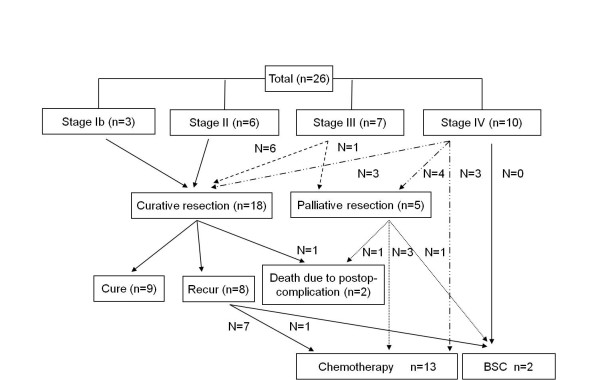
Figure 1
Figure 1
Treatment patterns for all patients. Stage at diagnosis was stage IB in 3 patients, stage II in 6 patients, stage III in 7 patients, and stage IV in 10 patients. Nine patients, including three patients with stage Ib, three patients with stage II, one patient with stage III, and 2 patients with stage IV, were cured. Two patients expired due to post-operative complications. Of 10 patients who initially had stage IV, 6 patients underwent gastrectomy and 6 patients received palliative chemotherapy. Two of three stage IV patients who underwent gastrectomy with R0 resection were followed up with no evidence of disease. Seven patients of 16 patients with initial stage I-III relapsed and six patients received palliative chemotherapy.
Figure 2
Figure 2
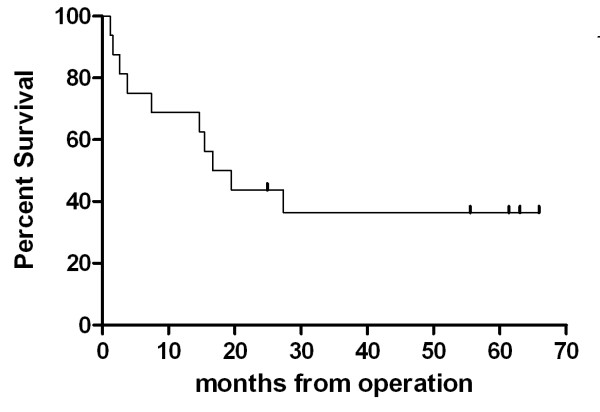
Kaplan-Meier plot of RFS to early or locally advanced gastric HAC. Median RFS of patients who underwent curative resection was 16.67 months (range 1.63- 65.9)(Vertical upticks represent alive patients).
Figure 3
Figure 3
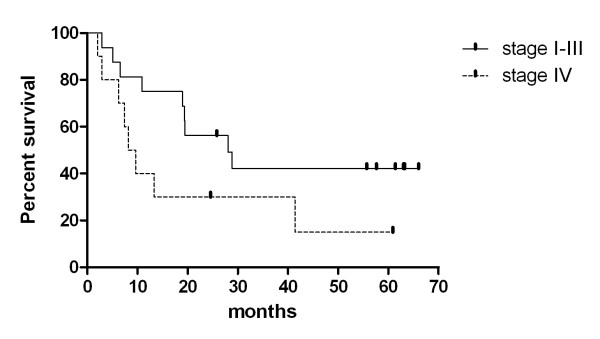
Kaplan-Meier plot of OS according to stage. Median OS of stage I-III and stage IV were 28.0 and 8.2 months, respectively (range 2.9 - 66.0 months, 2.1 - 60.87 months, p = 0.068) (Vertical upticks represent alive patients).
Figure 4
Figure 4
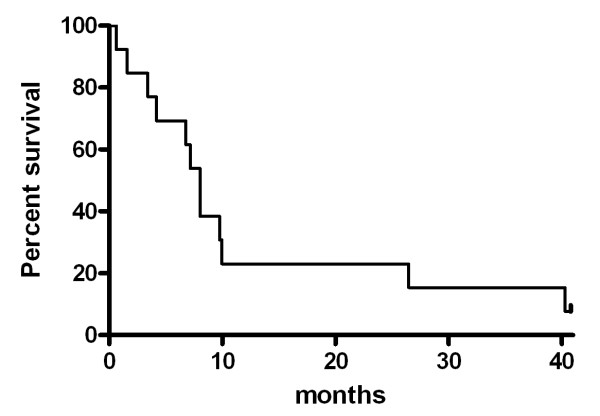
Kaplan-Meier plot of OS for patients receiving palliative chemotherapy. Median OS of 13 patients receiving palliative chemotherapy was 8.03 months (95% CI: 6.59-9.47, range: 0.63-40.8 months)
Figure 5
Figure 5
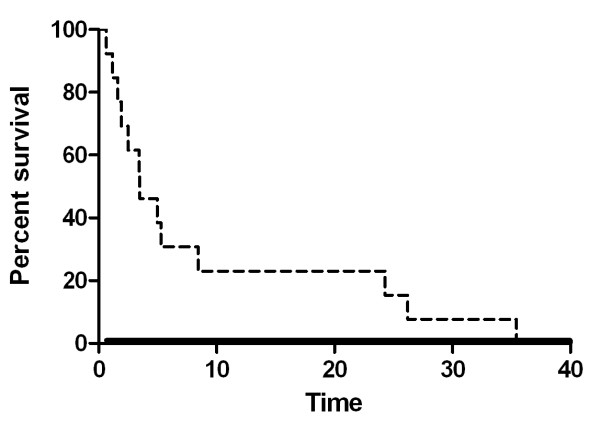
Kaplan-Meier plot of PFS for patients receiving palliative chemotherapy. Median PFS of 13 patients receiving palliative chemotherapy was 3.47 months, respectively (95% CI: 0.65-6.29, range: 0.63 - 35.43 months, respectively)

References

    1. Gao YB, Zhang DF, Jin XL, Xiao JC. Preliminary study on the clinical and pathological relevance of gastric hepatoid adenocarcinoma. J Dig Dis. 2007;8(1):23–28. doi: 10.1111/j.1443-9573.2007.00279.x. - DOI - PubMed
    1. Burgues O, Ferrer J, Navarro S, Ramos D, Botella E, Llombart-Bosch A. Hepatoid adenocarcinoma of the urinary bladder. An unusual neoplasm. Virchows Arch. 1999;435(1):71–75. doi: 10.1007/s004280050398. - DOI - PubMed
    1. Devouassoux-Shisheboran M, Schammel DP, Tavassoli FA. Ovarian hepatoid yolk sac tumours: morphological, immunohistochemical and ultrastructural features. Histopathology. 1999;34(5):462–469. doi: 10.1046/j.1365-2559.1999.00650.x. - DOI - PubMed
    1. Gardiner GW, Lajoie G, Keith R. Hepatoid adenocarcinoma of the papilla of Vater. Histopathology. 1992;20(6):541–544. - PubMed
    1. Hoshida Y, Nagakawa T, Mano S, Taguchi K, Aozasa K. Hepatoid adenocarcinoma of the endometrium associated with alpha-fetoprotein production. Int J Gynecol Pathol. 1996;15(3):266–269. doi: 10.1097/00004347-199607000-00012. - DOI - PubMed