


Viral interleukin-10 expressed by human cytomegalovirus during the latent phase of infection modulates latently infected myeloid cell differentiation
- PMID: 21593144
- PMCID: PMC3126599
- DOI: 10.1128/JVI.00088-11
Viral interleukin-10 expressed by human cytomegalovirus during the latent phase of infection modulates latently infected myeloid cell differentiation
Abstract
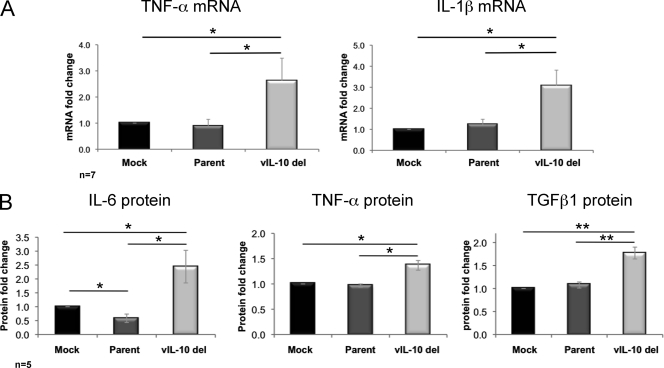
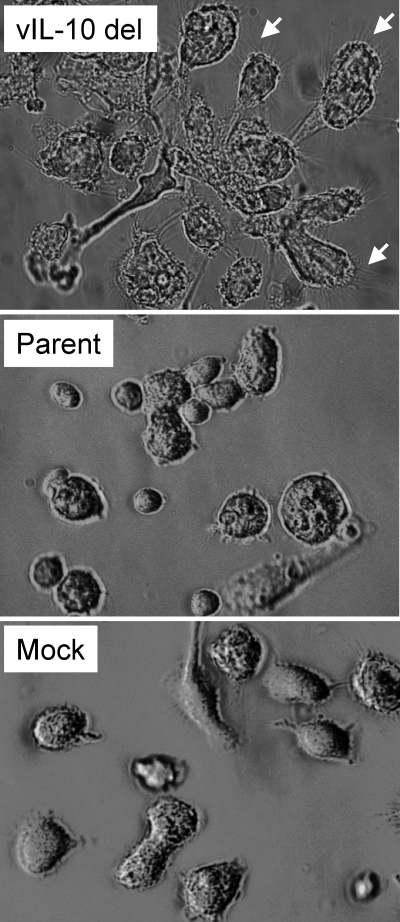
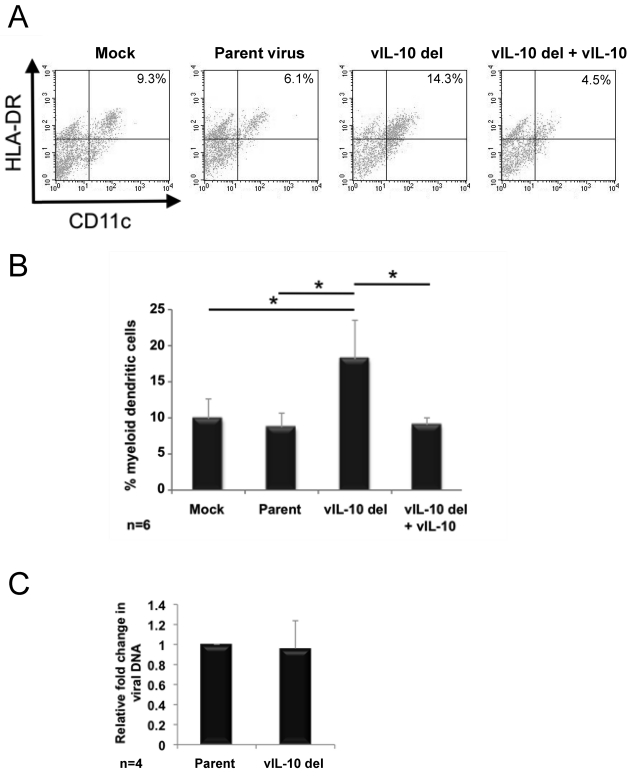
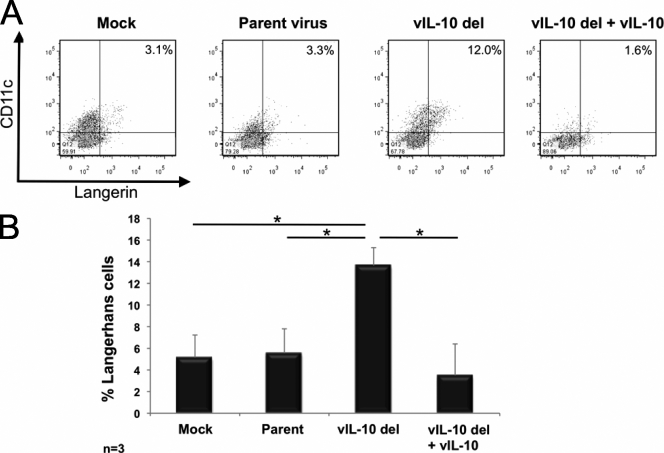
The human cytomegalovirus UL111A gene is expressed during latent and productive infections, and it codes for homologs of interleukin-10 (IL-10). We examined whether viral IL-10 expressed during latency altered differentiation of latently infected myeloid progenitors. In comparison to infection with parental virus or mock infection, latent infection with a virus in which the gene encoding viral IL-10 has been deleted upregulated cytokines associated with dendritic cell (DC) formation and increased the proportion of myeloid DCs. These data demonstrate that viral IL-10 restricts the ability of latently infected myeloid progenitors to differentiate into DCs and identifies an immunomodulatory role for viral IL-10 which may limit the host's ability to clear latent virus.
Figures
References
-
- Anton D., Dabadghao S., Palucka K., Holm G., Yi Q. 1998. Generation of dendritic cells from peripheral blood adherent cells in medium with human serum. Scand. J. Immunol. 47:116–121 - PubMed
-
- Burns S., et al. 2004. Maturation of DC is associated with changes in motile characteristics and adherence. Cell Motil. Cytoskeleton 57:118–132 - PubMed
-
- Caux C., et al. 1999. Respective involvement of TGF-beta and IL-4 in the development of Langerhans cells and non-Langerhans dendritic cells from CD34+ progenitors. J. Leukoc. Biol. 66:781–791 - PubMed
Publication types
MeSH terms
Substances
LinkOut - more resources
Full Text Sources
Other Literature Sources
