


The centipede genus Eupolybothrus Verhoeff, 1907 (Chilopoda: Lithobiomorpha: Lithobiidae) in North Africa, a cybertaxonomic revision, with a key to all species in the genus and the first use of DNA barcoding for the group
- PMID: 21594115
- PMCID: PMC3088018
- DOI: 10.3897/zookeys.50.504
The centipede genus Eupolybothrus Verhoeff, 1907 (Chilopoda: Lithobiomorpha: Lithobiidae) in North Africa, a cybertaxonomic revision, with a key to all species in the genus and the first use of DNA barcoding for the group
Abstract
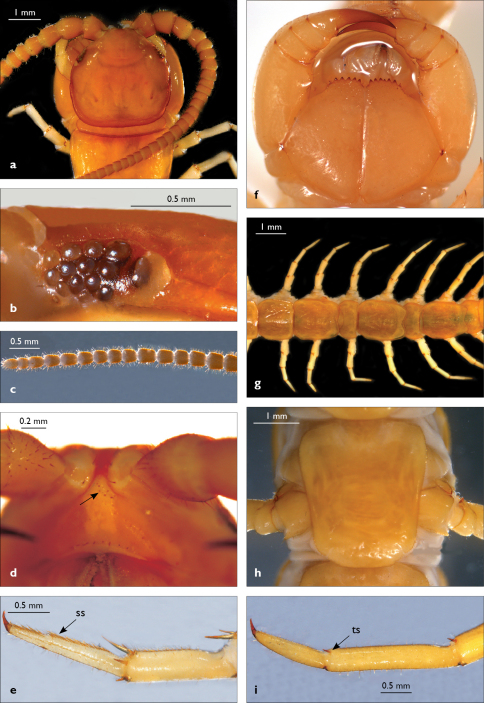
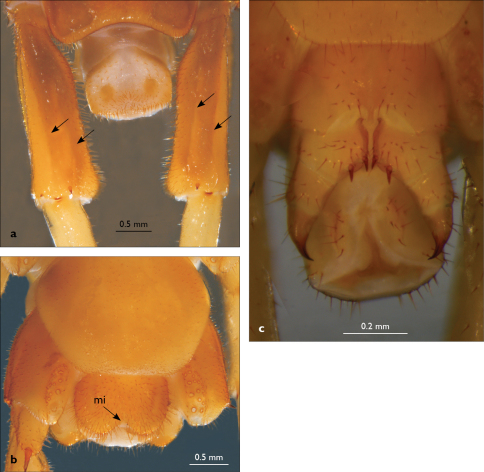
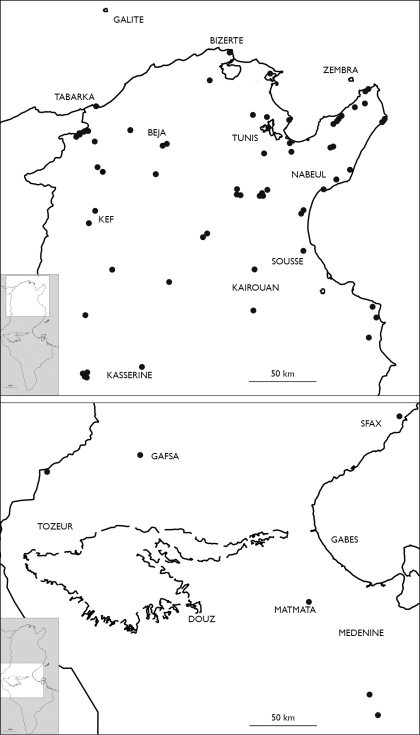
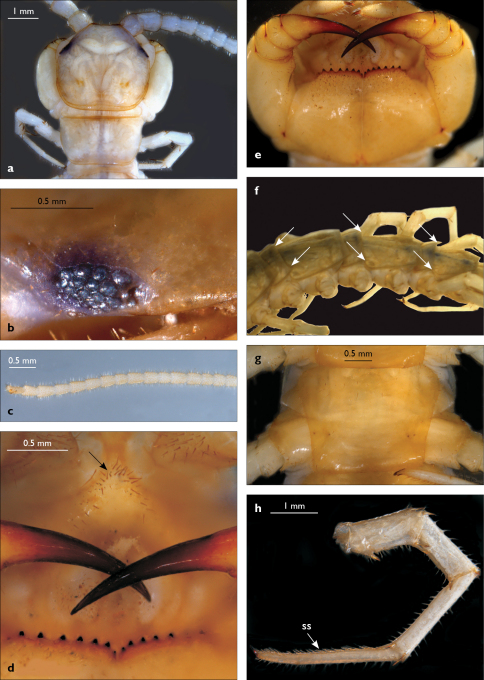
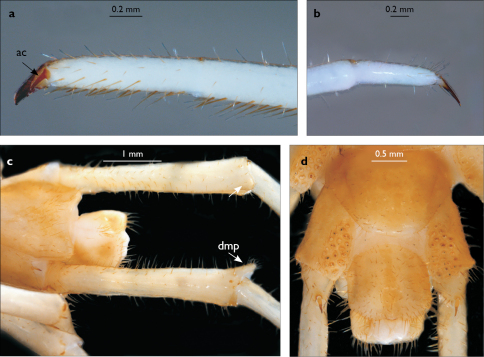
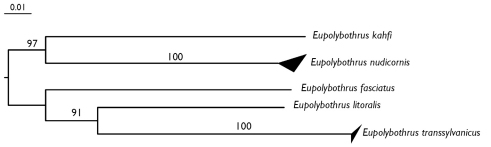
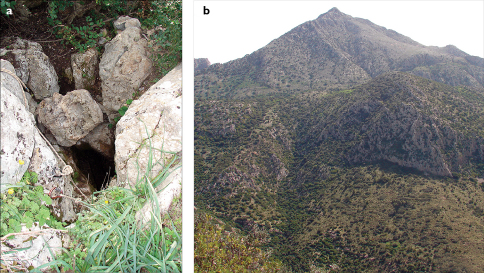
The centipede genus Eupolybothrus Verhoeff, 1907 in North Africa is revised. A new cavernicolous species, Eupolybothruskahfi Stoev & Akkari, sp. n., is described from a cave in Jebel Zaghouan, northeast Tunisia. Morphologically, it is most closely related to Eupolybothrusnudicornis (Gervais, 1837) from North Africa and Southwest Europe but can be readily distinguished by the long antennae and leg-pair 15, a conical dorso-median protuberance emerging from the posterior part of prefemur 15, and the shape of the male first genital sternite. Molecular sequence data from the cytochrome c oxidase I gene (mtDNA-5' COI-barcoding fragment) exhibit 19.19% divergence between Eupolybothruskahfi and Eupolybothrusnudicornis, an interspecific value comparable to those observed among four other species of Eupolybothrus which, combined with a low intraspecific divergence (0.3-1.14%), supports the morphological diagnosis of Eupolybothruskahfi as a separate species. This is the first troglomorphic myriapod to be found in Tunisia, and the second troglomorph lithobiomorph centipede known from North Africa. Eupolybothrusnudicornis is redescribed based on abundant material from Tunisia and its post-embryonic development, distribution and habitat preferences recorded. Eupolybothruscloudsley-thompsoni Turk, 1955, a nominal species based on Tunisian type material, is placed in synonymy with Eupolybothrusnudicornis. To comply with the latest technological developments in publishing of biological information, the paper implements new approaches in cybertaxonomy, such as fine granularity XML tagging validated against the NLM DTD TaxPub for PubMedCentral and dissemination in XML to various aggregators (GBIF, EOL, Wikipedia), vizualisation of all taxa mentioned in the text via the dynamically created Pensoft Taxon Profile (PTP) page, data publishing, georeferencing of all localities via Google Earth, and ZooBank, GenBank and MorphBank registration of datasets. An interactive key to all valid species of Eupolybothrus is made with DELTA software.
Keywords: Eupolybothrus kahfi sp. n.; Eupolybothrus nudicornis; North Africa; barcoding; cybertaxonomy; cytochrome c oxidase I gene; habitat preferences; interactive key; semantic enhancements; semantic tagging; troglomorphism.
Figures
References
-
- Andersson G.(1981) Taxonomical studies on the post-embryotic development in Swedish Lithobiomorpha (Chilopoda). Entomologica scandinavica, Supplement 16: 105–124.
-
- Attems C.(1908) Note sur les Myriapodes recueillis par M. Henri Gadeau de Kerville en Khroumirie et description de deux espèces et d’une variété nouvelles provenant de cette région de la Tunisie. In: Gadeaude Kerville H. (Ed.). Voyage zoologique en Khroumirie (Tunisie), Rouen: 103–116.
-
- Attems C.(1952) Myriopoden der Forschungsreise Dr. H. Franz in Spanien 1951 nebst Übersicht über die gesamte iberische Myriopodenfauna. EOS, Revista Espanola de Entomologia 28 (4): 323–366.
-
- Boutin C, Decu V, Juberthie C, Messouli M, Besson JP.(2001) Maroc. In: Juberthie C, Decu V. (Ed.) Encyclopaedia Biospeologica Tome 3, Société de Biospéologie, Moulis, Bucarest: 1613–1634.
LinkOut - more resources
Full Text Sources