


Horizontal gene transfer in silkworm, Bombyx mori
- PMID: 21595916
- PMCID: PMC3116507
- DOI: 10.1186/1471-2164-12-248
Horizontal gene transfer in silkworm, Bombyx mori
Abstract
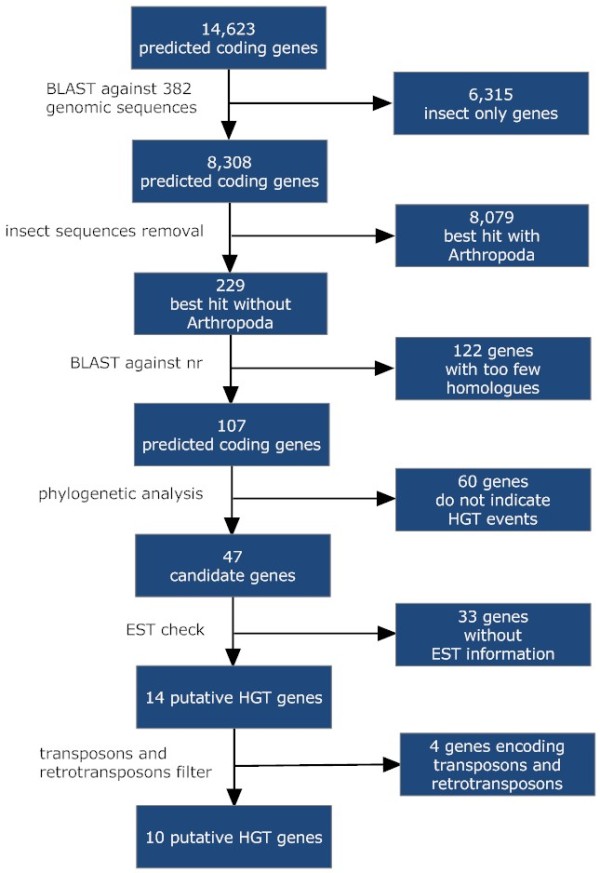
Background: The domesticated silkworm, Bombyx mori, is the model insect for the order Lepidoptera, has economically important values, and has gained some representative behavioral characteristics compared to its wild ancestor. The genome of B. mori has been fully sequenced while function analysis of BmChi-h and BmSuc1 genes revealed that horizontal gene transfer (HGT) maybe bestow a clear selective advantage to B. mori. However, the role of HGT in the evolutionary history of B. mori is largely unexplored. In this study, we compare the whole genome of B. mori with those of 382 prokaryotic and eukaryotic species to investigate the potential HGTs.
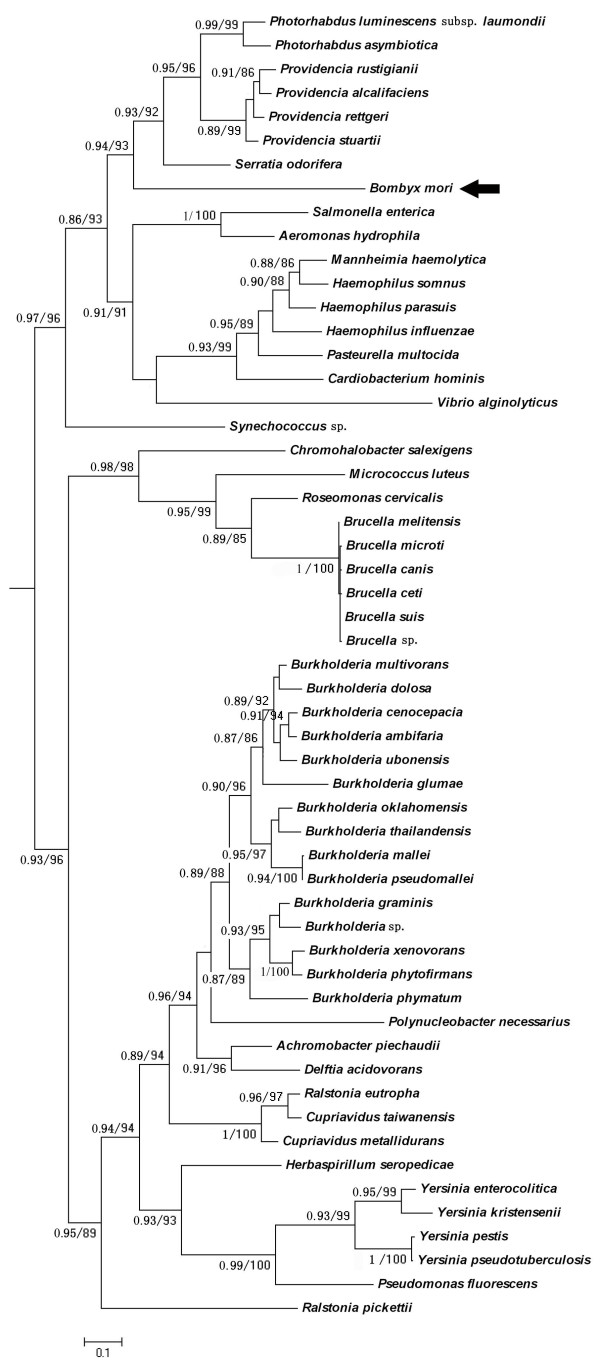
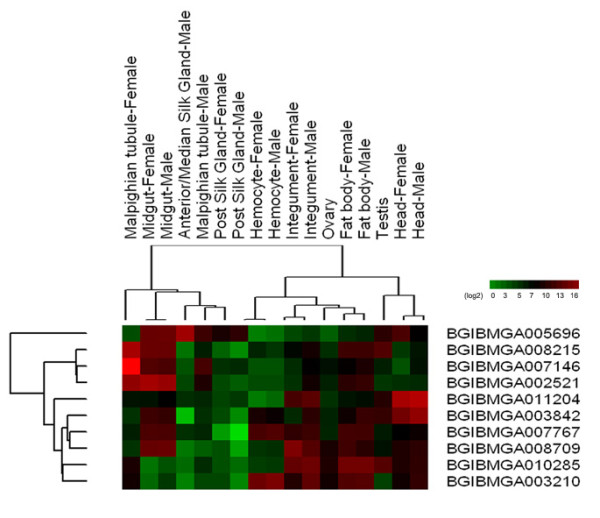
Results: Ten candidate HGT events were defined in B. mori by comprehensive sequence analysis using Maximum Likelihood and Bayesian method combining with EST checking. Phylogenetic analysis of the candidate HGT genes suggested that one HGT was plant-to- B. mori transfer while nine were bacteria-to- B. mori transfer. Furthermore, functional analysis based on expression, coexpression and related literature searching revealed that several HGT candidate genes have added important characters, such as resistance to pathogen, to B. mori.
Conclusions: Results from this study clearly demonstrated that HGTs play an important role in the evolution of B. mori although the number of HGT events in B. mori is in general smaller than those of microbes and other insects. In particular, interdomain HGTs in B. mori may give rise to functional, persistent, and possibly evolutionarily significant new genes.
Figures
References
Publication types
MeSH terms
Substances
LinkOut - more resources
Full Text Sources
Molecular Biology Databases
Research Materials
