


Construction of high quality Gateway™ entry libraries and their application to yeast two-hybrid for the monocot model plant Brachypodium distachyon
- PMID: 21595971
- PMCID: PMC3239850
- DOI: 10.1186/1472-6750-11-53
Construction of high quality Gateway™ entry libraries and their application to yeast two-hybrid for the monocot model plant Brachypodium distachyon
Abstract
Background: Monocots, especially the temperate grasses, represent some of the most agriculturally important crops for both current food needs and future biofuel development. Because most of the agriculturally important grass species are difficult to study (e.g., they often have large, repetitive genomes and can be difficult to grow in laboratory settings), developing genetically tractable model systems is essential. Brachypodium distachyon (hereafter Brachypodium) is an emerging model system for the temperate grasses. To fully realize the potential of this model system, publicly accessible discovery tools are essential. High quality cDNA libraries that can be readily adapted for multiple downstream purposes are a needed resource. Additionally, yeast two-hybrid (Y2H) libraries are an important discovery tool for protein-protein interactions and are not currently available for Brachypodium.
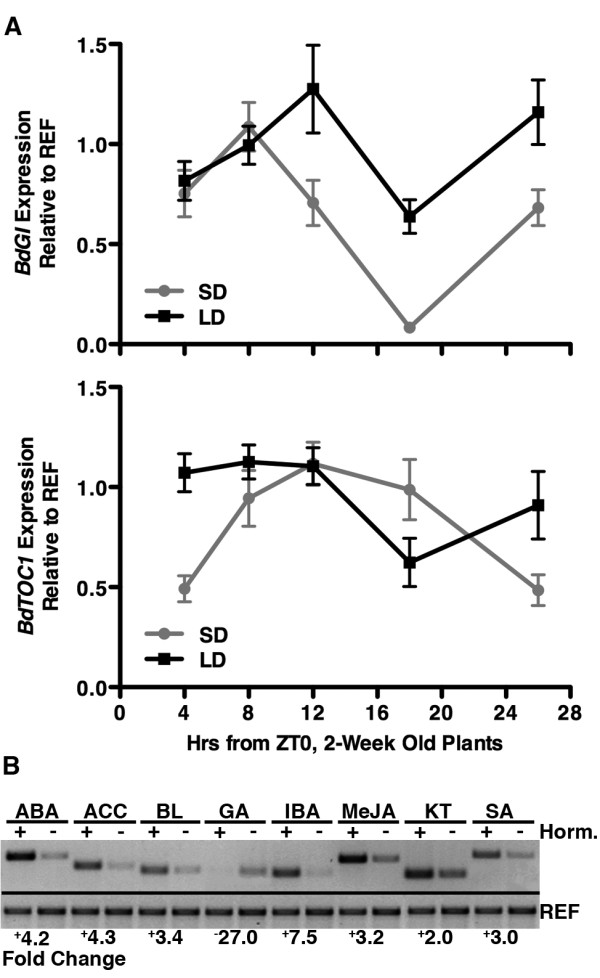
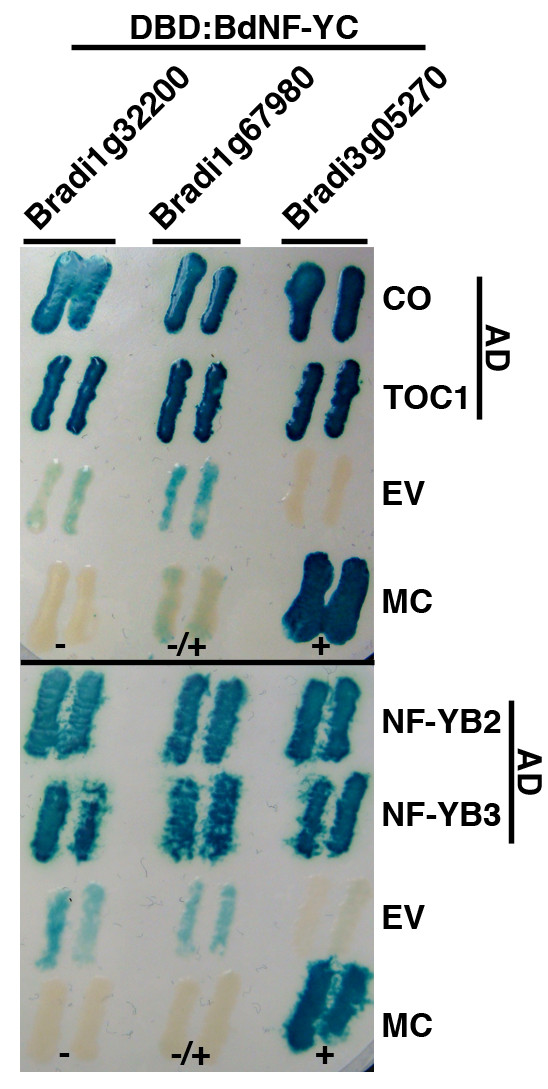
Results: We describe the creation of two high quality, publicly available Gateway™ cDNA entry libraries and their derived Y2H libraries for Brachypodium. The first entry library represents cloned cDNA populations from both short day (SD, 8/16-h light/dark) and long day (LD, 20/4-h light/dark) grown plants, while the second library was generated from hormone treated tissues. Both libraries have extensive genome coverage (~5 × 10⁷ primary clones each) and average clone lengths of ~1.5 Kb. These entry libraries were then used to create two recombination-derived Y2H libraries. Initial proof-of-concept screens demonstrated that a protein with known interaction partners could readily re-isolate those partners, as well as novel interactors.
Conclusions: Accessible community resources are a hallmark of successful biological model systems. Brachypodium has the potential to be a broadly useful model system for the grasses, but still requires many of these resources. The Gateway™ compatible entry libraries created here will facilitate studies for multiple user-defined purposes and the derived Y2H libraries can be immediately applied to large scale screening and discovery of novel protein-protein interactions. All libraries are freely available for distribution to the research community.
Figures
References
Publication types
MeSH terms
Substances
LinkOut - more resources
Full Text Sources
Research Materials
