


Hemostatic and toxinological diversities in venom of Micrurus tener tener, Micrurus fulvius fulvius and Micrurus isozonus coral snakes
- PMID: 21596052
- PMCID: PMC3304457
- DOI: 10.1016/j.toxicon.2011.04.020
Hemostatic and toxinological diversities in venom of Micrurus tener tener, Micrurus fulvius fulvius and Micrurus isozonus coral snakes
Abstract
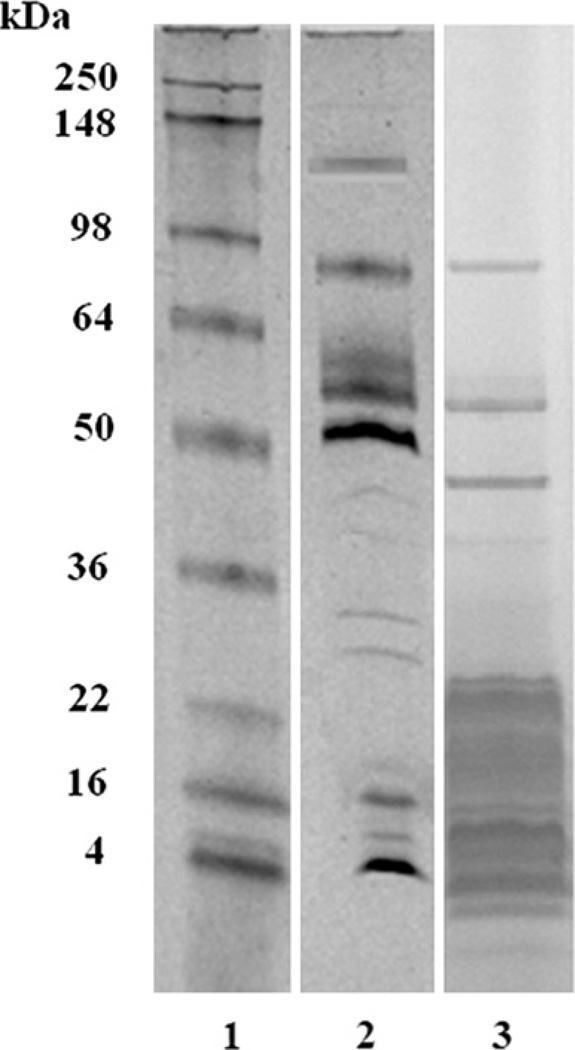
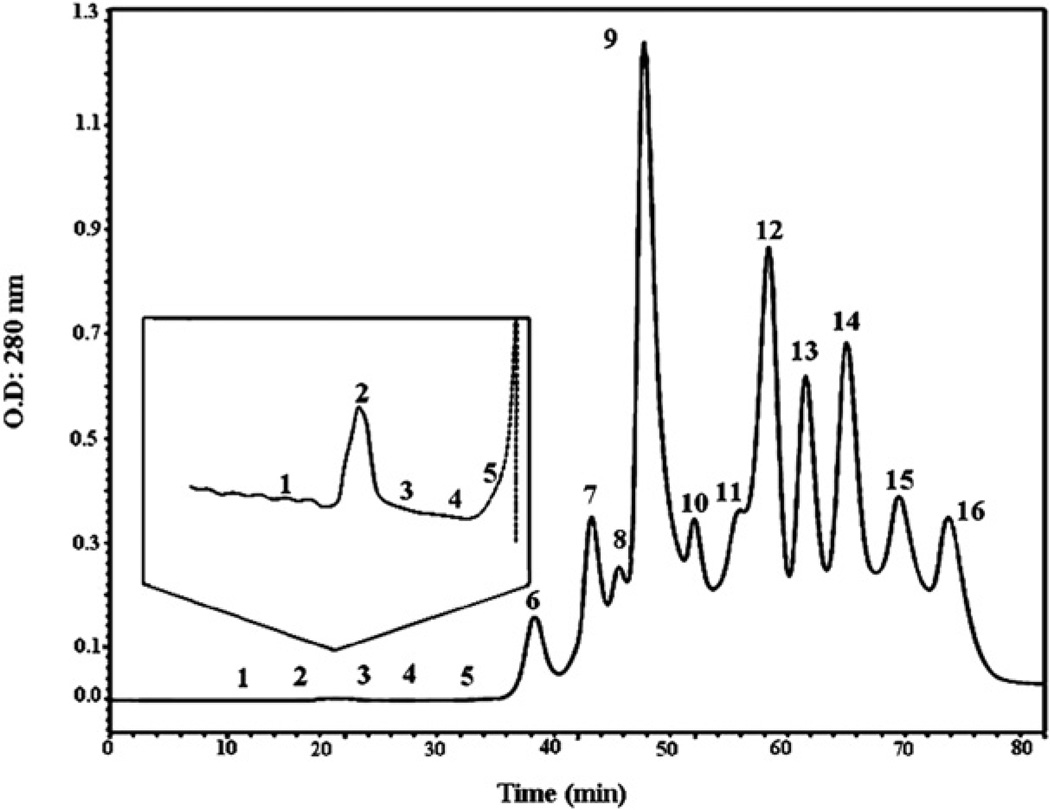
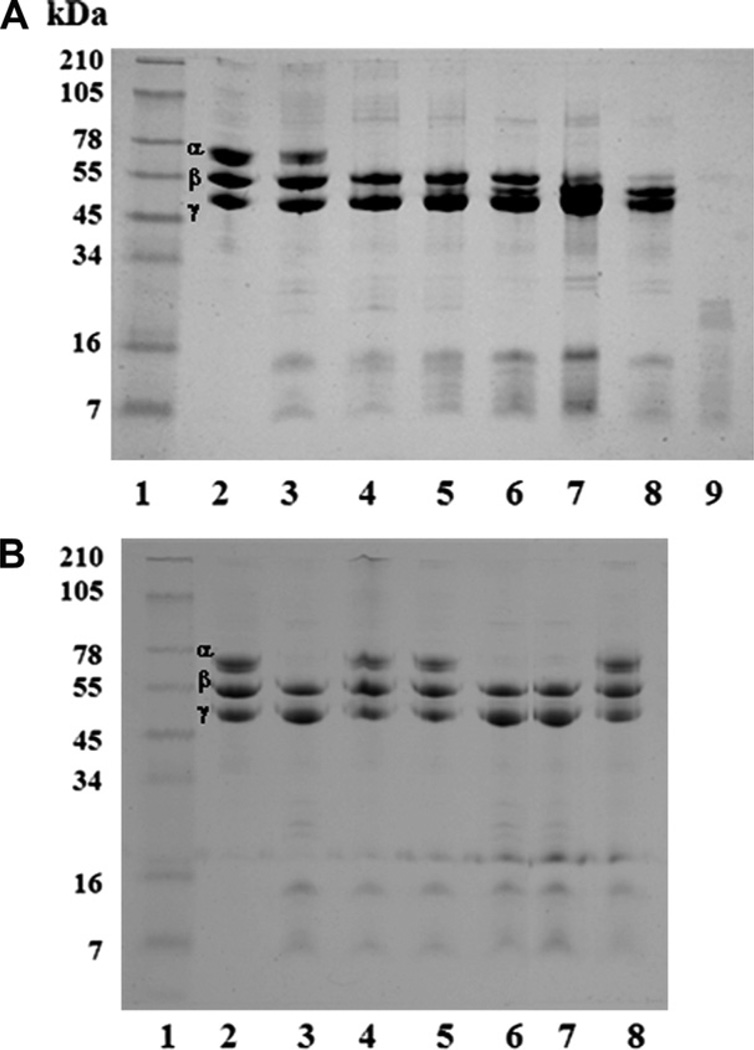
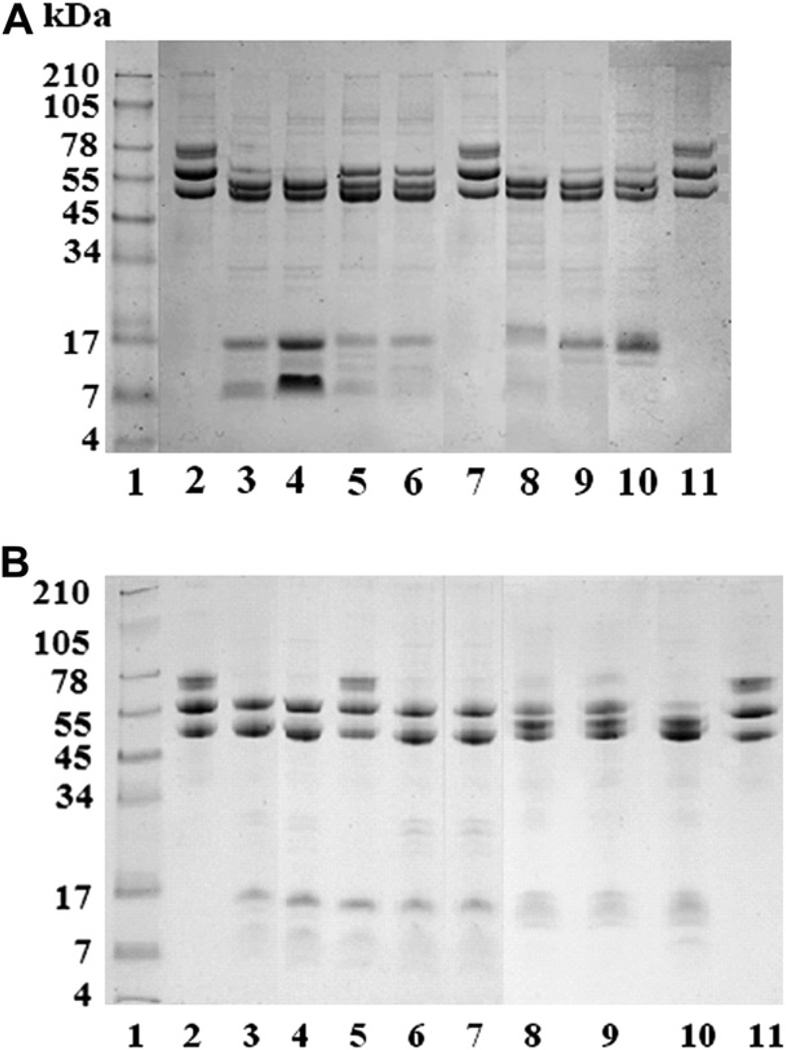
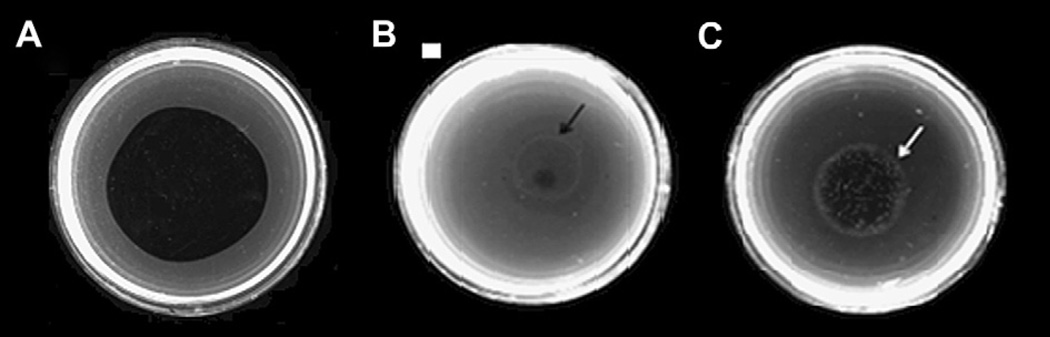
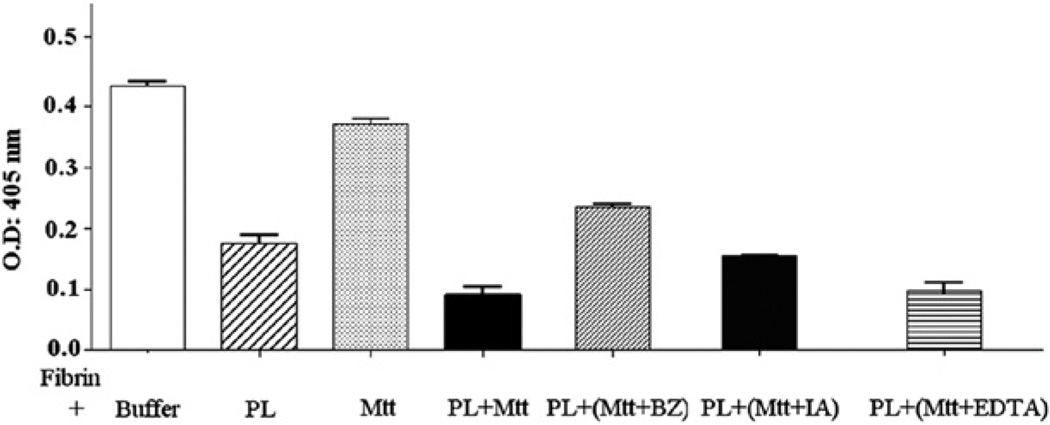
The coral snake Micrurus tener tener (Mtt) from the Elapidae family inhabits the southwestern United States and produces severe cases of envenomations. Although the majority of Mtt venom components are neurotoxins and phospholipase A₂s, this study demonstrated, by SDS-PAGE and molecular exclusion chromatography (MEC), that these venoms also contain high-molecular-weight proteins between 50 and 150 kDa that target the hemostatic system. The biological aspects of other Micrurus venoms were also studied, such as the LD₅₀s of Micrurus isozonus (from 0.52 to 0.61 mg/kg). A pool from these venoms presented a LD₅₀ of 0.57 mg/kg, Micrurus f. fulvius (Mff) and Mtt had LD₅₀s of 0.32 and 0.78 mg/kg, respectively. These venoms contained fibrino(geno)lytic activity, they inhibited platelet aggregation, as well as factor Xa and/or plasmin-like activities. M. isozonus venoms from different Venezuelan geographical regions inhibited ADP-induced platelet aggregation (from 50 to 68%). Micrurus tener tener venom from the United States was the most active with a 95.2% inhibitory effect. This venom showed thrombin-like activity on fibrinogen and human plasma. Fractions of Mtt showed fibrino(geno)lytic activity and inhibition on plasmin amidolytic activity. Several fractions degraded the fibrinogen Aα chains, and fractions F2 and F7 completely degraded both fibrinogen Aα and Bβ chains. To our knowledge, this is the first report on thrombin-like and fibrino(geno)lytic activity and plasmin or factor Xa inhibitors described in Micrurus venoms. Further purification and characterization of these Micrurus venom components could be of therapeutic use in the treatment of hemostatic disorders.
Copyright © 2011 Elsevier Ltd. All rights reserved.
Conflict of interest statement
The authors declare no conflicts of interest.
Figures
References
-
- Aguilar I, Girón ME, Rodríguez-Acosta A. Purification and characterization of a hemorrhagic fraction from the venom of the Uracoan rattlesnake Crotalus vegrandis. Biochim. Byophys. Acta. 2001;1548:57–65. - PubMed
-
- Aird SD, da Silva NJ., Jr Comparative enzymatic composition of Brazilian coral snake (Micrurus) venoms. Comp. Biochem. Physiol. B. 1991;99:287–294. - PubMed
-
- Alape-Girón A, Lomonte B, Gustafsson B, Da Silva NJ, Thelestam M. Electrophoretic and immunochemical studies of Micrurus snake venoms. Toxicon. 1994;32:713–723. - PubMed
-
- Alape-Girón A, Persson B, Cederlund E, Flores-Díaz M, Gutiérrez JM, Thelestam M, Bergman T, Jörnvall H. Elapid venom toxins: multiple recruitments of ancient scaffolds. Eur. J. Biochem. 1999:225–234. - PubMed
-
- Arce V, Rojas E, Ownby CL, Rojas G, Gutiérrez JM. Preclinical assessment of the ability of polyvalent (Crotalinae) and anticoral (Elapidae) antivenoms produced in Costa Rica to neutralize the venoms of North American snakes. Toxicon. 2003;41:851–860. - PubMed
Publication types
MeSH terms
Substances
Grants and funding
LinkOut - more resources
Full Text Sources
Miscellaneous
