


A comparison of economic demand and conditioned-cued reinstatement of methamphetamine-seeking or food-seeking in rats
- PMID: 21597363
- PMCID: PMC3135689
- DOI: 10.1097/FBP.0b013e3283473be4
A comparison of economic demand and conditioned-cued reinstatement of methamphetamine-seeking or food-seeking in rats
Abstract
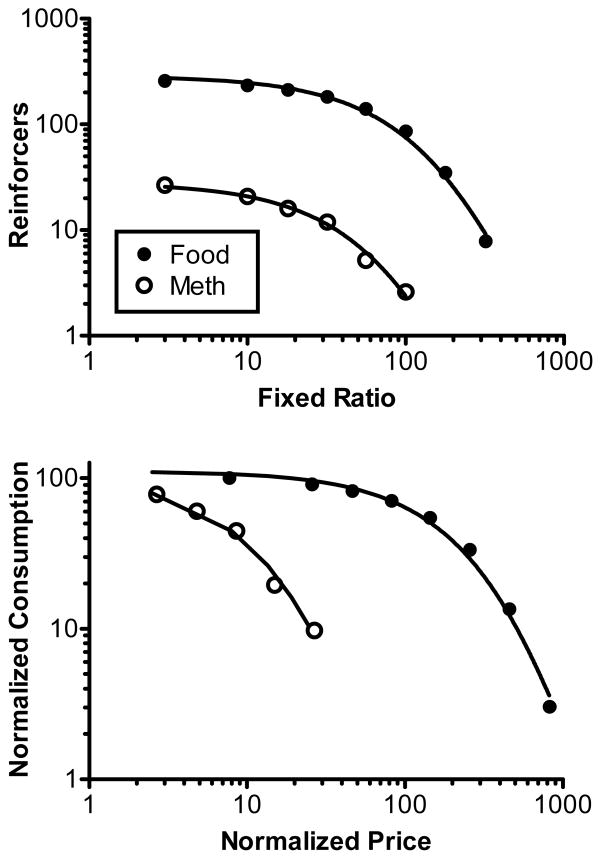
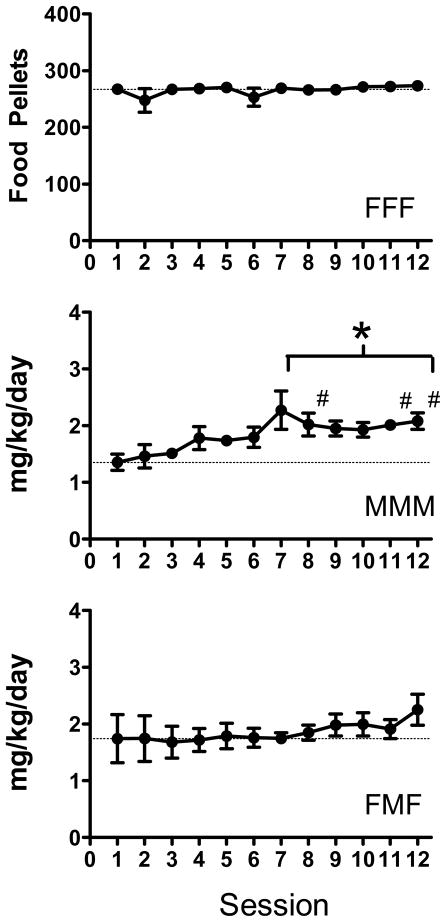
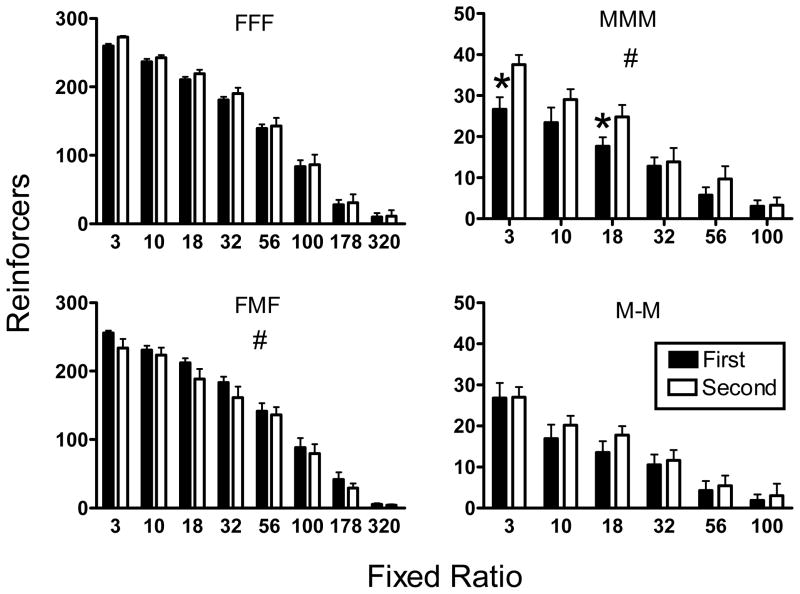
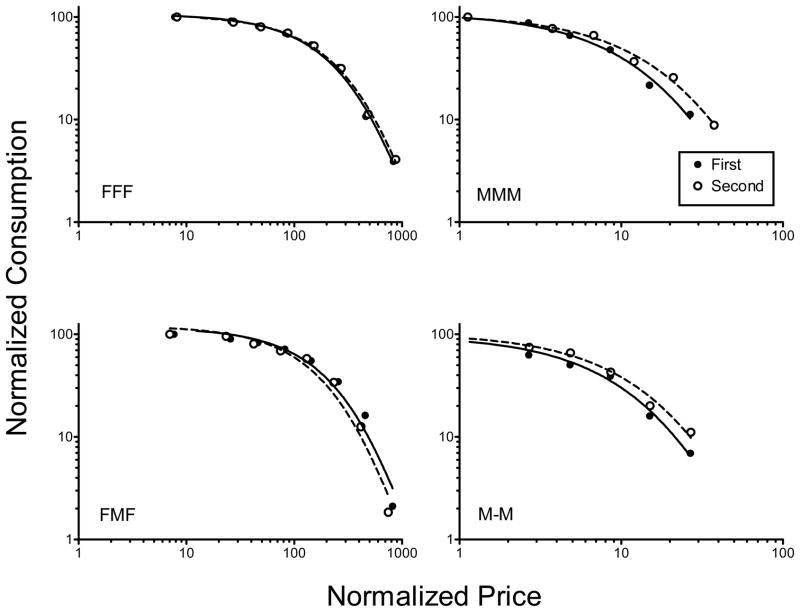
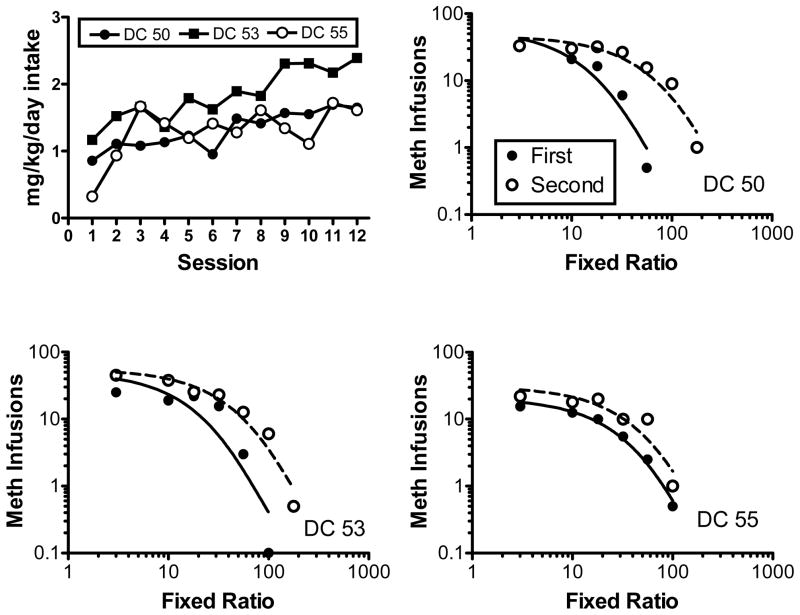
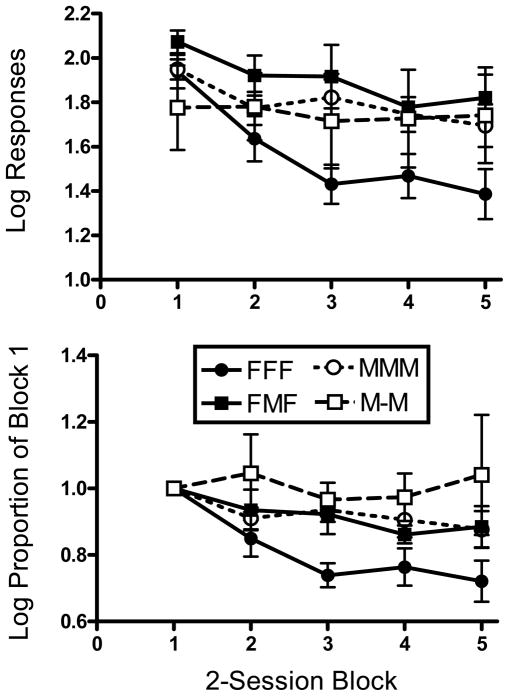
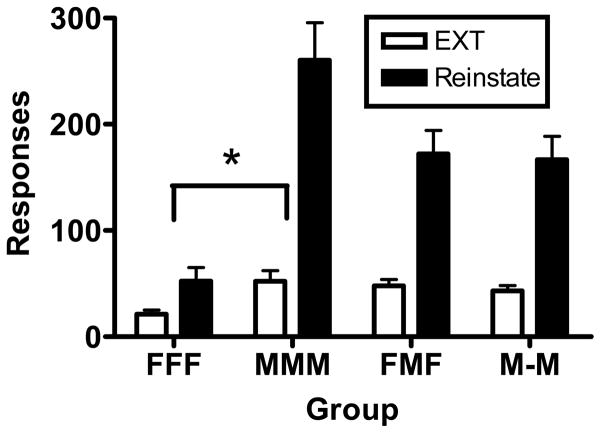
This study examined whether continued access to methamphetamine or food reinforcement changed economic demand for both. The relationship between demand elasticity and cue-induced reinstatement was also determined. Male Long-Evans rats were lever pressed under increasing fixed-ratio requirements for either food pellets or methamphetamine (20 μg/50 μl infusion). For two groups, demand curves were obtained before and after continued access (12 days, 2-h sessions) to the reinforcer under a fixed-ratio 3 schedule. A third group was given continued access to methamphetamine between determinations of food demand and a fourth group abstained from methamphetamine between determinations. All groups underwent extinction sessions, followed by a cue-induced reinstatement test. Although food demand was less elastic than methamphetamine demand, continued access to methamphetamine shifted the methamphetamine demand curve upward and the food demand curve downward. In some rats, methamphetamine demand also became less elastic. Continued access to food had no effect on food demand. Reinstatement was higher after continued access to methamphetamine relative to food. For methamphetamine, elasticity and reinstatement measures were correlated. Continued access to methamphetamine, but not food, alters demand in ways suggestive of methamphetamine accruing reinforcing strength. Demand elasticity thus provides a useful measure of abuse liability that may predict future relapse to renewed drug-seeking and drug use.
Figures
References
-
- Ahmed SH, Koob GR. Transition from moderate to excessive drug intake: Change in hedonic set point. Science. 1998;282:298–300. - PubMed
-
- Anggadiredja K, Nakamichi M, Hiranita T, Tanaka H, Shoyama Y, Watanabe S, Yamamoto T. Endocannabinoid system modulates relapse to methamphetamine seeking: possible mediation by the arachidonic acid cascade. Neuropsychopharmacology. 2004;29:1470–1478. - PubMed
-
- American Psychiatric Association. Diagnostic and statistical manual of mental disorders. 4. Washington, DC: Author; 2000.
-
- Belin D, Jonkman S, Dickinson A, Robbins TW, Everitt BJ. Parallel and interactive learning processes within the basal ganglia: relevance for the understanding of addiction. Behav Brain Res. 2009;199:89–102. - PubMed
Publication types
MeSH terms
Substances
Grants and funding
LinkOut - more resources
Full Text Sources
Medical
