


Contingent negative variation as a dopaminergic biomarker: evidence from dose-related effects of methylphenidate
- PMID: 21597989
- PMCID: PMC3210368
- DOI: 10.1007/s00213-011-2345-x
Contingent negative variation as a dopaminergic biomarker: evidence from dose-related effects of methylphenidate
Abstract
Rationale: The basal ganglia play an important role in motor control, which is dependent on dopaminergic input. Preparation of a motor response has been associated with dopamine release in the basal ganglia, and response readiness may therefore serve as a pharmacodynamic marker of dopamine activity.
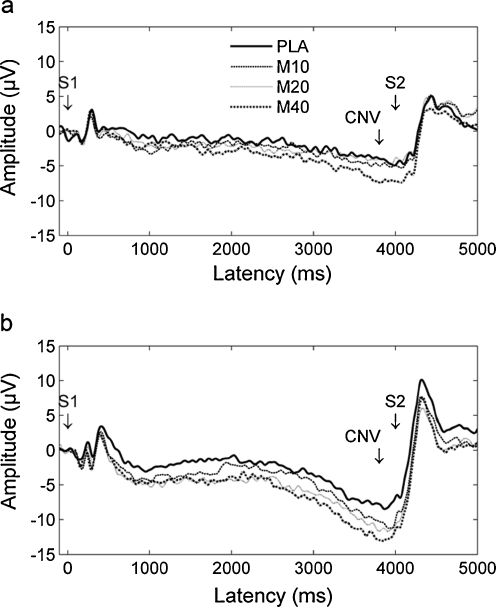
Methods: We measured response readiness using the amplitude of the contingent negative variation (CNV), a slow negative shift in the electroencephalogram. The CNV is evoked in a paradigm in which a warning stimulus (S1) signals the occurrence of the imperative stimulus (S2) 4 s later, to which the participant has to respond. CNV was assessed in healthy volunteers after administration of placebo or 10, 20 or 40 mg of methylphenidate, a catecholamine re-uptake blocker which primarily enhances the synaptic concentration of dopamine and to a lesser extent also noradrenaline. In addition, participants filled out two visual analogue scales measuring subjective ratings of mood and alertness: Profile of Mood States and Bond and Lader.
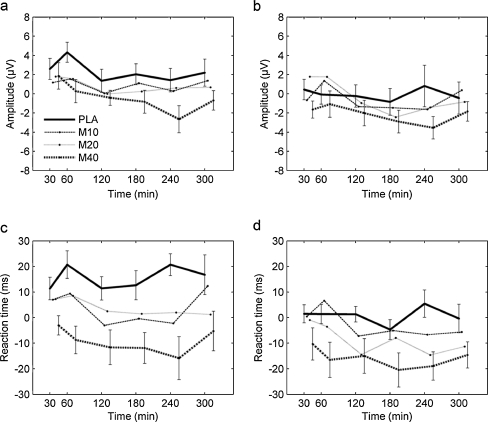
Results: Methylphenidate dose dependently increased CNV amplitude and decreased reaction times. Furthermore, participants reported improved mood, feeling more alert, vigorous and content and less angry and tired after methylphenidate.
Conclusions: These results indicate that dopamine availability increases response readiness as measured by the CNV paradigm. The CNV appears to be a good candidate biomarker for assessing changes in dopaminergic function by treatments that either directly or indirectly target the dopaminergic system.
Figures
References
-
- Arnsten AF, Dudley AG. Methylphenidate improves prefrontal cortical cognitive function through alpha2 adrenoceptor and dopamine D1 receptor actions: relevance to therapeutic effects in attention deficit hyperactivity disorder. Behav Brain Funct. 2005;1(1):2. doi: 10.1186/1744-9081-1-2. - DOI - PMC - PubMed
Publication types
MeSH terms
Substances
LinkOut - more resources
Full Text Sources
Medical
