


p65/RelA-Ser529 NF-κB subunit phosphorylation induces autophagic astroglial death (Clasmatodendrosis) following status epilepticus
- PMID: 21598036
- PMCID: PMC11498587
- DOI: 10.1007/s10571-011-9706-1
p65/RelA-Ser529 NF-κB subunit phosphorylation induces autophagic astroglial death (Clasmatodendrosis) following status epilepticus
Abstract
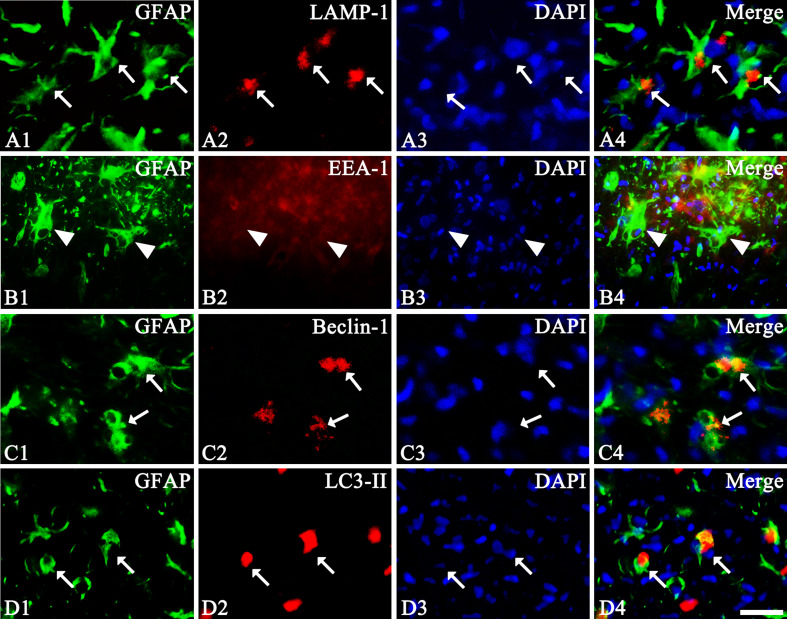
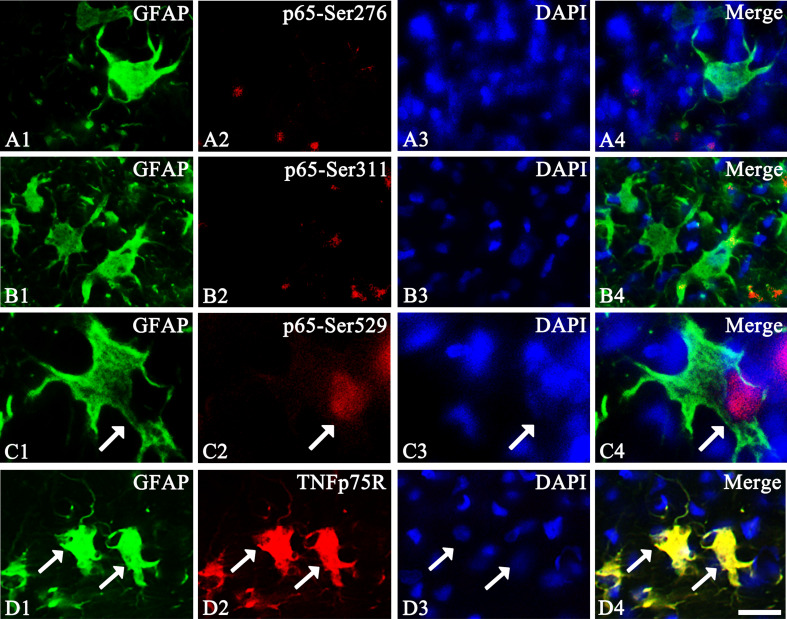
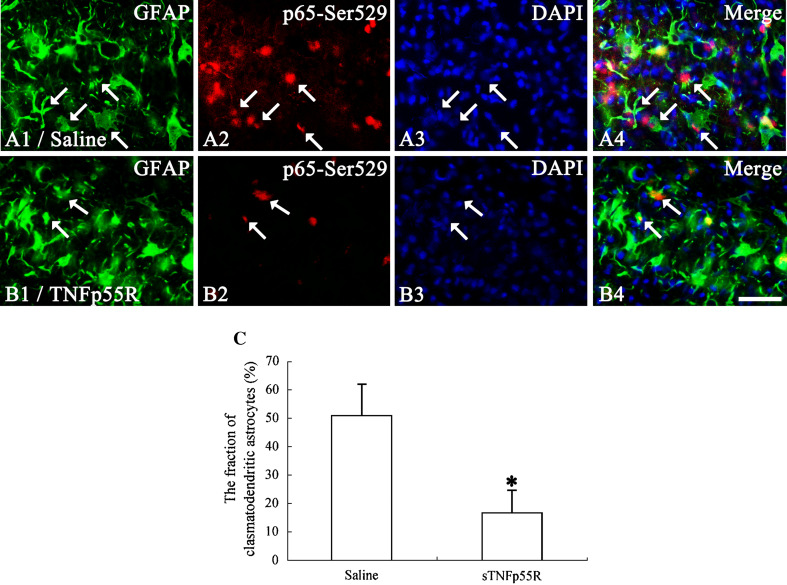
Clasmatodendrosis is an irreversible astroglial degenerative change, which includes extensive swelling and vacuolization of cell bodies and disintegrated and beaded processes. This study was designed to elucidate whether clasmatodendrosis may be one of the autophagy-related degeneration of astrocytes. In this study, clasmatodendritic astrocytes were observed only in the stratum radiatum in the CA1 region. Vacuoles in clasmatodendritic astrocytes showed LAMP-1 immunoreactivity. In addition, both LC3-II and Beclin-1 expression were detected in most of clasmatodendritic astrocytes as well as a few non-vacuolized astrocytes. Clasmatodendritic astrocytes also showed p65/RelA-Ser529 phosphorylation in the nuclei. The neutralization of TNF-α by sTNFp55R infusion reduced clasmatodendritic astrocytes with nuclear p65/RelA-Ser529 phosphorylation. Therefore, these findings suggest that clasmatodendrosis may be autophagic astroglial death in response to epileptic seizures through TNF-α-mediated p65/RelA-Ser529 phosphorylation.
Figures
References
Publication types
MeSH terms
Substances
LinkOut - more resources
Full Text Sources
Molecular Biology Databases
Miscellaneous
