Yield of combined impedance-pH monitoring for refractory reflux symptoms in clinical practice
- PMID: 21602992
- PMCID: PMC3093007
- DOI: 10.5056/jnm.2011.17.2.158
Yield of combined impedance-pH monitoring for refractory reflux symptoms in clinical practice
Abstract
Background/aims: In patients with gastroesophageal reflux disease, persistent symptoms on proton pump inhibitor (PPI) therapy may be due to residual acid or non-acid reflux. Combined impedance-pH has been suggested to be superior to pH alone in the management of refractory patients to PPI. The utility of implementation of this technique in every day clinical practice is still unknown. The aim of this study was to investigate the outcomes of patients studied with combined impedance-pH and to evaluate the yield of additional impedance monitoring over pH alone in patients with persistent gastroesophageal reflux disease symptoms.
Methods: Seventy-one patients (31 men; mean age, 49.1 ± 15.5 years) on PPI therapy underwent combined impedance-pH for persistent typical (76%) or atypical (49%) symptoms.
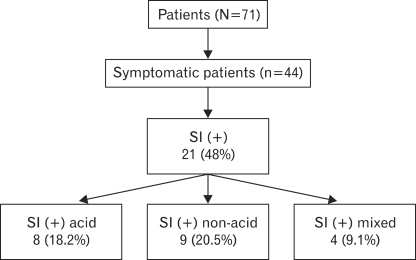
Results: During impedance-pH study, 44 (62%) patients reported symptoms. A positive symptom index (SI) was found in 21 (48%) patients: 8 (18.2%) had a positive SI for acid reflux, 9 (20.5%) for non-acid reflux and 4 (9.1%) for mixed reflux. Addition of impedance allowed association between reflux and symptoms in 20.5% of patients who would have been missed by pH study alone. Heartburn was the most prevalent symptom associated with acid reflux, whereas regurgitation and ear, nose and throat symptoms were associated with non-acid reflux.
Conclusions: The use of combined impedance-pH monitoring substantially increased the diagnostic yield compared to pH alone. With SI analysis, 20.5% of patients received a diagnosis that could not have been achieved with pH testing alone.
Keywords: Electric impedance; Esophageal pH monitoring; Gastroesophageal reflux.
Figures
References
-
- Isolauri J, Laippala P. Prevalence of symptoms suggestive of gastroesophageal reflux disease in an adult population. Ann Med. 1995;27:67–70. - PubMed
-
- Nebel OT, Fornes MF, Castell DO. Symptomatic gastroesophageal reflux: incidence and precipitating factors. Am J Dig Dis. 1976;21:953–956. - PubMed
-
- Kahrilas PJ, Shaheen NJ, Vaezi MF American Gastroenterological Association Institute; Clinical Practice and Quality Management Committee. American Gastroenterological Association Institute technical review on the management of gastroesophageal reflux disease. Gastroenterology. 2008;135:1392–1413. - PubMed
-
- Hetzel DJ, Dent J, Reed WD, et al. Healing and relapse of severe peptic esophagitis after treatment with omeprazole. Gastroenterology. 1988;95:903–912. - PubMed
-
- Sontag SJ, Hirschowitz BI, Holt S, et al. Two doses of omeprazole versus placebo in symptomatic erosive esophagitis: The U.S. Multicenter Study. Gastroenterology. 1992;102:109–118. - PubMed
LinkOut - more resources
Full Text Sources