


Comparison of tiered formularies and reference pricing policies: a systematic review
- PMID: 21603047
- PMCID: PMC3090119
Comparison of tiered formularies and reference pricing policies: a systematic review
Abstract
Objectives: To synthesize methodologically comparable evidence from the published literature regarding the outcomes of tiered formularies and therapeutic reference pricing of prescription drugs.
Methods: We searched the following electronic databases: ABI/Inform, CINAHL, Clinical Evidence, Digital Dissertations & Theses, Evidence-Based Medicine Reviews (which incorporates ACP Journal Club, Cochrane Central Register of Controlled Trials, Cochrane Database of Systematic Reviews, Cochrane Methodology Register, Database of Abstracts of Reviews of Effectiveness, Health Technology Assessments and NHS Economic Evaluation Database), EconLit, EMBASE, International Pharmaceutical Abstracts, MEDLINE, PAIS International and PAIS Archive, and the Web of Science. We also searched the reference lists of relevant articles and several grey literature sources. We sought English-language studies published from 1986 to 2007 that examined the effects of either therapeutic reference pricing or tiered formularies, reported on outcomes relevant to patient care and cost-effectiveness, and employed quantitative study designs that included concurrent or historical comparison groups. We abstracted and assessed potentially appropriate articles using a modified version of the data abstraction form developed by the Cochrane Effective Practice and Organisation of Care Group.
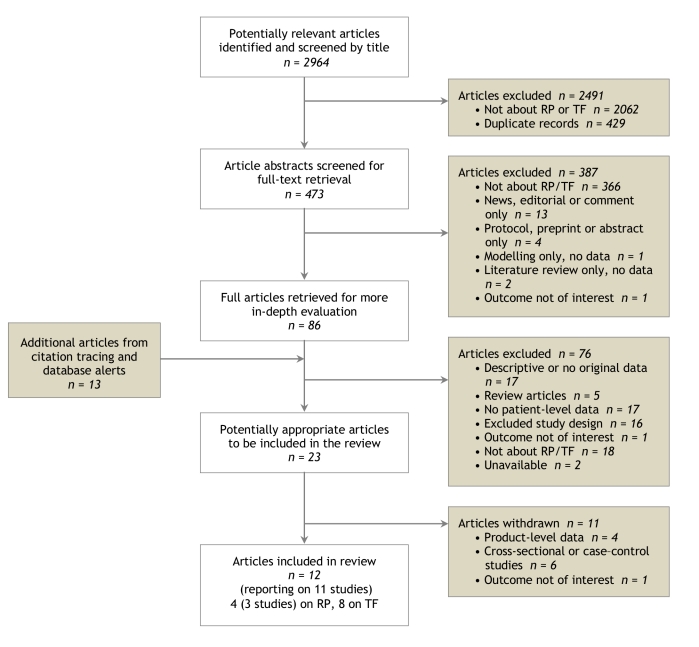
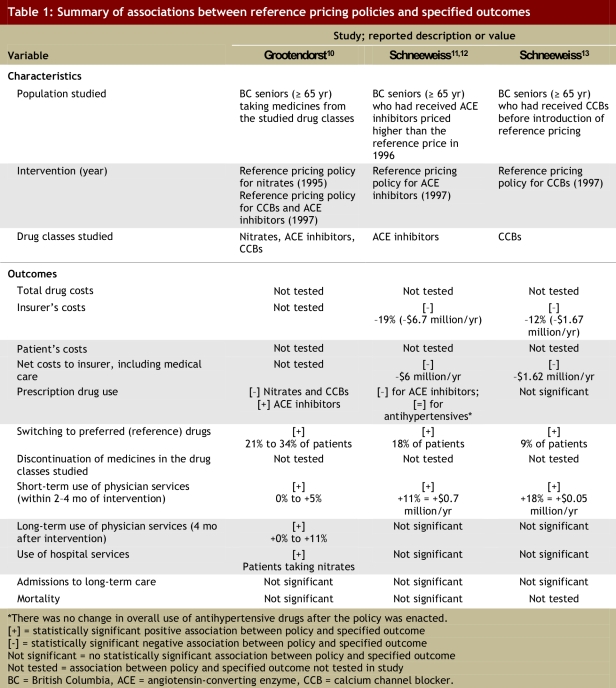
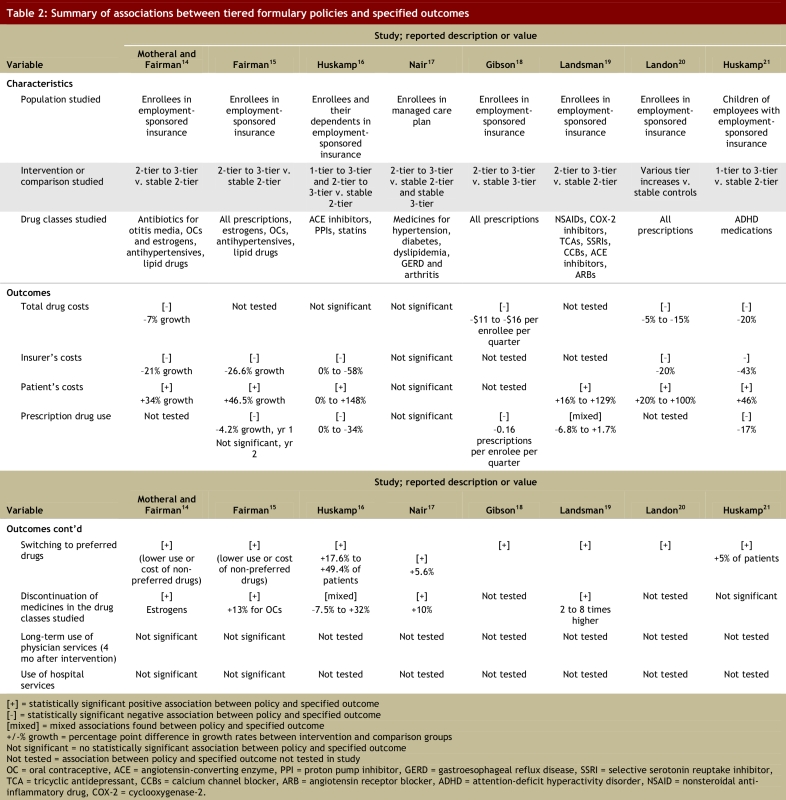
Results: From an initial list of 2964 citations, 12 citations (representing 11 studies) were deemed eligible for inclusion in our review: 3 studies (reported in 4 articles) of reference pricing and 8 studies of tiered formularies. The introduction of reference pricing was associated with reduced plan spending, switching to preferred medicines, reduced overall drug utilization and short-term increases in the use of physician services. Reference pricing was not associated with adverse health impacts. The introduction of tiered formularies was associated with reduced plan expenditures, greater patient costs and increased rates of non-compliance with prescribed drug therapy. From the data available, we were unable to examine the hypothesis that tiered formulary policies result in greater use of physician services and potentially worse health outcomes.
Conclusion: The available evidence does not clearly differentiate between reference pricing and tiered formularies in terms of policy outcomes. Reference pricing appears to have a slight evidentiary advantage, given that patients' health outcomes under tiered formularies have not been well studied and that tiered formularies are associated with increased rates of medicine discontinuation.
Conflict of interest statement
Competing interests: None declared.
Figures
References
-
- Canadian Institute for Health Information. Drug expenditure in Canada 1985–2007. Ottawa: Canadian Institute for Health Information; 2008. http://secure.cihi.ca/cihiweb/products/Drug_Expenditure_in_Canada_1985_2....
-
- Puig-Junoy Jaume. What is required to evaluate the impact of pharmaceutical reference pricing? Appl Health Econ Health Policy. 2005;4(2):87–98. - PubMed
-
- Goldman Dana P, Joyce Geoffrey F, Zheng Yuhui. Prescription drug cost sharing: associations with medication and medical utilization and spending and health. JAMA. 2007;298(1):61–69. doi: 10.1001/jama.298.1.61. http://jama.ama-assn.org/cgi/pmidlookup?view=long&pmid=17609491. - DOI - PMC - PubMed
-
- Dewa CS, Hoch JS. Fixed and flexible formularies as cost-control mechanisms. Expert Rev Pharmacoecon Outcomes Res. 2003;3(3):303–315. - PubMed
LinkOut - more resources
Full Text Sources