


Use of α(2)-Agonists in Neuroanesthesia: An Overview
- PMID: 21603337
- PMCID: PMC3096156
Item in Clipboard
Use of α(2)-Agonists in Neuroanesthesia: An Overview
Ochsner J.
2011 Spring.
Abstract
α(2)-Agonists are a novel class of drugs with mechanisms of action that differ from other commonly used anesthetic drugs. They have neuroprotective, cardioprotective, and sedative effects. These unique characteristics make them potentially useful during neuroanesthesia and intensive care. We review the effects of dexmedetomidine on cerebral blood flow and cerebral metabolism, along with recent advances in using α(2)-agonists in neuroanesthesia and neurointensive care.
Keywords: Alpha-2 agonist; anesthesia; dexmedetomidine; neuroanesthesia; neuroprotection.
Figures
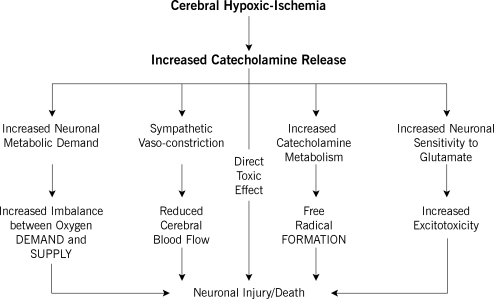
Effects of catecholamines during cerebral hypoxic ischemia. (Reproduced with permission of Oxford University Press. Ma D, et al. Br Med Bull. 2005;71:77-92.9)
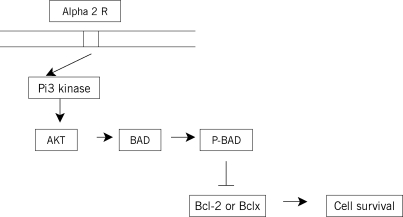
Possible mechanism by which brimonidine increases ganglion cell survival. Activation of α2-receptors by brimonidine activates Pi3 kinase, which subsequently activates AKT (protein kinase B). This phosphorylates Bcl-2–associated death promoter, which prevents it from interacting with the Bcl-2–associated protein and thus prevents apoptosis. (Reprinted with permission of Elsevier. Wheeler L, et al. Surv Ophthalmol. 2003;48(suppl 1):S47-S51.19) Pi3, phosphatidyl inositol-3; Bcl-2, B cell lymphoma-2; BAD, Bcl-2–associated death promoter; P-BAD, phosphorylated BAD; Bclx, Bcl-2–associated × protein.
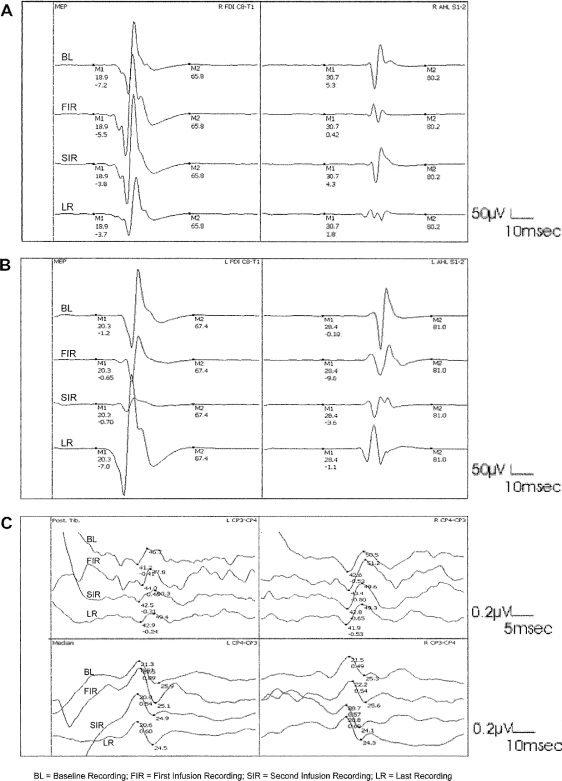
Transcranial motor-evoked potentials (TceMEPs) and somatosensory-evoked potentials (SSEPs) at different study recording periods. (A) Right first dorsal interossei (R FD1 C8-T1) and abductor hallucis longus (R AHL S1-2) TceMEP. (B) Left first dorsal interossei (L FD1 C8-T1) and abductor hallucis longus (L AHL S1-2) TceMEP. (C) Left (L) and right posterior tibial nerve (Post Tib) and median nerve (Median) SSEP. (Reprinted with permission of Lippincott Williams & Wilkins. Bala E, et al. Anesthesiology. 2008;109(3):417-425.40)
References
-
- Maze M., Tranquilli W. Alpha-2 adrenoceptor agonists: defining the role in clinical anesthesia. Anesthesiology. 1991;74((3)):581–605. - PubMed
-
- Maze M., Scarfini C., Cavaliere F. New agents for sedation in the intensive care unit. Crit Care Clin. 2001;17((4)):881–897. - PubMed
-
- Kamibayashi T., Maze M. Clinical uses of alpha2-adrenergic agonists. Anesthesiology. 2000;93((5)):1345–1349. - PubMed
-
- Khan Z. P., Ferguson C. N., Jones R. M. Alpha-2 and imidazoline receptor agonists: their pharmacology and therapeutic role. Anaesthesia. 1999;54((2)):146–165. - PubMed
-
- Wheeler L. A., Gil D. W., WoldeMussie E. Role of alpha-2 adrenergic receptors in neuroprotection and glaucoma. Surv Ophthalmol. 2001;45((suppl 3)):S291–S294. - PubMed
LinkOut - more resources
Full Text Sources