


Hepatitis C virus infection and hepatic stellate cell activation downregulate miR-29: miR-29 overexpression reduces hepatitis C viral abundance in culture
- PMID: 21606534
- PMCID: PMC3143452
- DOI: 10.1093/infdis/jir186
Hepatitis C virus infection and hepatic stellate cell activation downregulate miR-29: miR-29 overexpression reduces hepatitis C viral abundance in culture
Abstract
Background: Chronic hepatitis C virus (HCV)-induced liver fibrosis involves upregulation of transforming growth factor (TGF)-β and subsequent hepatic stellate cell (HSC) activation. MicroRNAs (miRNAs) regulate HCV infection and HSC activation.
Methods: TaqMan miRNA profiling identified 12 miRNA families differentially expressed between chronically HCV-infected human livers and uninfected controls. To identify pathways affected by miRNAs, we developed a new algorithm (pathway analysis of conserved targets), based on the probability of conserved targeting.
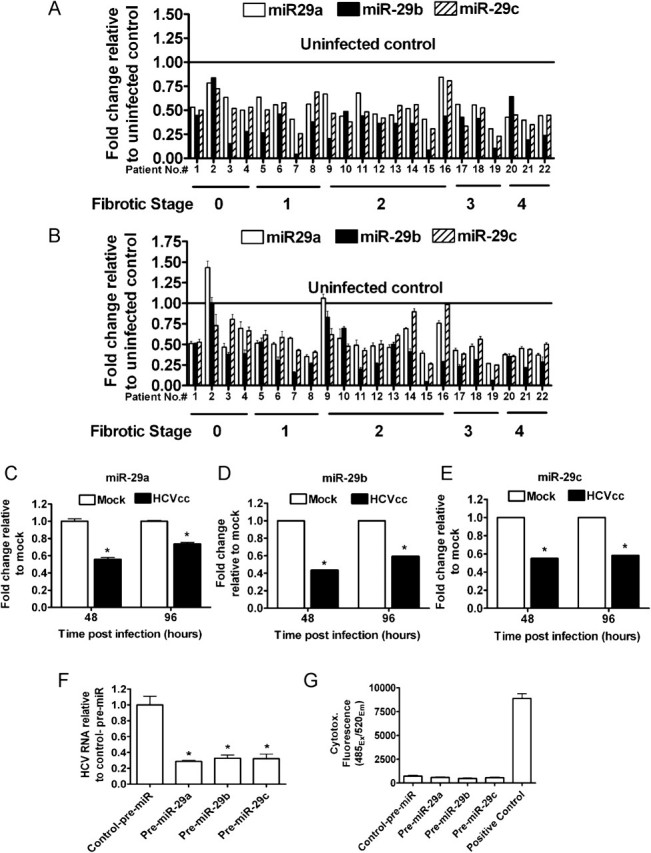
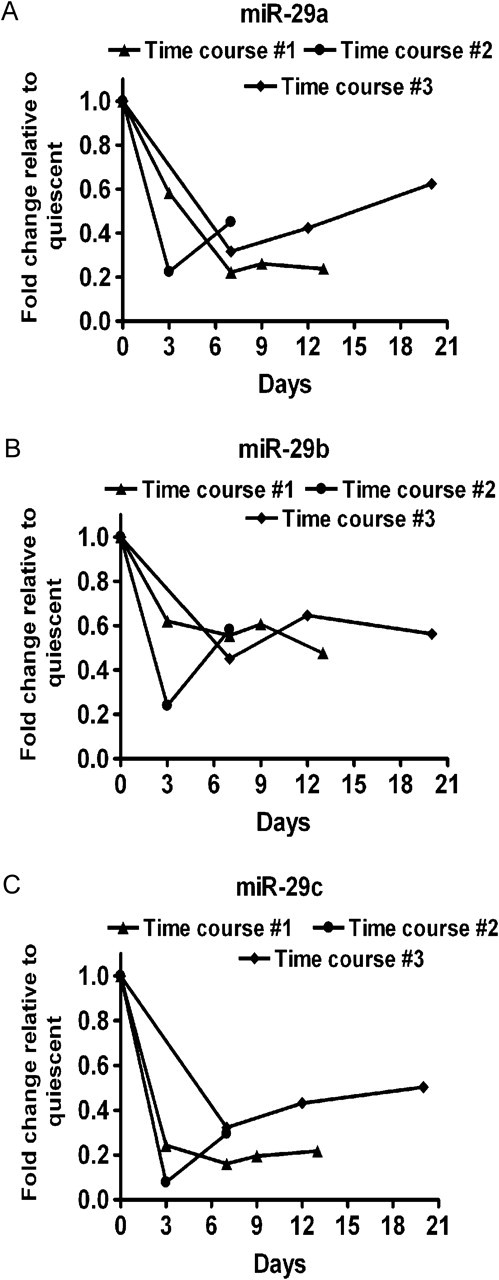
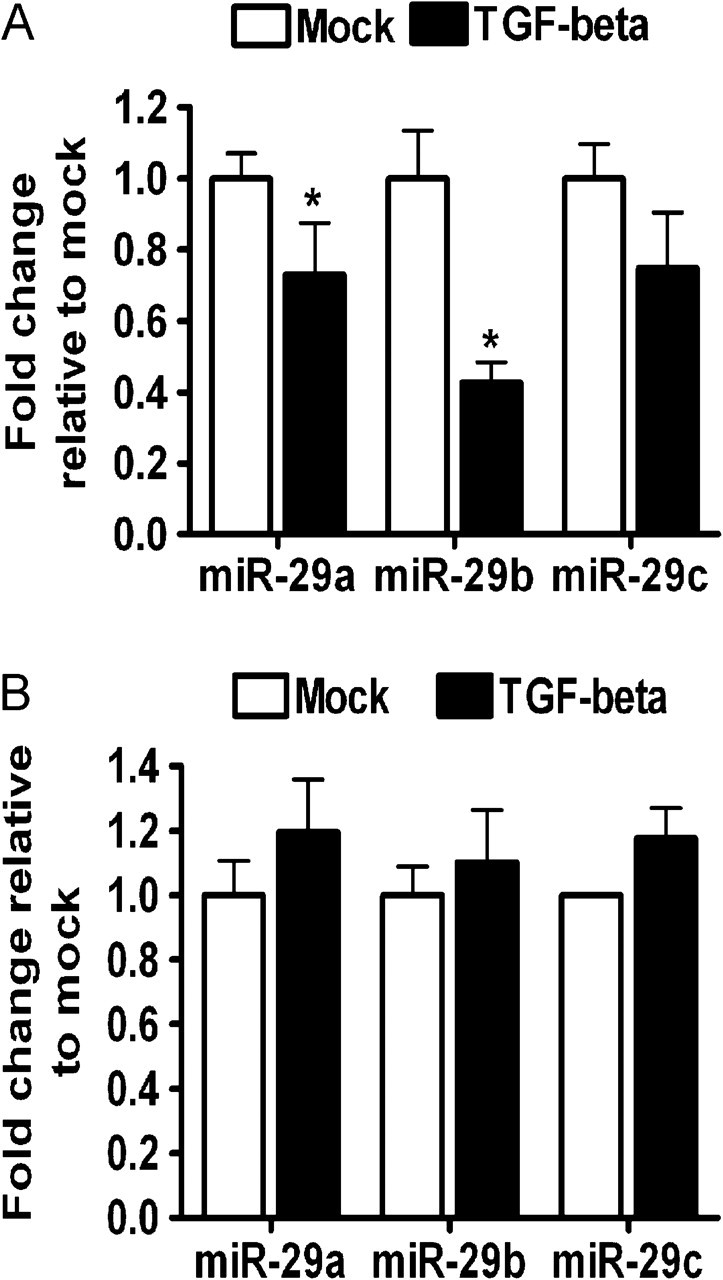
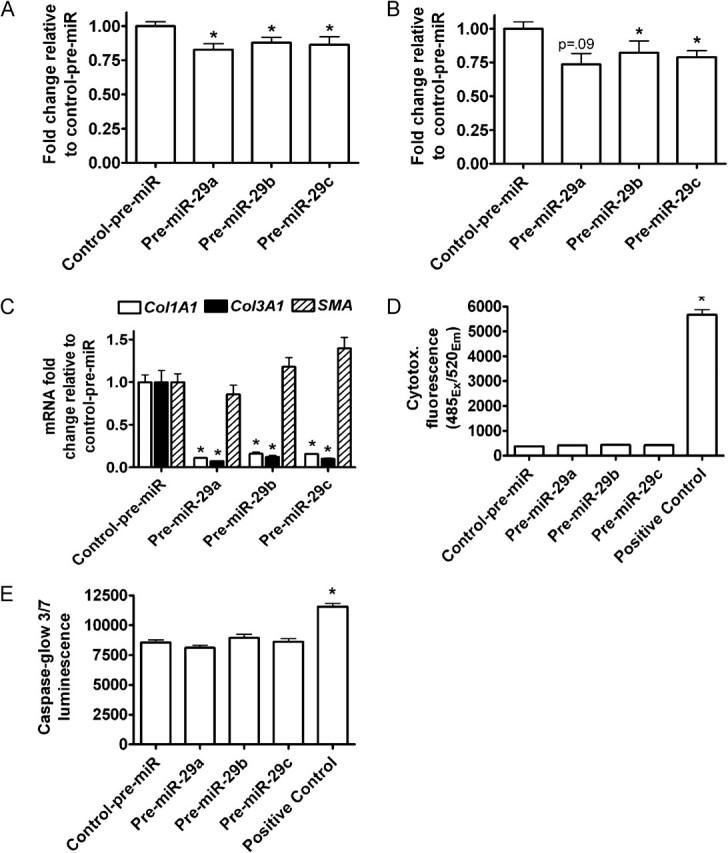
Results: This analysis suggested a role for miR-29 during HCV infection. Of interest, miR-29 was downregulated in most HCV-infected patients. miR-29 regulates expression of extracellular matrix proteins. In culture, HCV infection downregulated miR-29, and miR-29 overexpression reduced HCV RNA abundance. miR-29 also appears to play a role in HSCs. Hepatocytes and HSCs contribute similar amounts of miR-29 to whole liver. Both activation of primary HSCs and TGF-β treatment of immortalized HSCs downregulated miR-29. miR-29 overexpression in LX-2 cells decreased collagen expression and modestly decreased proliferation. miR-29 downregulation by HCV may derepress extracellular matrix synthesis during HSC activation.
Conclusions: HCV infection downregulates miR-29 in hepatocytes and may potentiate collagen synthesis by reducing miR-29 levels in activated HSCs. Treatment with miR-29 mimics in vivo might inhibit HCV while reducing fibrosis.
Figures
References
-
- Lewis BP, Shih IH, Jones-Rhoades MW, Bartel DP, Burge CB. Prediction of mammalian microRNA targets. Cell. 2003;115:787–98. - PubMed
-
- Lewis BP, Burge CB, Bartel DP. Conserved seed pairing, often flanked by adenosines, indicates that thousands of human genes are microRNA targets. Cell. 2005;120:15–20. - PubMed
-
- Pfeffer S, Baumert TF. Unravelling the importance of microRNAs during hepatitis C virus infection in the human liver. J Hepatol. 2009;51:606–9. - PubMed
Publication types
MeSH terms
Substances
Grants and funding
LinkOut - more resources
Full Text Sources
Other Literature Sources
