


The human visual cortex responds to gene therapy-mediated recovery of retinal function
- PMID: 21606598
- PMCID: PMC3104779
- DOI: 10.1172/JCI57377
The human visual cortex responds to gene therapy-mediated recovery of retinal function
Erratum in
- J Clin Invest. 2011 Jul 1;121(7):2945
Abstract
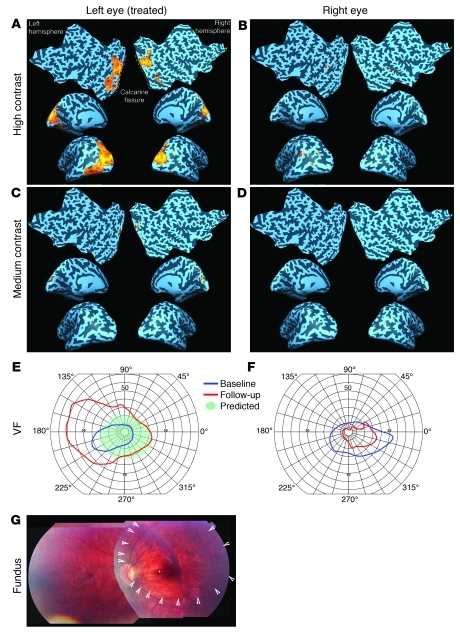
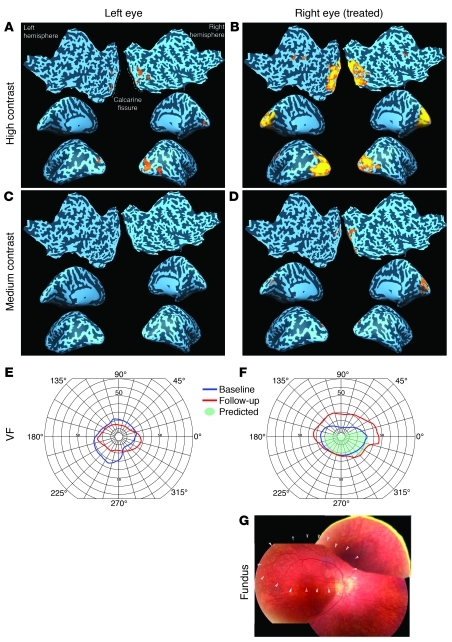
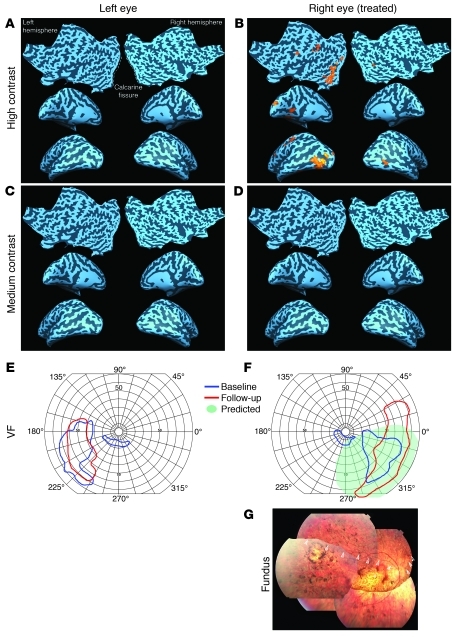
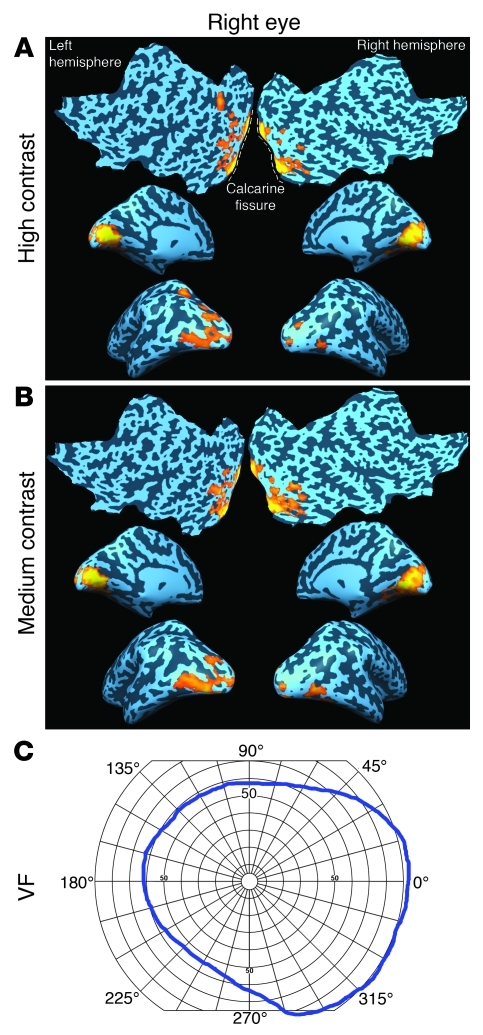
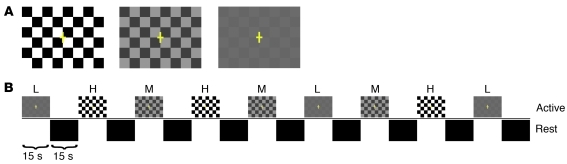
Leber congenital amaurosis (LCA) is a rare degenerative eye disease, linked to mutations in at least 14 genes. A recent gene therapy trial in patients with LCA2, who have mutations in RPE65, demonstrated that subretinal injection of an adeno-associated virus (AAV) carrying the normal cDNA of that gene (AAV2-hRPE65v2) could markedly improve vision. However, it remains unclear how the visual cortex responds to recovery of retinal function after prolonged sensory deprivation. Here, 3 of the gene therapy trial subjects, treated at ages 8, 9, and 35 years, underwent functional MRI within 2 years of unilateral injection of AAV2-hRPE65v2. All subjects showed increased cortical activation in response to high- and medium-contrast stimuli after exposure to the treated compared with the untreated eye. Furthermore, we observed a correlation between the visual field maps and the distribution of cortical activations for the treated eyes. These data suggest that despite severe and long-term visual impairment, treated LCA2 patients have intact and responsive visual pathways. In addition, these data suggest that gene therapy resulted in not only sustained and improved visual ability, but also enhanced contrast sensitivity.
Figures
Comment in
-
Spotlight on childhood blindness.J Clin Invest. 2011 Jun;121(6):2145-9. doi: 10.1172/JCI58300. Epub 2011 May 23. J Clin Invest. 2011. PMID: 21606601 Free PMC article.
References
-
- Marlhens F, et al. Mutations in RPE65 cause Leber’s congenital amaurosis. . Nature Genetics. 1997;17(2):139–141. - PubMed
Publication types
MeSH terms
Substances
Grants and funding
LinkOut - more resources
Full Text Sources
Other Literature Sources
Medical
Research Materials
