. 2011 Aug 19;6(8):837-44.
doi: 10.1021/cb200039s. Epub 2011 Jun 16.

Protease-resistant peptide ligands from a knottin scaffold library

Affiliations

Protease-resistant peptide ligands from a knottin scaffold library

Jennifer A Getz et al. ACS Chem Biol. .

Abstract

Peptides within the knottin family have been shown to possess inherent stability, making them attractive scaffolds for the development of therapeutic and diagnostic agents. Given its remarkable stability to proteases, the cyclic peptide kalata B1 was employed as a scaffold to create a large knottin library displayed on the surface of E. coli. A library exceeding 10(9) variants was constructed by randomizing seven amino acids within a loop of the kalata B1 scaffold and screened using fluorescence-activated cell sorting to identify peptide ligands specific for the active site of human thrombin. Refolded thrombin binders exhibited high nanomolar affinities in solution and slow dissociation rates and were able to inhibit thrombin's enzymatic activity. Importantly, 80% of a knottin-based thrombin inhibitor remained intact after a 2 h incubation both with trypsin and with chymotrypsin, demonstrating that modifying the kalata B1 sequence did not compromise its stability properties. In addition, the knottin variant mediated 20-fold enhanced affinity for thrombin, when compared to the same seven residue binding epitope constrained by a single disulfide bond. Our results indicate that peptide libraries derived from the kalata B1 scaffold can yield high-affinity protein ligands that retain the remarkable protease resistance associated with the parent scaffold. More generally, this strategy may prove useful in the development of stable peptide ligands suitable for in vivo applications.


Figures
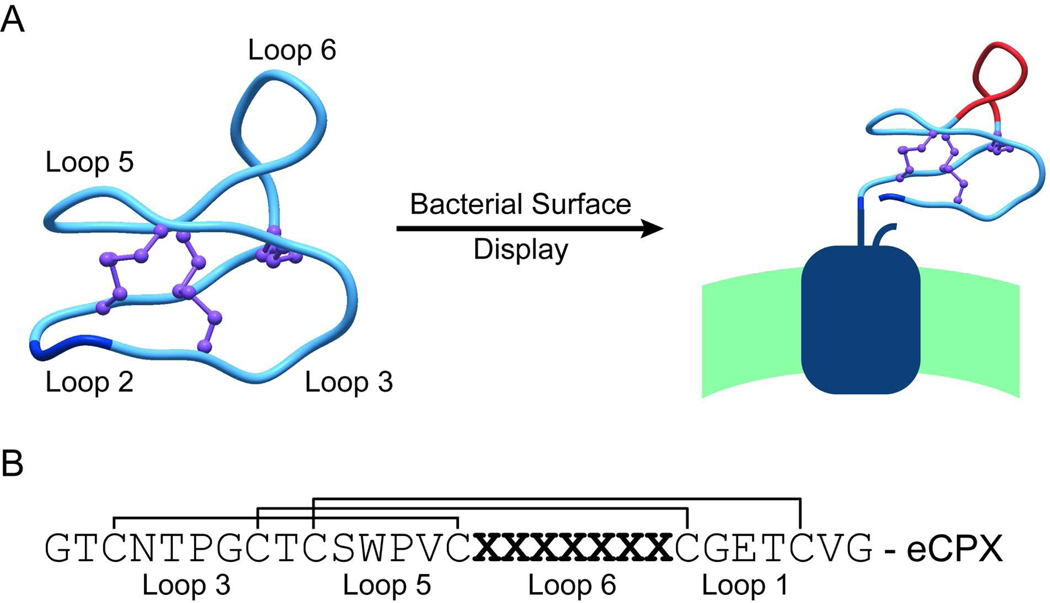
Figure 1
Figure 1
Construction of a library of kalata B1 variants displayed on the cell surface of E. coli. A) The backbone of the cyclic kalata B1 peptide (PDB: 1NB1) was broken in loop two between two glycine residues (shown in dark blue) and fused to the display scaffold eCPX. Loop six was randomized to form the library (shown in red). B) Sequence of the kalata B1 peptide shown with the disulfide bond connectivity, the randomized region, and loop designations.
Figure 2
Figure 2
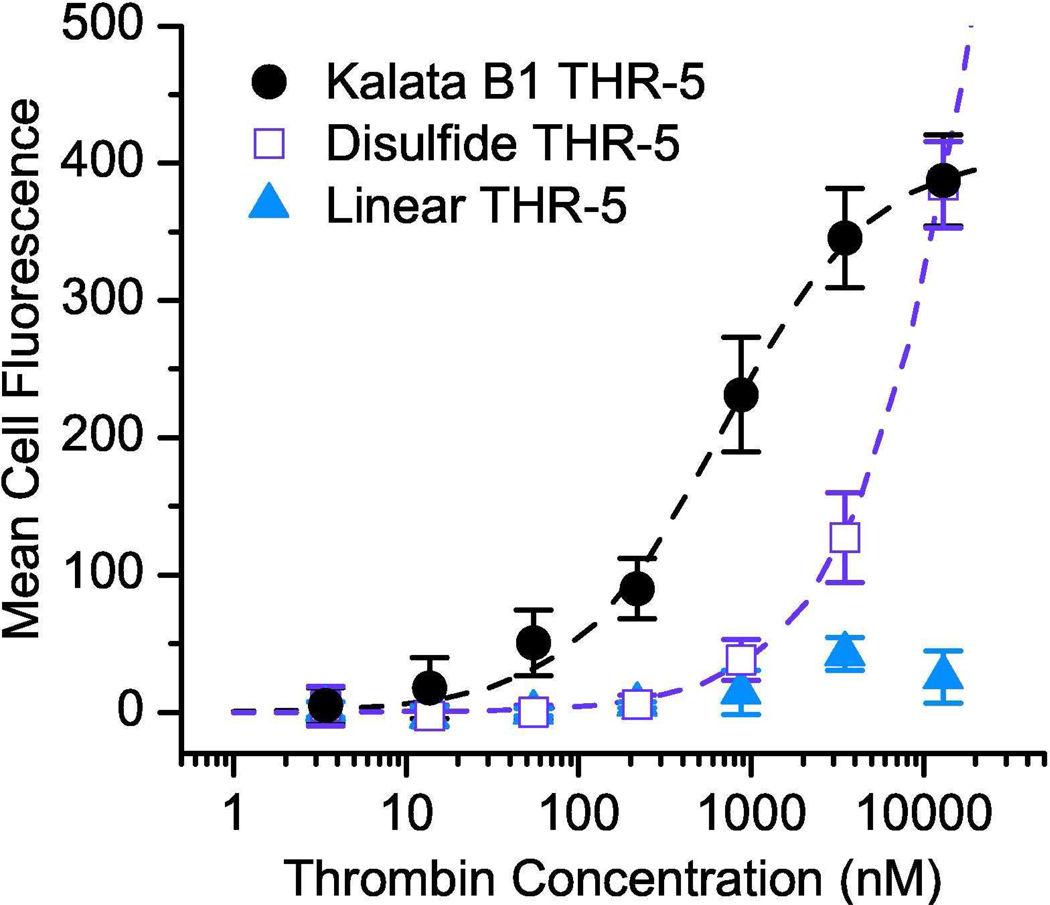
Measurement of the contribution of the kalata B1 scaffold to the apparent binding affinity for thrombin. The bacterial display clone THR-5 exhibited a KDApp = 670 nM, corresponding to an affinity at least 20-fold greater than that of the same peptide in a single-disulfide constrained loop conformation. The epitope as a linear peptide did not appreciably bind at any of the thrombin concentrations that were assayed.
Figure 3
Figure 3
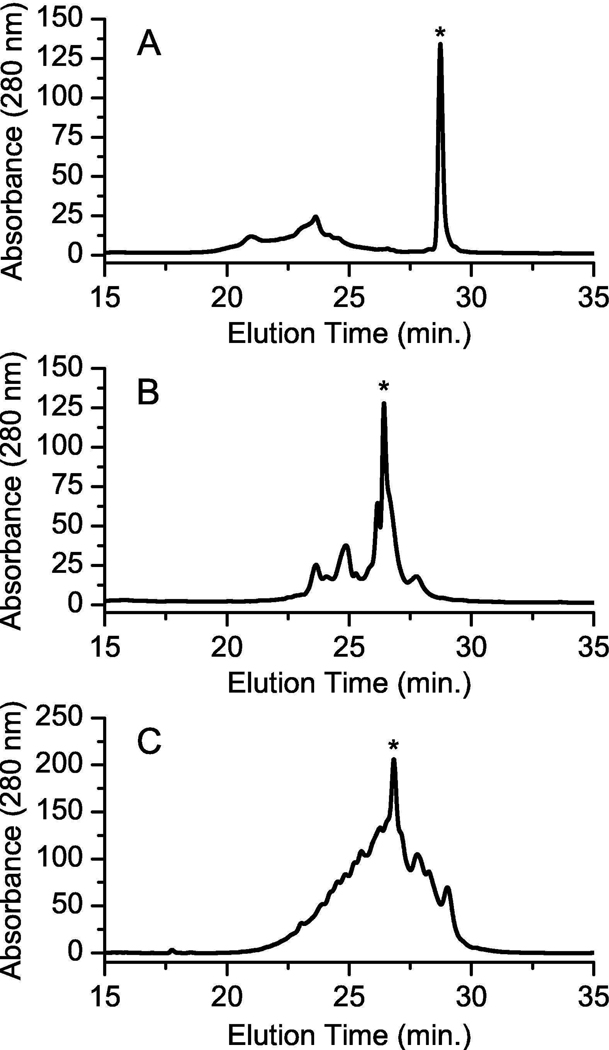
Purification of the refolded kalata B1 peptides. HPLC absorbance traces for A) kalata B1, B) THR-5, and C) THR-29. The asterisk indicates the refolded product characterized using surface plasmon resonance and trypsin stability assays.
Figure 4
Figure 4
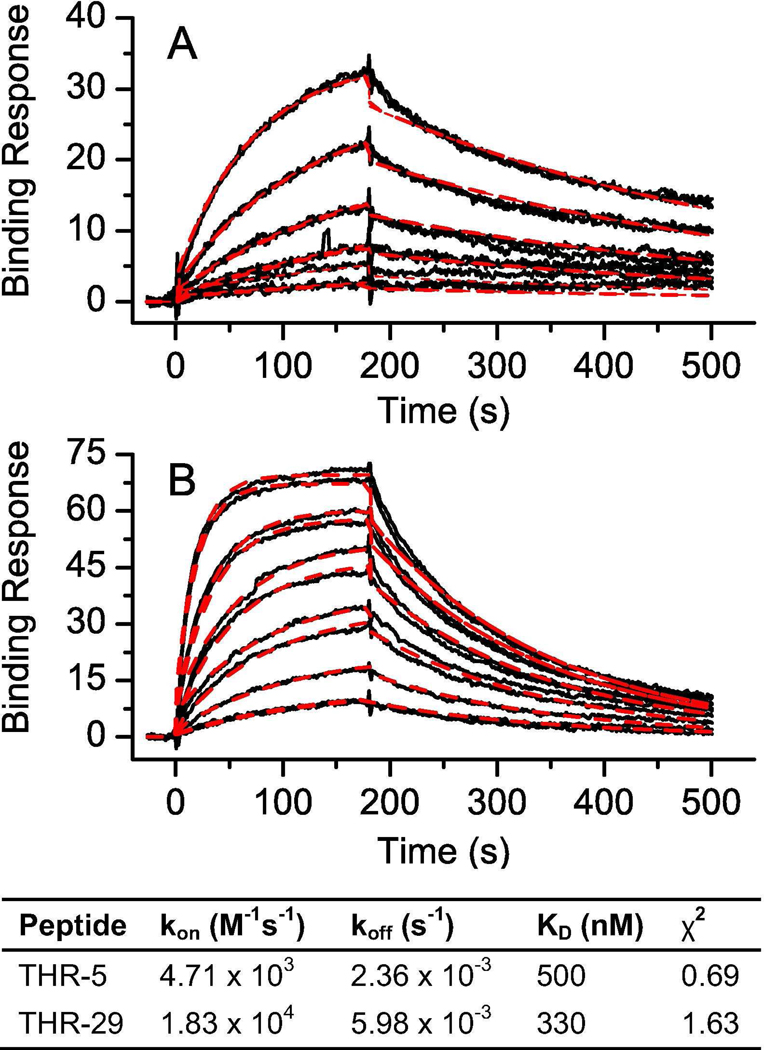
Measurement of thrombin-binding knottin affinity. Response curves were measured using surface plasmon resonance for A) THR-5 and B) THR-29 binding to thrombin immobilized on a CM5 chip. The raw data are shown as a solid black line with the fit (1:1 Langmuir binding model) as a dashed red line. A two-fold dilution series from 78 nM to 2.5 µM was used for each of the peptides with each series run in duplicate. The kinetic values calculated from each of the fits (association rate constant, dissociation rate constant, and KD) are given.
Figure 5
Figure 5
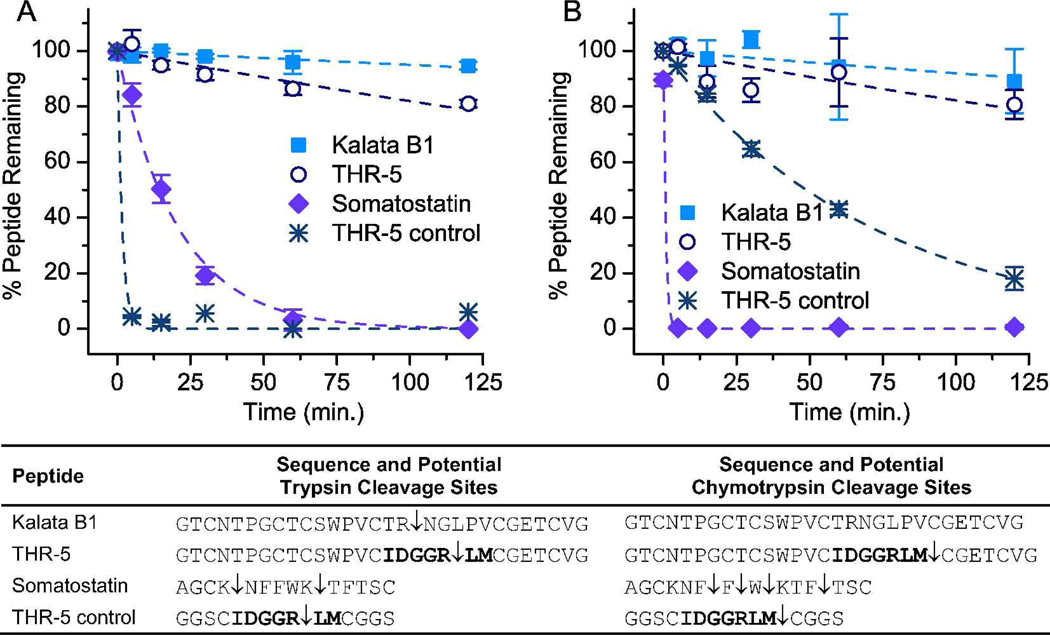
Trypsin and chymotrypsin resistance of a thrombin-specific knottin THR-5. The acyclic kalata B1 parent, THR-5, somatostatin, and a cyclic, control peptide corresponding to the binding loop of THR-5 were incubated with A) trypsin and B) chymotrypsin and analyzed by LC/MS. The sequences for each of the peptides are listed along with the potential cleavage sites. Kalata B1 was stable over the two hour incubation period with both proteases, and 80% of THR-5 remained intact. Somatostatin and the THR-5 control were readily degraded by both trypsin and chymotrypsin. The curves were fit to a second-order reaction model and the experiments were performed in duplicate.

References

    1. Pichereau C, Allary C. Therapeutic peptides under the spotlight. Eur. Biopharm. Rev. 2005:88–91.
    1. Sato AK, Viswanathan M, Kent RB, Wood CR. Therapeutic peptides: technological advances driving peptides into development. Curr. Opin. Biotechnol. 2006;17:638–642. - PubMed
    1. Werle M, Bernkop-Schnürch A. Strategies to improve plasma half life time of peptide and protein drugs. Amino Acids. 2006;30:351–367. - PubMed
    1. McGregor DP. Discovering and improving novel peptide therapeutics. Curr. Opin. Pharm. 2008;8:616–619. - PubMed
    1. Stromstedt AA, Pasupuleti M, Schmidtchen A, Malmsten M. Evaluation of strategies for improving proteolytic resistance of antimicrobial peptides by using variants of EFK17, an internal segment of LL-37. Antimicrob. Agents Chemother. 2009;53:593–602. - PMC - PubMed

Publication types

MeSH terms