


Are workplace health promotion programs effective at improving presenteeism in workers? A systematic review and best evidence synthesis of the literature
- PMID: 21615940
- PMCID: PMC3123596
- DOI: 10.1186/1471-2458-11-395
Are workplace health promotion programs effective at improving presenteeism in workers? A systematic review and best evidence synthesis of the literature
Abstract
Background: Presenteeism is highly prevalent and costly to employers. It is defined as being present at work, but limited in some aspect of job performance by a health problem.Workplace health promotion (WHP) is a common strategy used to enhance on-the-job productivity. The primary objective is to determine if WHP programs are effective in improving presenteeism. The secondary objectives are to identify characteristics of successful programs and potential risk factors for presenteeism.
Methods: The Cochrane Library, Medline, and other electronic databases were searched from 1990 to 2010. Reference lists were examined, key journals were hand-searched and experts were contacted. Included studies were original research that contained data on at least 20 participants (≥ 18 years of age), and examined the impacts of WHP programs implemented at the workplace. The Effective Public Health Practice Project Tool for Quantitative Studies was used to rate studies. 'Strong' and 'moderate' studies were abstracted into evidence tables, and a best evidence synthesis was performed. Interventions were deemed successful if they improved the outcome of interest. Their program components were identified, as were possible risk factors contributing to presenteeism.
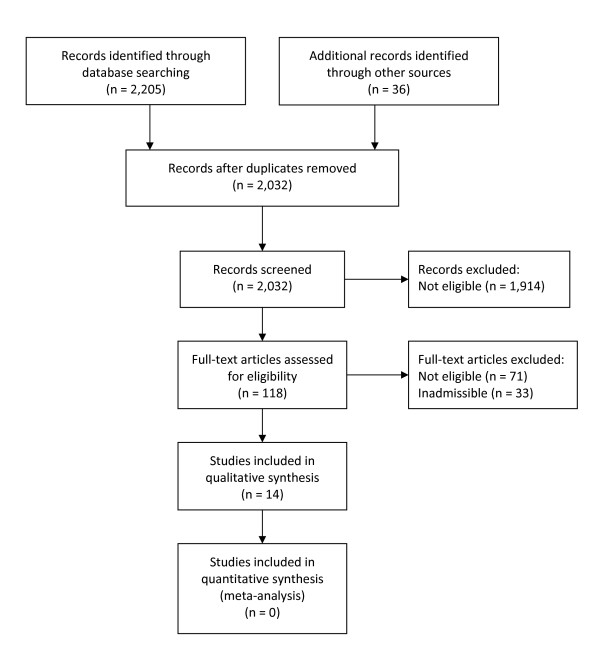
Results: After 2,032 titles and abstracts were screened, 47 articles were reviewed, and 14 were accepted (4 strong and 10 moderate studies). These studies contained preliminary evidence for a positive effect of some WHP programs. Successful programs offered organizational leadership, health risk screening, individually tailored programs, and a supportive workplace culture. Potential risk factors contributing to presenteeism included being overweight, a poor diet, a lack of exercise, high stress, and poor relations with co-workers and management.
Limitations: This review is limited to English publications. A large number of reviewed studies (70%) were inadmissible due to issues of bias, thus limiting the amount of primary evidence. The uncertainties surrounding presenteeism measurement is of significant concern as a source of bias.
Conclusions: The presenteeism literature is young and heterogeneous. There is preliminary evidence that some WHP programs can positively affect presenteeism and that certain risk factors are of importance. Future research would benefit from standard presenteeism metrics and studies conducted across a broad range of workplace settings.
Comment in
-
Organizational leadership, health risk screening, individually tailored programs, and supportive workplace culture might reduce presenteeism.Aust Occup Ther J. 2012 Jun;59(3):247-8. doi: 10.1111/j.1440-1630.2012.01019.x. Aust Occup Ther J. 2012. PMID: 22690776 No abstract available.
References
-
- Burton WN, Conti DH, Chen CY. The role of health risk factors and disease on worker productivity. J Occup Environ Health. 1999;41:863–877. - PubMed
-
- Loeppke R, Hymel PA, Lofland JH, Pizzi LT, Konicki DL, Anstadt GW, Baase C, Fortuna J, Scharf T. American College of Occupational and Environmental Medicine. Health-related workplace productivity measurement: general and migraine-specific recommendations from the ACOEM Expert Panel. J Occup Environ Med. 2003;45(4):349–359. doi: 10.1097/01.jom.0000063619.37065.e2. - DOI - PubMed
-
- Escorpizo R, Bombardier C, Boonen A, Hazes JMW, Lacaille D, Strand V, Beaton D. Worker productivity outcome measures in arthritis. J Rheum. 2007;34(6):1372–1380. - PubMed
Publication types
MeSH terms
LinkOut - more resources
Full Text Sources
Medical
