. 2011 May 30:11:65.
doi: 10.1186/1471-230X-11-65.

Most bowel cancer symptoms do not indicate colorectal cancer and polyps: a systematic review

Affiliations

Most bowel cancer symptoms do not indicate colorectal cancer and polyps: a systematic review

Barbara-Ann Adelstein et al. BMC Gastroenterol. .

Abstract

Background: Bowel symptoms are often considered an indication to perform colonoscopy to identify or rule out colorectal cancer or precancerous polyps. Investigation of bowel symptoms for this purpose is recommended by numerous clinical guidelines. However, the evidence for this practice is unclear. The objective of this study is to systematically review the evidence about the association between bowel symptoms and colorectal cancer or polyps.

Methods: We searched the literature extensively up to December 2008, using MEDLINE and EMBASE and following references. For inclusion in the review, papers from cross sectional, case control and cohort studies had to provide a 2×2 table of symptoms by diagnosis (colorectal cancer or polyps) or sufficient data from which that table could be constructed. The search procedure, quality appraisal, and data extraction was done twice, with disagreements resolved with another reviewer. Summary ROC analysis was used to assess the diagnostic performance of symptoms to detect colorectal cancer and polyps.

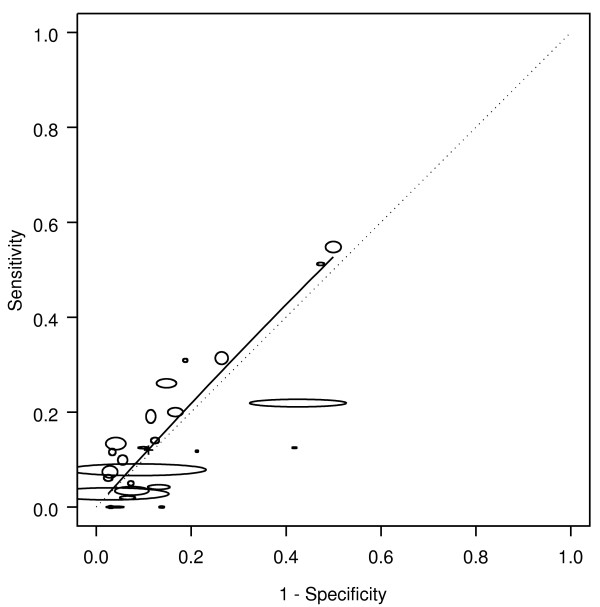
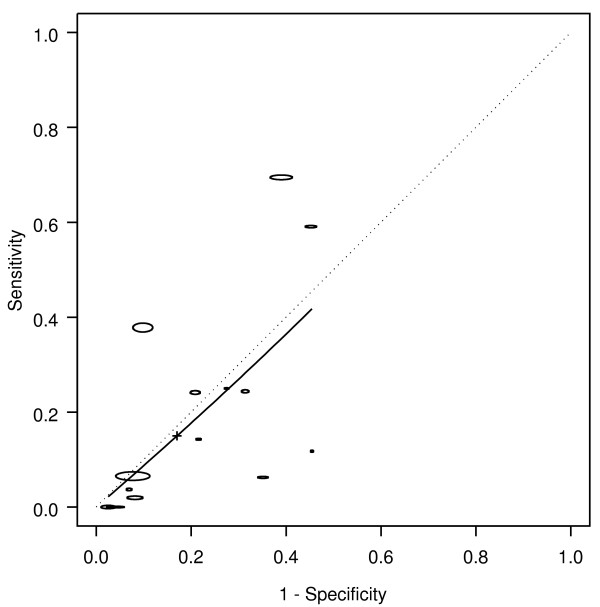
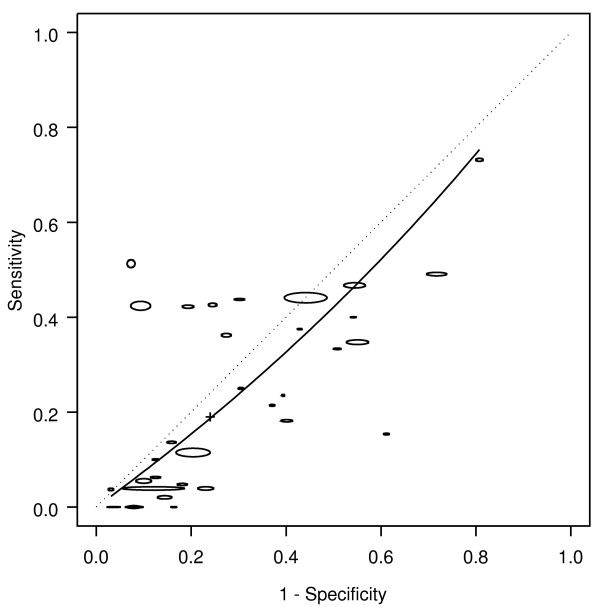
Results: Colorectal cancer was associated with rectal bleeding (AUC 0.66; LR+ 1.9; LR- 0.7) and weight loss (AUC 0.67, LR+ 2.5, LR- 0.9). Neither of these symptoms was associated with the presence of polyps. There was no significant association of colorectal cancer or polyps with change in bowel habit, constipation, diarrhoea or abdominal pain. Neither the clinical setting (primary or specialist care) nor study type was associated with accuracy.Most studies had methodological flaws. There was no consistency in the way symptoms were elicited or interpreted in the studies.

Conclusions: Current evidence suggests that the common practice of performing colonoscopies to identify cancers in people with bowel symptoms is warranted only for rectal bleeding and the general symptom of weight loss. Bodies preparing guidelines for clinicians and consumers to improve early detection of colorectal cancer need to take into account the limited value of symptoms.


Figures
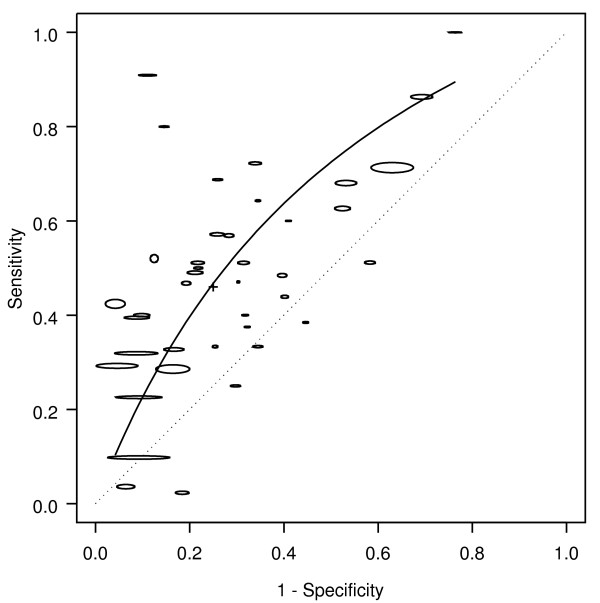
Figure 1
Figure 1
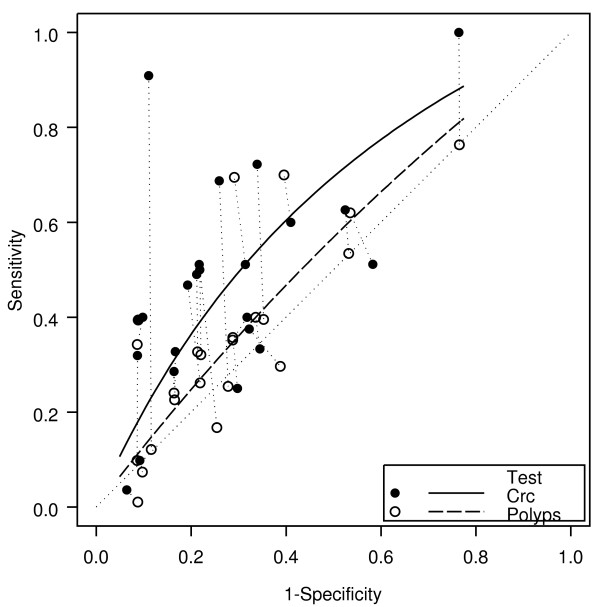
Bleeding: SROC for cancer. SROC = Summary ROC crc = colorectal cancer. The horizontal and vertical dimensions of the each ellipse are proportional to the square root of the number of non-diseased and diseased respectively. + shows the expected sensitivity and 1-specificity for the curve. The diagonal line joining (0,0) and (1,1) represents an ROC of no diagnostic value.
Figure 2
Figure 2
Bleeding: cancer and polyp comparison. crc = colorectal cancer. The horizontal and vertical dimensions of the each ellipse are proportional to the square root of the number of non-diseased and diseased respectively. + shows the expected sensitivity and 1-specificity for the curve. The paired points (one black and one open joined by a dotted line) represent a within study comparison. The diagonal line joining (0,0) and (1,1) represents an ROC of no diagnostic value.
Figure 3
Figure 3
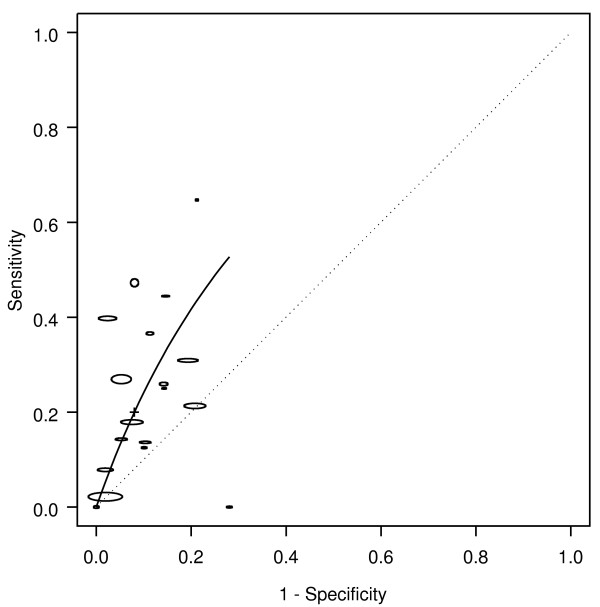
Weight loss: SROC for cancer. SROC = Summary ROC. crc = colorectal cancer. The horizontal and vertical dimensions of the each ellipse are proportional to the square root of the number of non-diseased and diseased respectively. + shows the expected sensitivity and 1-specificity for the curve. The diagonal line joining (0,0) and (1,1) represents an ROC of no diagnostic value.
Figure 4
Figure 4
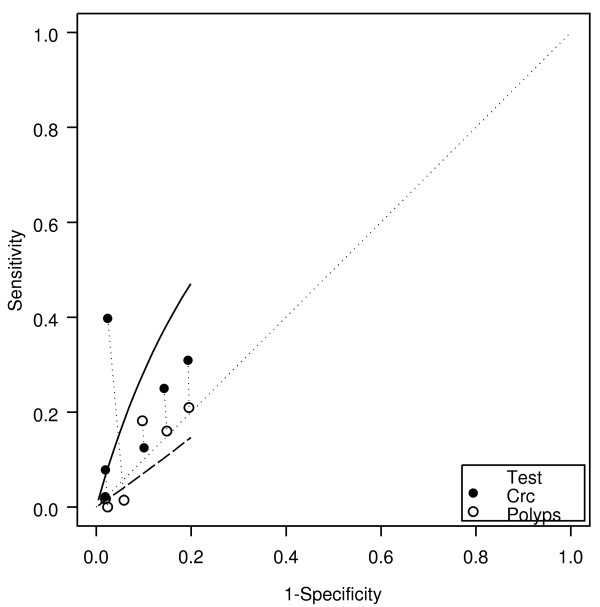
Weight loss: cancer and polyp comparison. crc = colorectal cancer. The horizontal and vertical dimensions of the each ellipse are proportional to the square root of the number of non-diseased and diseased respectively. + shows the expected sensitivity and 1-specificity for the curve. The paired points (one black and one open joined by a dotted line) represent a within study comparison. The diagonal line joining (0,0) and (1,1) represents an ROC of no diagnostic value.
Figure 5
Figure 5
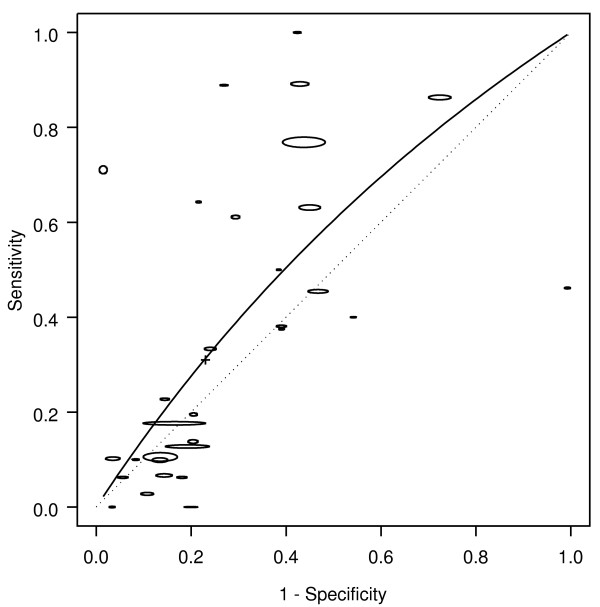
Change in bowel habit: SROC for cancer. SROC = Summary ROC. crc = colorectal cancer. The horizontal and vertical dimensions of the each ellipse are proportional to the square root of the number of non-diseased and diseased respectively. + shows the expected sensitivity and 1-specificity for the curve. The diagonal line joining (0,0) and (1,1) represents an ROC of no diagnostic value.
Figure 6
Figure 6
Constipation: SROC for cancer. SROC = Summary ROC. crc = colorectal cancer. The horizontal and vertical dimensions of the each ellipse are proportional to the square root of the number of non-diseased and diseased respectively. + shows the expected sensitivity and 1-specificity for the curve. The diagonal line joining (0,0) and (1,1) represents an ROC of no diagnostic value.
Figure 7
Figure 7
Diarrhoea: SROC for cancer. SROC = Summary ROC. crc = colorectal cancer. The horizontal and vertical dimensions of the each ellipse are proportional to the square root of the number of non-diseased and diseased respectively. + shows the expected sensitivity and 1-specificity for the curve. The diagonal line joining (0,0) and (1,1) represents an ROC of no diagnostic value.
Figure 8
Figure 8
Abdominal pain: SROC for cancer. SROC = Summary ROC. crc = colorectal cancer. The horizontal and vertical dimensions of the each ellipse are proportional to the square root of the number of non-diseased and diseased respectively. + shows the expected sensitivity and 1-specificity for the curve. The diagonal line joining (0,0) and (1,1) represents an ROC of no diagnostic value.

References

    1. Cooper N, Westlake S. Cancer incidence and mortality: trends in the United Kingdom and constituent countries, 1993 to 2004. Health Statistics Quarterly. 2008;Summer(38):33–46. - PubMed
    1. Majumdar SR, Fletcher RH, Evans AT. How does colorectal cancer present? Symptoms, duration, and clues to location. Am J Gastroenterol. 1999;94(10):3039–3045. doi: 10.1111/j.1572-0241.1999.01454.x. - DOI - PubMed
    1. Mulcahy HE, O'Donoghue DP. Duration of colorectal cancer symptoms and survival: the effect of confounding clinical and pathological variables. Eur J Cancer. 1997;33(9):1461–1467. doi: 10.1016/S0959-8049(97)00089-0. - DOI - PubMed
    1. Dent OF, Goulston KJ, Zubrzycki J, Chapuis PH. Bowel symptoms in an apparently well population. Dis Colon Rectum. 1986;29(4):243–247. doi: 10.1007/BF02553027. - DOI - PubMed
    1. Goulston K, Chapuis P, Dent O, Bokey L. Significance of bowel symptoms. Med J Aust. 1987;146(12):631–633. - PubMed

Publication types