


Event-related distress in kidney disease patients
- PMID: 21624943
- PMCID: PMC3350338
- DOI: 10.1093/ndt/gfr305
Event-related distress in kidney disease patients
Abstract
Background: Non-dialysis-dependent chronic kidney disease (CKD) and dialysis-dependent Stage 5 CKD (CKD5) are associated with a significant physical and psychosocial burden. Little is known, however, about the impact of stressful life events on CKD and CKD5 patients. This study aimed to determine the prevalence of stressful life events in CKD and CKD5 patients and identify the factors correlated with high levels of event-related distress.
Methods: This cross-sectional study's sample consisted of 181 patients (91 with non-dialysis-dependent CKD Stages 4 and 5, 90 with CKD5) who filled out the Impact of Event Scale (IES), which measures subjective distress related to stressful life events. Other measures included scores from the Medical Outcomes Study Short Form-36, Patient Health Questionnaire-9 (PHQ-9) and Dialysis Symptom Index (DSI).
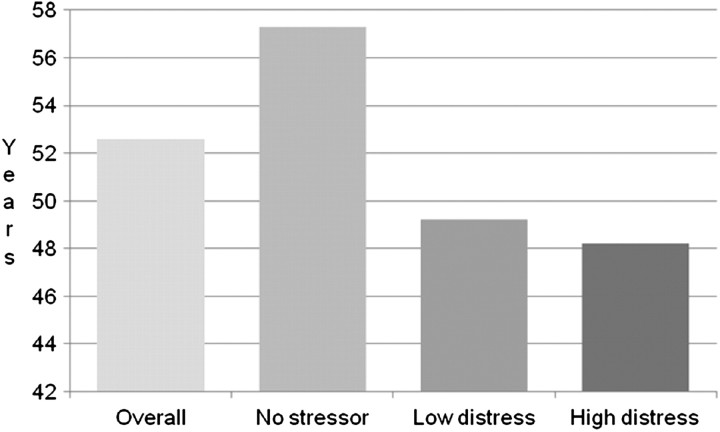
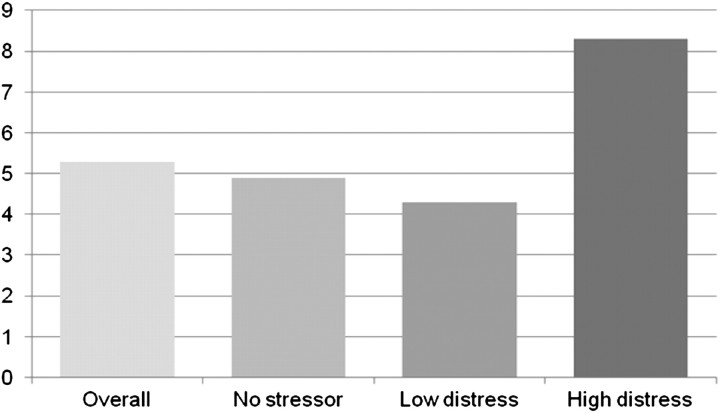
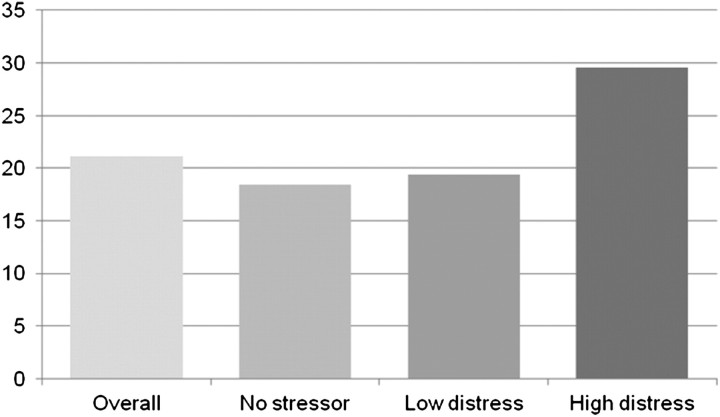
Results: One hundred and three subjects reported stressors on the IES. Almost half the stressors (49.5%) related to personal health; the rest fell into other categories. There were significant differences between the no stressor, low event-related distress and high event-related distress groups in age (P < 0.001), PHQ-9 score (P < 0.001) and DSI score (P = 0.002). After adjustment, PHQ-9 score was associated with high event-related distress [odds ratio (OR) 1.20, 95% confidence interval (CI) 1.10-1.32], as was DSI score (OR 1.04, 95% CI 1.02-1.07) in a separate model.
Conclusions: Event-related distress is common in CKD and CKD5 patients. High event-related distress is associated with worse depressive symptoms and greater somatic and emotional symptom burden, even with adjustments for age and gender. The renal practitioner may need to address patients' event-related distress in order to provide optimal care.
Figures
References
-
- Cohen SD, Norris L, Acquaviva K, et al. Screening, diagnosis, and treatment of depression in patients with end-stage renal disease. Clin J Am Soc Nephrol. 2007;2:1332–1342. - PubMed
-
- Kimmel PL, Cohen SD, Peterson RA. Depression in patients with chronic renal disease: where are we going? J Ren Nutr. 2008;18:99–103. - PubMed
-
- Kimmel PL, Thamer M, Richard CM, et al. Psychiatric illness in patients with end-stage renal disease. Am J Med. 1998;105:214–221. - PubMed
-
- Perlman RL, Finkelstein FO, Liu L, et al. Quality of life in chronic kidney disease (CKD): a cross-sectional analysis in the Renal Research Institute-CKD study. Am J Kidney Dis. 2005;45:658–666. - PubMed
-
- Drayer RA, Piraino B, Reynolds CF, 3rd, et al. Characteristics of depression in hemodialysis patients: symptoms, quality of life and mortality risk. Gen Hosp Psychiatry. 2006;28:306–312. - PubMed
Publication types
MeSH terms
Grants and funding
LinkOut - more resources
Full Text Sources
Medical
