


Dysfunctional CFTR alters the bactericidal activity of human macrophages against Pseudomonas aeruginosa
- PMID: 21625641
- PMCID: PMC3097223
- DOI: 10.1371/journal.pone.0019970
Dysfunctional CFTR alters the bactericidal activity of human macrophages against Pseudomonas aeruginosa
Abstract
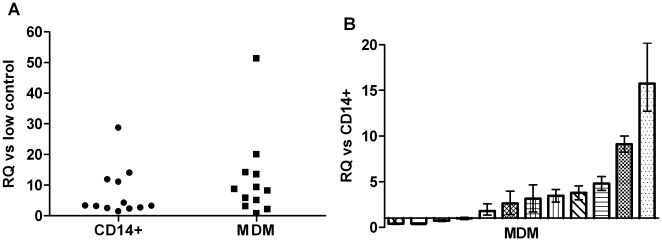
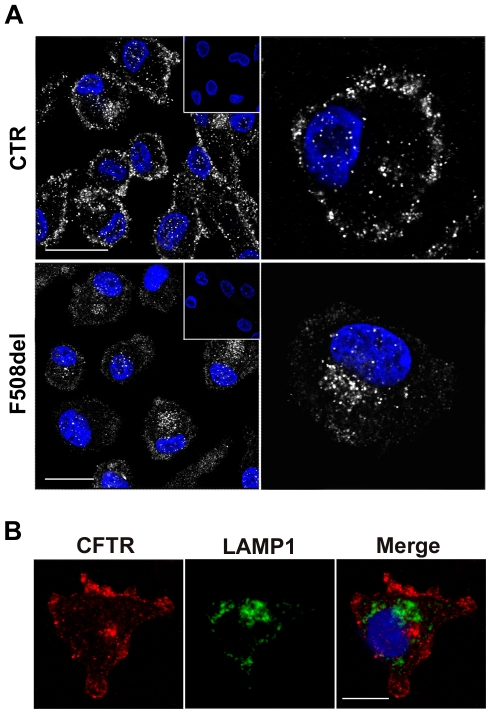
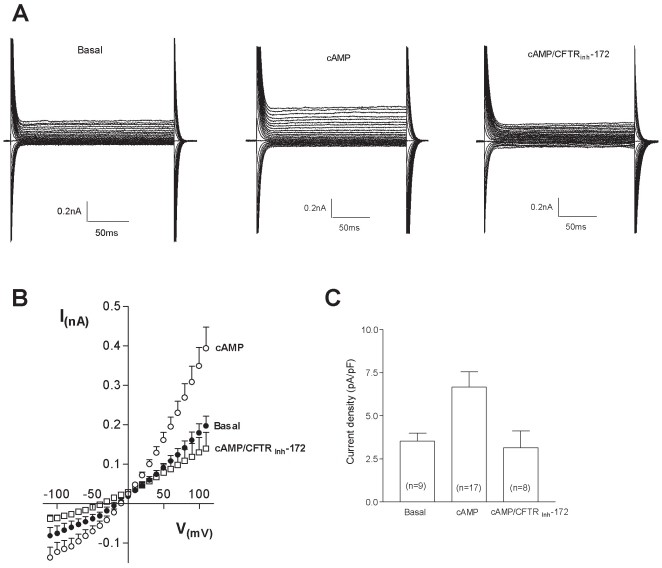
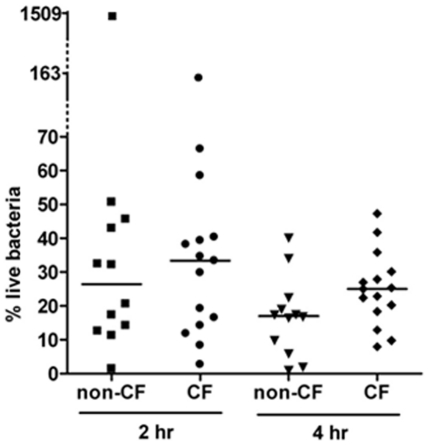
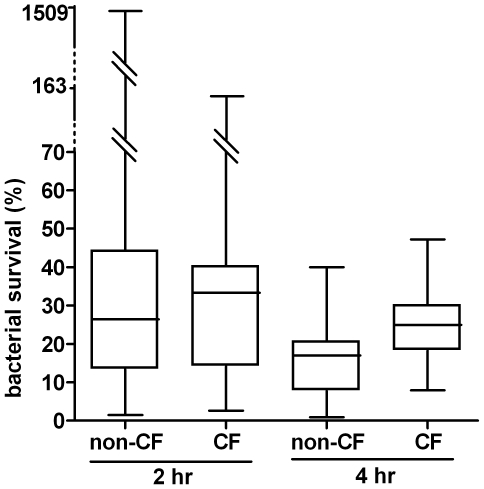
Chronic inflammation of the lung, as a consequence of persistent bacterial infections by several opportunistic pathogens represents the main cause of mortality and morbidity in cystic fibrosis (CF) patients. Mechanisms leading to increased susceptibility to bacterial infections in CF are not completely known, although the involvement of cystic fibrosis transmembrane conductance regulator (CFTR) in microbicidal functions of macrophages is emerging. Tissue macrophages differentiate in situ from infiltrating monocytes, additionally, mature macrophages from different tissues, although having a number of common activities, exhibit variation in some molecular and cellular functions. In order to highlight possible intrinsic macrophage defects due to CFTR dysfunction, we have focused our attention on in vitro differentiated macrophages from human peripheral blood monocytes. Here we report on the contribution of CFTR in the bactericidal activity against Pseudomonas aeruginosa of monocyte derived human macrophages. At first, by real time PCR, immunofluorescence and patch clamp recordings we demonstrated that CFTR is expressed and is mainly localized to surface plasma membranes of human monocyte derived macrophages (MDM) where it acts as a cAMP-dependent chloride channel. Next, we evaluated the bactericidal activity of P. aeruginosa infected macrophages from healthy donors and CF patients by antibiotic protection assays. Our results demonstrate that control and CF macrophages do not differ in the phagocytic activity when infected with P. aeruginosa. Rather, although a reduction of intracellular live bacteria was detected in both non-CF and CF cells, the percentage of surviving bacteria was significantly higher in CF cells. These findings further support the role of CFTR in the fundamental functions of innate immune cells including eradication of bacterial infections by macrophages.
Conflict of interest statement
Figures
References
-
- Kerem B, Rommens JM, Buchanam JA, Markiewicz D, Cox TK, et al. Identification of the cystic fibrosis gene: genetic analysis. Science. 1989;245:1073–1080. - PubMed
-
- Riordan JR, Rommens JM, Kerem B, Alon N, Rozmahel R, et al. Identification of the cystic fibrosis gene: cloning and characterization of complementary DNA. Science. 1989;245:1066–1073. - PubMed
-
- Matsui H, Grubb BR, Tarran R, Randell SH, Gatzy JT, et al. Evidence for periciliary liquid layer depletion, not abnormal ion composition, in the pathogenesis of cystic fibrosis airways disease. Science. 1998;95:1005–1010. - PubMed
-
- Doring G, Gulbins E. Cystic fibrosis and innate immunity: how chloride channel mutations provoke lung disease. Cell Microbiol. 2008;11:208–216. - PubMed
Publication types
MeSH terms
Substances
LinkOut - more resources
Full Text Sources
Other Literature Sources
