


Susceptibility of Streptococcus pneumoniae to fluoroquinolones in Canada
- PMID: 21628545
- PMCID: PMC3147653
- DOI: 10.1128/AAC.00237-11
Susceptibility of Streptococcus pneumoniae to fluoroquinolones in Canada
Abstract
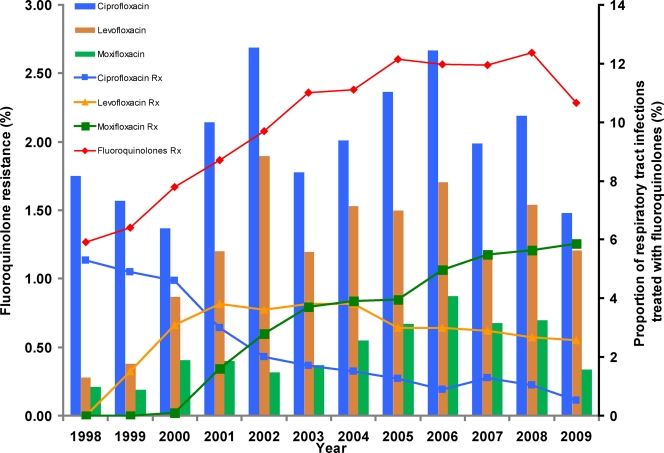
Ciprofloxacin, the first fluoroquinolone to be used to treat lower respiratory tract infections (LRTI), demonstrates poor potency against Streptococcus pneumoniae, and its use has been associated with the emergence of resistance. During the last decade, fluoroquinolones with enhanced in vitro activity against S. pneumoniae have replaced ciprofloxacin for the treatment of LRTI. Here, we analyzed the impact of more active fluoroquinolone usage on pneumococci by examining the fluoroquinolone usage, prevalence of fluoroquinolone resistance, and mutations in the genes that encode the major target sites for the fluoroquinolones (gyrA and parC) in pneumococcal isolates collected in Canada-wide surveillance. A total of 26,081 isolates were collected between 1998 and 2009. During this time period, total per capita outpatient use of fluoroquinolones increased from 64 to 96 prescriptions per 1,000 persons per year. The proportion of prescriptions for respiratory tract infection that were for fluoroquinolones increased from 5.9% to 10.7%, but the distribution changed: the proportion of prescriptions for ciprofloxacin decreased from 5.3% to 0.5%, and those for levofloxacin or moxifloxacin increased from 1.5% in 1999 to 5.9% in 2009. The prevalence of ciprofloxacin resistance (MIC ≥ 4 μg/ml), levofloxacin resistance, and moxifloxacin resistance remained unchanged at <2%. Multivariable analyses showed that prevalence of mutations known to be associated with reduced susceptibility to fluoroquinolones did not change during the surveillance period. If fluoroquinolone therapy is required, the preferential use of fluoroquinolones with enhanced pneumococcal activity to treat pneumococcal infections may slow the emergence of resistance in S. pneumoniae.
Figures
References
-
- Adam H. J., Hoban D. J., Gin A. S., Zhanel G. G. 2009. Association between fluoroquinolone usage and a dramatic rise in ciprofloxacin-resistant Streptococcus pneumoniae in Canada, 1997–2006. Int. J. Antimicrob. Agents 34:82–85 - PubMed
-
- Bhavnani S. M., Hammel J. P., Jones R. N., Ambrose P. G. 2005. Relationship between increased levofloxacin use and decreased susceptibility of Streptococcus pneumoniae in the United States. Diagn. Microbiol. Infect. Dis. 51:31–37 - PubMed
-
- Canton R., Morosini M., Enright M. C., Morrissey I. 2003. Worldwide incidence, molecular epidemiology and mutations implicated in fluoroquinolone-resistant Streptococcus pneumoniae: data from the global PROTEKT surveillance programme. J. Antimicrob. Chemother. 52:944–952 - PubMed
Publication types
MeSH terms
Substances
LinkOut - more resources
Full Text Sources
Other Literature Sources
Medical
