


doi: 10.1055/s-0030-1253520.
Hyperkalemia, Bradycardia, and Cardiac Arrest during Percutaneous Declotting of an Arteriovenous Graft
Affiliations
- PMID: 21629412
- PMCID: PMC3036522
- DOI: 10.1055/s-0030-1253520
Item in Clipboard
Hyperkalemia, Bradycardia, and Cardiac Arrest during Percutaneous Declotting of an Arteriovenous Graft
Semin Intervent Radiol.
2010 Jun.
No abstract available
Figures
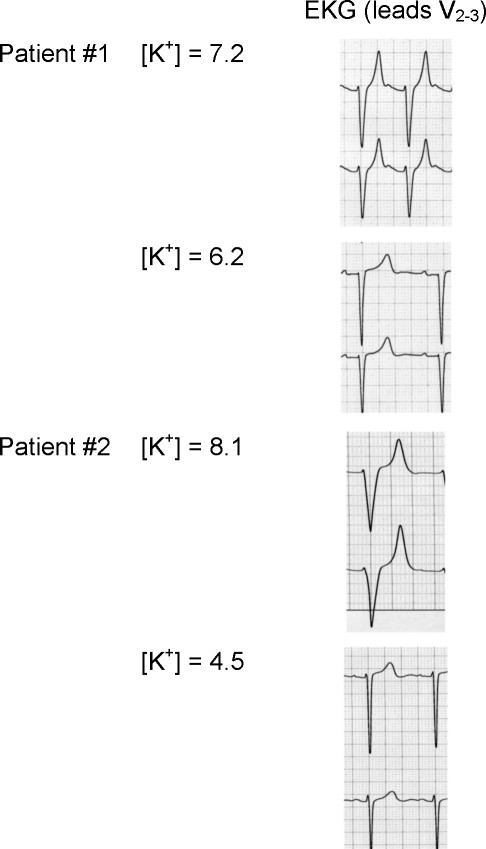
Two representative patients with serum potassium levels (in mEq/L) and associated electrocardiograms (EKGs). In both patients, observed hyperkalemic EKG changes include peaking of the T waves, QRS widening, lengthening of the PR interval, and flattening of the P wave. Note in patient No. 1 that EKG changes resolve despite persistent elevated serum potassium.
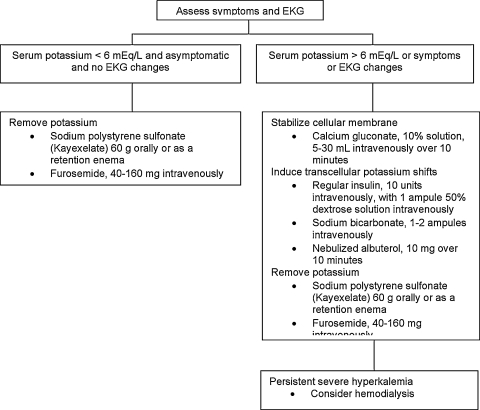
Brief management algorithm for hyperkalemia. EKG, electrocardiogram.
References
-
- Weiner I D, Wingo C S. Hyperkalemia: a potential silent killer. J Am Soc Nephrol. 1998;9:1535–1543. - PubMed
-
- Kim H J, Han S W. Therapeutic approach to hyperkalemia. Nephron. 2002;92(Suppl 1):33–40. - PubMed
-
- Mattu A, Brady W J, Robinson D A. Electrocardiographic manifestations of hyperkalemia. Am J Emerg Med. 2000;18:721–729. - PubMed
-
- Abe R, Yonemura K, Takahashi T, Watanabe H, Sano K, Hishida A. Marked bradycardia associated with profound hyperkalemia in patients with end-stage renal disease. Nephron. 1998;80:355–356. - PubMed
