


Low-diversity bacterial community in the gut of the fruitfly Drosophila melanogaster
- PMID: 21631690
- PMCID: PMC3495270
- DOI: 10.1111/j.1462-2920.2011.02511.x
Low-diversity bacterial community in the gut of the fruitfly Drosophila melanogaster
Abstract
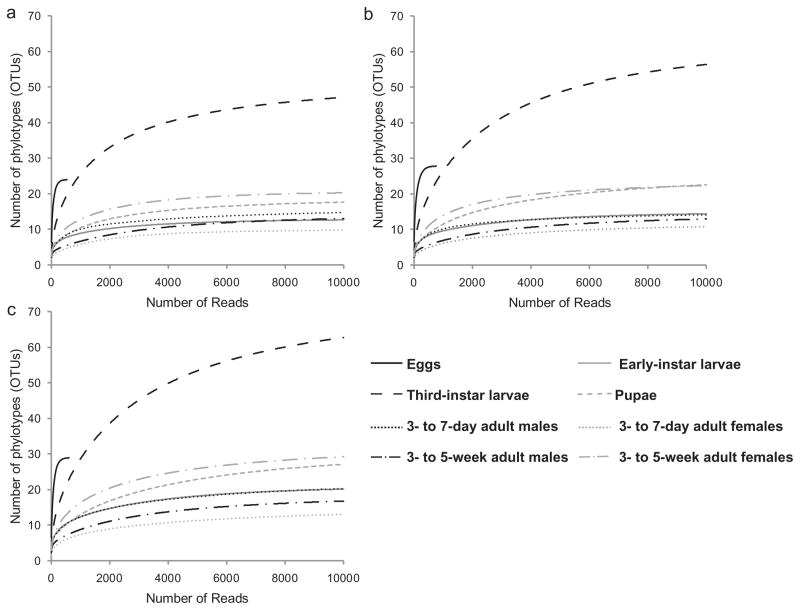
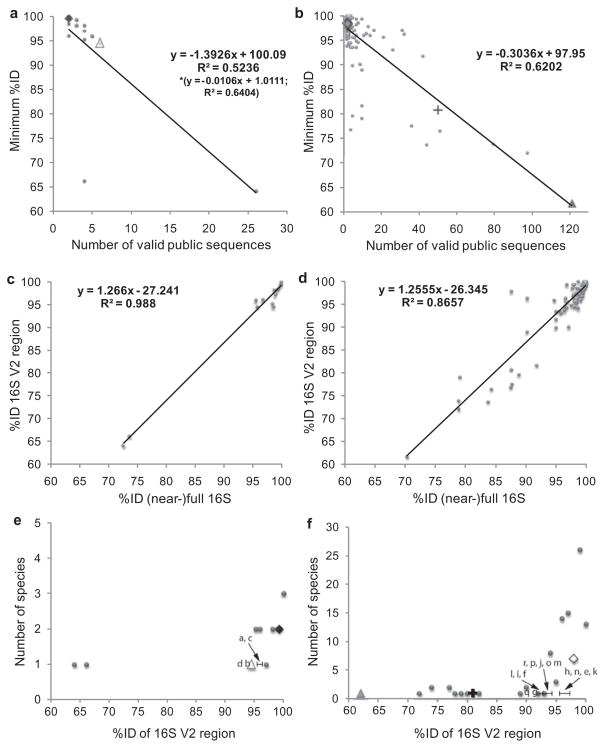
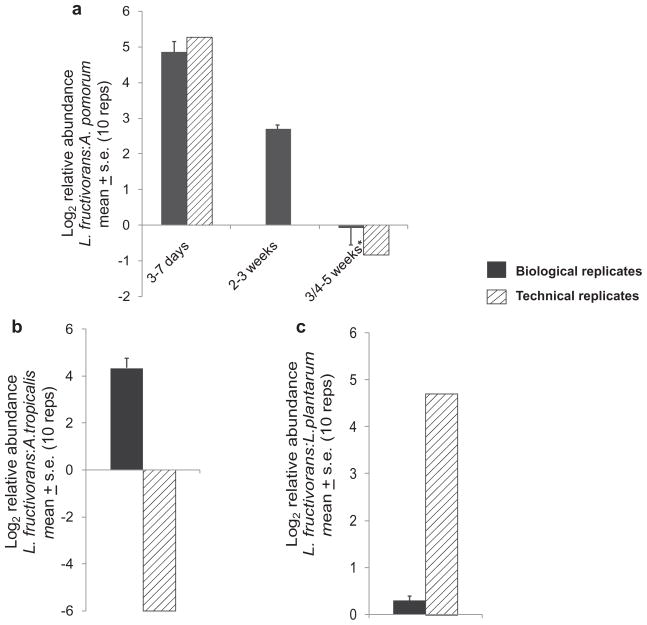
The bacteria in the fruitfly Drosophila melanogaster of different life stages was quantified by 454 pyrosequencing of 16S rRNA gene amplicons. The sequence reads were dominated by 5 operational taxonomic units (OTUs) at ≤ 97% sequence identity that could be assigned to Acetobacter pomorum, A. tropicalis, Lactobacillus brevis, L. fructivorans and L. plantarum. The saturated rarefaction curves and species richness indices indicated that the sampling (85,000-159,000 reads per sample) was comprehensive. Parallel diagnostic PCR assays revealed only minor variation in the complement of the five bacterial species across individual insects and three D. melanogaster strains. Other gut-associated bacteria included 6 OTUs with low %ID to previously reported sequences, raising the possibility that they represent novel taxa within the genera Acetobacter and Lactobacillus. A developmental change in the most abundant species, from L. fructivorans in young adults to A. pomorum in aged adults was identified; changes in gut oxygen tension or immune system function might account for this effect. Host immune responses and disturbance may also contribute to the low bacterial diversity in the Drosophila gut habitat.
© 2011 Society for Applied Microbiology and Blackwell Publishing Ltd.
Figures
References
-
- Baker AC, Starger CJ, McClanahan TR, Glynn PW. Coral reefs: corals’ adaptive response to climate change. Nature. 2004;430:741. - PubMed
-
- Bakula M. The persistence of a microbial flora during postembryogenesis of Drosophila melanogaster. J Invertebr Pathol. 1969;14:365–374. - PubMed
-
- Behar A, Yuval B, Jurkevitch E. Gut bacterial communities in the Mediterranean fruit fly (Ceratitis capitata) and their impact on host longevity. J Insect Physiol. 2008;54:1377–1383. - PubMed
-
- Buchon N, Broderick NA, Poidevin M, Pradervand S, Lemaitre B. Drosophila intestinal response to bacterial infection: activation of host defense and stem cell proliferation. Cell Host Microbe. 2009;5:200–211. - PubMed
Publication types
MeSH terms
Substances
Grants and funding
LinkOut - more resources
Full Text Sources
Molecular Biology Databases
