


Comparative oncogenomics identifies breast tumors enriched in functional tumor-initiating cells
- PMID: 21633010
- PMCID: PMC3286979
- DOI: 10.1073/pnas.1018862108
Comparative oncogenomics identifies breast tumors enriched in functional tumor-initiating cells
Abstract
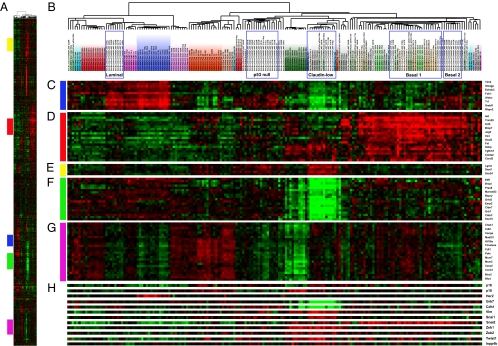
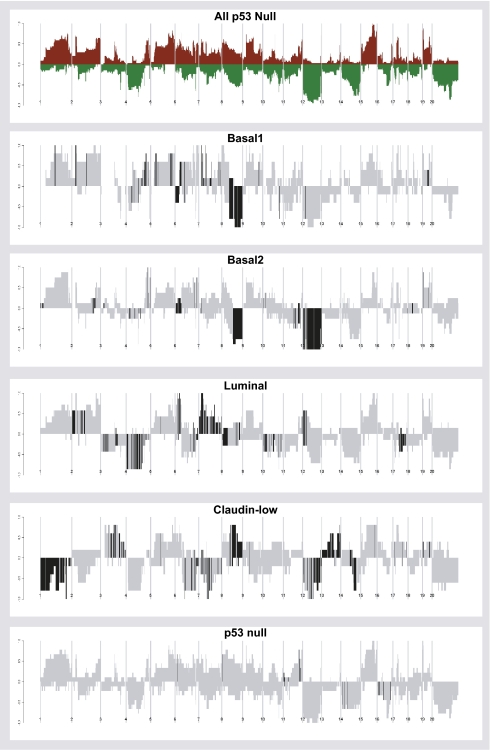
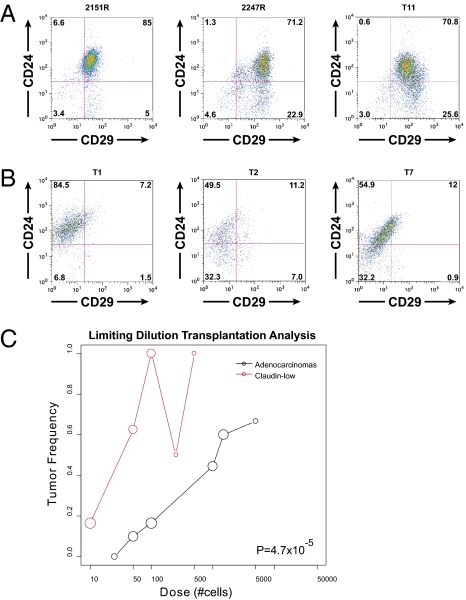
The claudin-low subtype is a recently identified rare molecular subtype of human breast cancer that expresses low levels of tight and adherens junction genes and shows high expression of epithelial-to-mesenchymal transition (EMT) genes. These tumors are enriched in gene expression signatures derived from human tumor-initiating cells (TICs) and human mammary stem cells. Through cross-species analysis, we discovered mouse mammary tumors that have similar gene expression characteristics as human claudin-low tumors and were also enriched for the human TIC signature. Such claudin-low tumors were similarly rare but came from a number of distinct mouse models, including the p53 null transplant model. Here we present a molecular characterization of 50 p53 null mammary tumors compared with other mouse models and human breast tumor subtypes. Similar to human tumors, the murine p53 null tumors fell into multiple molecular subtypes, including two basal-like, a luminal, a claudin-low, and a subtype unique to this model. The claudin-low tumors also showed high gene expression of EMT inducers, low expression of the miR-200 family, and low to absent expression of both claudin 3 and E-cadherin. These murine subtypes also contained distinct genomic DNA copy number changes, some of which are similarly altered in their cognate human subtype counterpart. Finally, limiting dilution transplantation revealed that p53 null claudin-low tumors are highly enriched for TICs compared with the more common adenocarcinomas arising in the same model, thus providing a unique preclinical mouse model to investigate the therapeutic response of TICs.
Conflict of interest statement
Conflict of interest statement: C.M.P. has an equity interest in University Genomics and BioClassifier LLC.
Figures

References
-
- Jemal A, Siegel R, Xu J, Ward E. Cancer statistics, 2010. CA Cancer J Clin. 2010;60:277–300. - PubMed
-
- Donehower LA, et al. Mice deficient for p53 are developmentally normal but susceptible to spontaneous tumours. Nature. 1992;356:215–221. - PubMed
-
- Jacks T, et al. Tumor spectrum analysis in p53-mutant mice. Curr Biol. 1994;4:1–7. - PubMed
Publication types
MeSH terms
Substances
Associated data
- Actions
Grants and funding
LinkOut - more resources
Full Text Sources
Other Literature Sources
Medical
Molecular Biology Databases
Research Materials
Miscellaneous
