Isolated traumatic head injury in children: Analysis of 276 observations
- PMID: 21633564
- PMCID: PMC3097575
- DOI: 10.4103/0974-2700.76831
Isolated traumatic head injury in children: Analysis of 276 observations
Abstract
Background: To determine predictive factors of mortality among children after isolated traumatic brain injury.
Materials and methods: In this retrospective study, we included all consecutive children with isolated traumatic brain injury admitted to the 22-bed intensive care unit (ICU) of Habib Bourguiba University Hospital (Sfax, Tunisia). Basic demographic, clinical, biochemical, and radiological data were recorded on admission and during ICU stay.
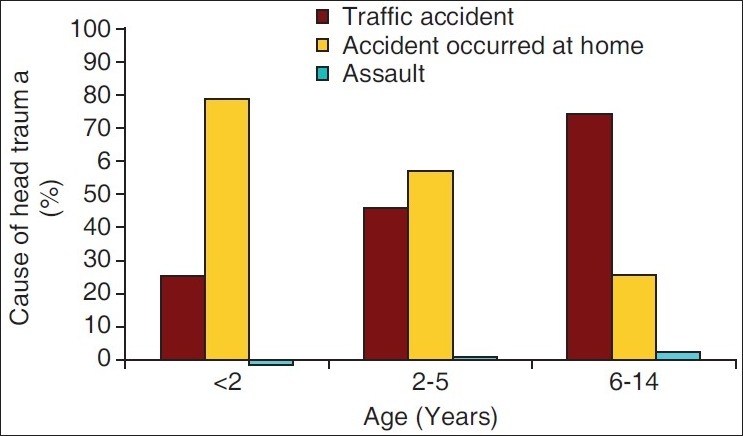
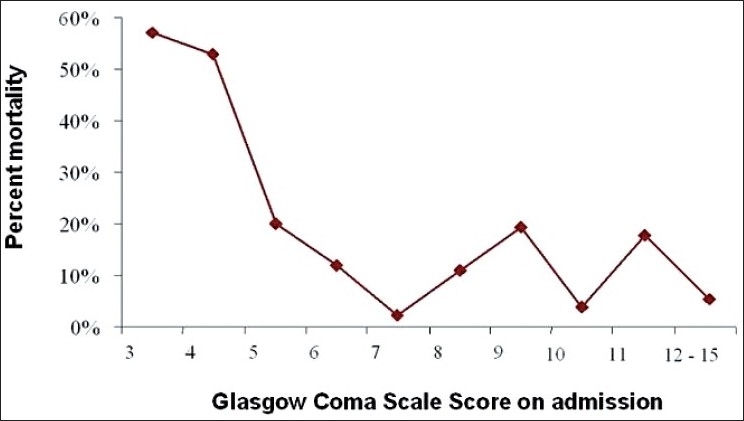
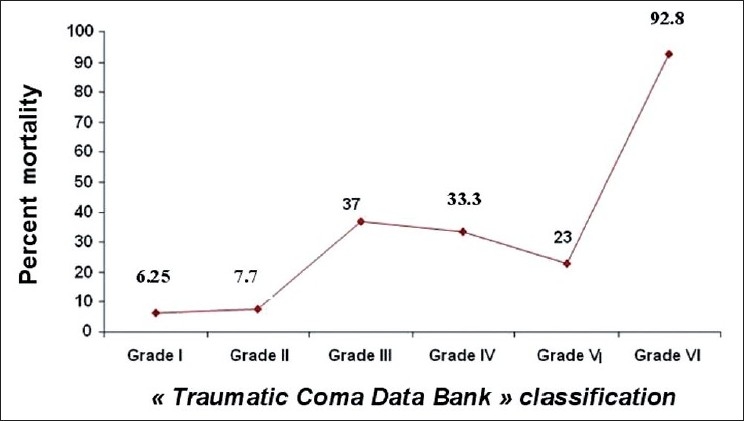
Results: There were 276 patients with 196 boys (71%) and 80 girls, with a mean age of 6.7 ± 3.8 years. The main cause of trauma was road traffic accident (58.3%). Mean Glasgow Coma Scale score was 8 ± 2, Mean Injury Severity Score (ISS) was 23.3 ± 5.9, Mean Pediatric Trauma Score (PTS) was 4.8 ± 2.3, and Mean Pediatric Risk of Mortality (PRISM) was 10.8 ± 8. A total of 259 children required mechanical ventilation. Forty-eight children (17.4%) died. Multivariate analysis showed that factors associated with a poor prognosis were PRISM > 24 (OR: 10.98), neurovegetative disorder (OR: 7.1), meningeal hemorrhage (OR: 2.74), and lesion type VI according to Marshall tomographic grading (OR: 13.26).
Conclusion: In Tunisia, head injury is a frequent cause of hospital admission and is most often due to road traffic injuries. Short-term prognosis is influenced by demographic, clinical, radiological, and biochemical factors. The need to put preventive measures in place is underscored.
Keywords: Acute head injury; children; intensive care unit; motor-vehicle crash; prognosis; trauma.
Conflict of interest statement
Figures
References
-
- Bahloul M, Chelly H, Ben Hmida M, Ben Hamida C, Ksibi H, Kallel H, et al. Prognosis of traumatic head injury in South Tunisia: A multivariate analysis of 437 cases. J Trauma. 2004;57:255–61. - PubMed
-
- Baker SP, O’Neill B, Haddon W, Jr, Long WB. The injury severity score: A method for describing patients with multiple injuries and evaluating emergency care. J Trauma. 1974;14:187–96. - PubMed
-
- Bochicchio GV, Sung J, Joshi M, Bochicchio K, Johnson SB, Meyer W, et al. Persistent hyperglycemia is predictive of outcome in critically ill trauma patients. J Trauma. 2005;58:921–4. - PubMed
-
- Bone RC. Sepsis, the sepsis syndrome, multi-organ failure: A plea for comparable definitions. Ann Intern Med. 1991;114:332–3. - PubMed
-
- Born JD, Hans P, Smitz S, Legros JJ, Kay S. Syndrome of inappropriate secretion of antidiuretic hormone after severe head injury. Surg Neurol. 1985;23:383–7. - PubMed