Depressed mood and flow-mediated dilation: a systematic review and meta-analysis
- PMID: 21636660
- PMCID: PMC4266566
- DOI: 10.1097/PSY.0b013e31821db79a
Depressed mood and flow-mediated dilation: a systematic review and meta-analysis
Abstract
Objective: This systematic and quantitative review evaluates the literature on associations between depressed mood and flow-mediated dilation (FMD), a measure of endothelial function, in adults.
Methods: Published English-language articles (through December 2010) were identified from literature searches, assessed for data extraction, and evaluated for quality.
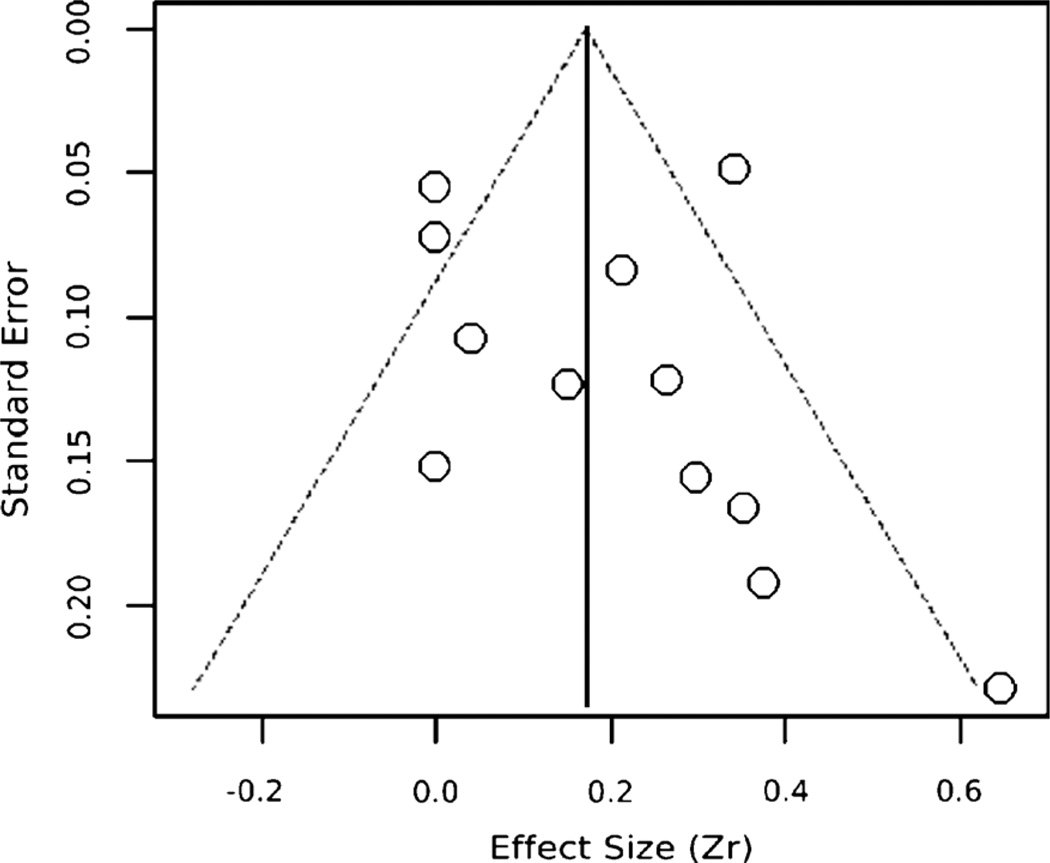
Results: The literature includes cross-sectional (n = 9) and retrospective examinations (n = 3) of how FMD correlates with clinical or subclinical depression in healthy adults and cardiovascular patients (total N across 12 studies = 1491). FMD was assessed using a variety of methodologies. Samples were predominately older white and Asian subjects with higher socioeconomic status. In eight of the 12 articles selected for this review, at least one significant inverse association was noted between depressed mood and FMD, with primarily moderate effect sizes. The overall meta-analysis (random-effects model) revealed a combined effect size of correlation coefficient r = 0.19 (95% confidence interval = 0.08-0.29, p = .001). Significant combined effects were found for subgroups of studies that a) received better quality ratings (r = 0.29), b) examined patients with cardiovascular disease or with cardiovascular disease risk factors/comorbidity (r = 0.29), c) used maximum vasodilation to quantify FMD (r = 0.27), and d) assessed samples that had a mean age of 55 years and older (r = 0.15).
Conclusions: Diverse studies support the inverse correlation between depressed mood and endothelial function, as measured by FMD. This literature would be strengthened by prospective studies, increased methodological consistency in FMD testing, and broader sampling (e.g., African Americans, younger age, lower socioeconomic status).
Figures


References
-
- Frasure-Smith N, Lespérance F. Recent evidence linking coronary heart disease and depression. Can J Psychiatry. 2006;51:730–737. - PubMed
-
- Wulsin LR, Vaillant GE, Wells VE. A systematic review of the mortality of depression. Psychosom Med. 1999;61:6–17. - PubMed
-
- Wulsin LR, Singal BM. Do depressive symptoms increase the risk for the onset of coronary disease? A systematic quantitative review. Psychosom Med. 2003;65:201–210. - PubMed
-
- Anda R, Williamson D, Jones D, Macera C, Eaker E, Glassman A, Marks J. Depressed affect, hopelessness, and the risk of ischemic heart disease in a cohort of U.S. adults. Epidemiology. 1993;4:285–294. - PubMed
Publication types
MeSH terms
Grants and funding
LinkOut - more resources
Full Text Sources
Medical