


Suppression of inflammatory and neuropathic pain by uncoupling CRMP-2 from the presynaptic Ca²⁺ channel complex
- PMID: 21642979
- PMCID: PMC3219927
- DOI: 10.1038/nm.2345
Suppression of inflammatory and neuropathic pain by uncoupling CRMP-2 from the presynaptic Ca²⁺ channel complex
Abstract
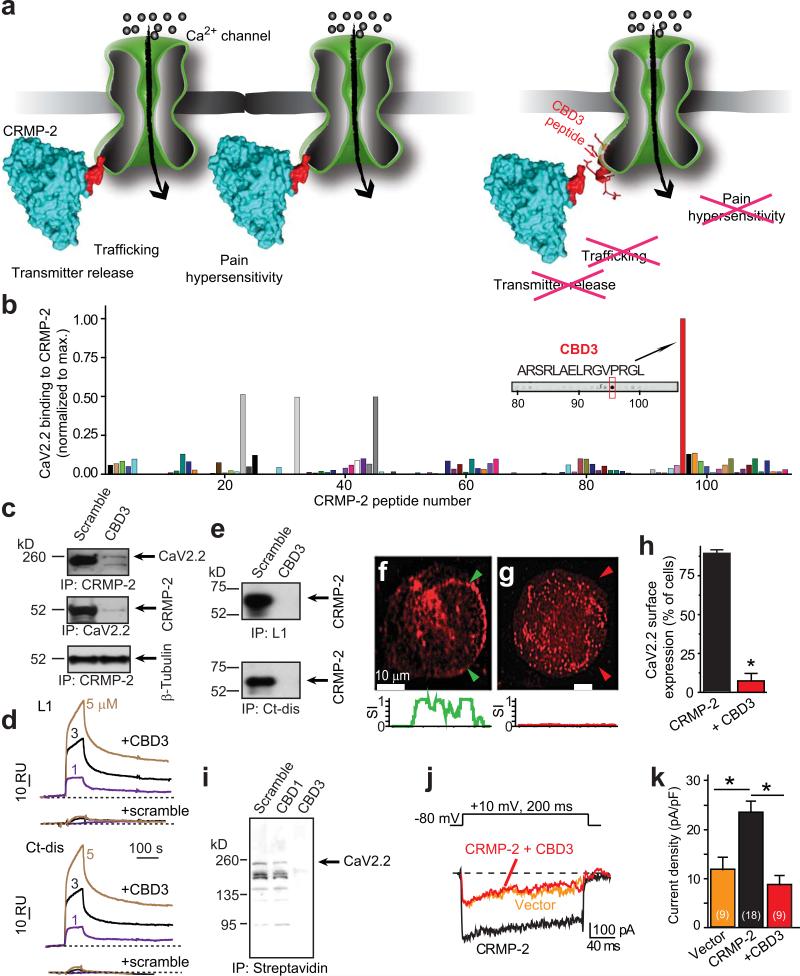
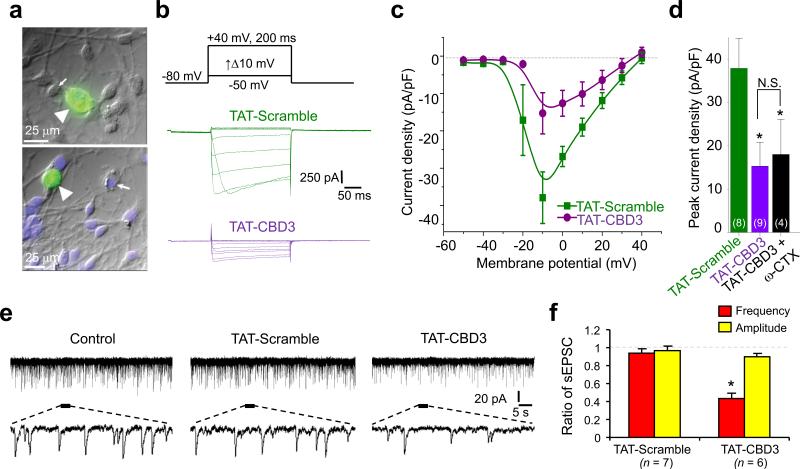
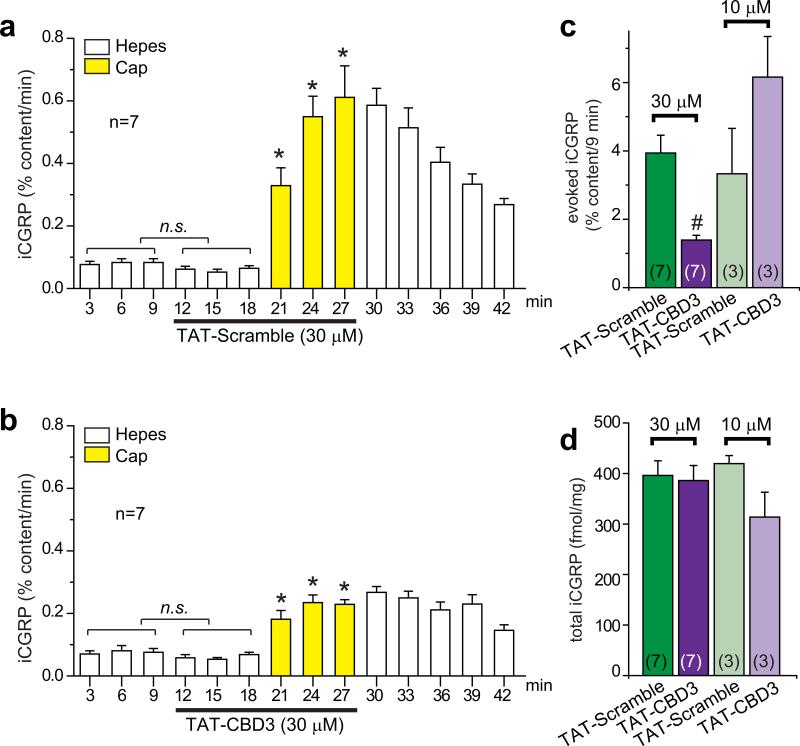
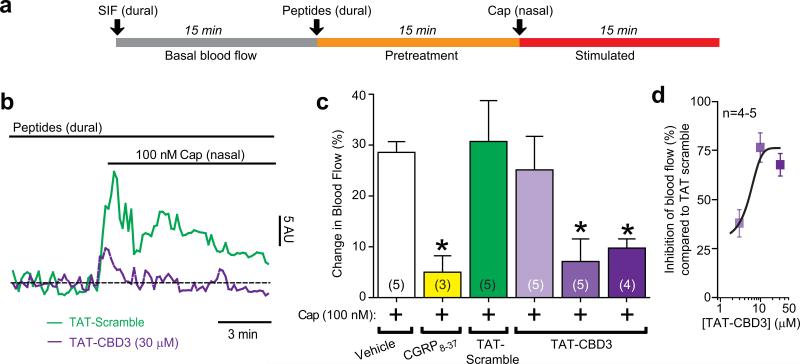
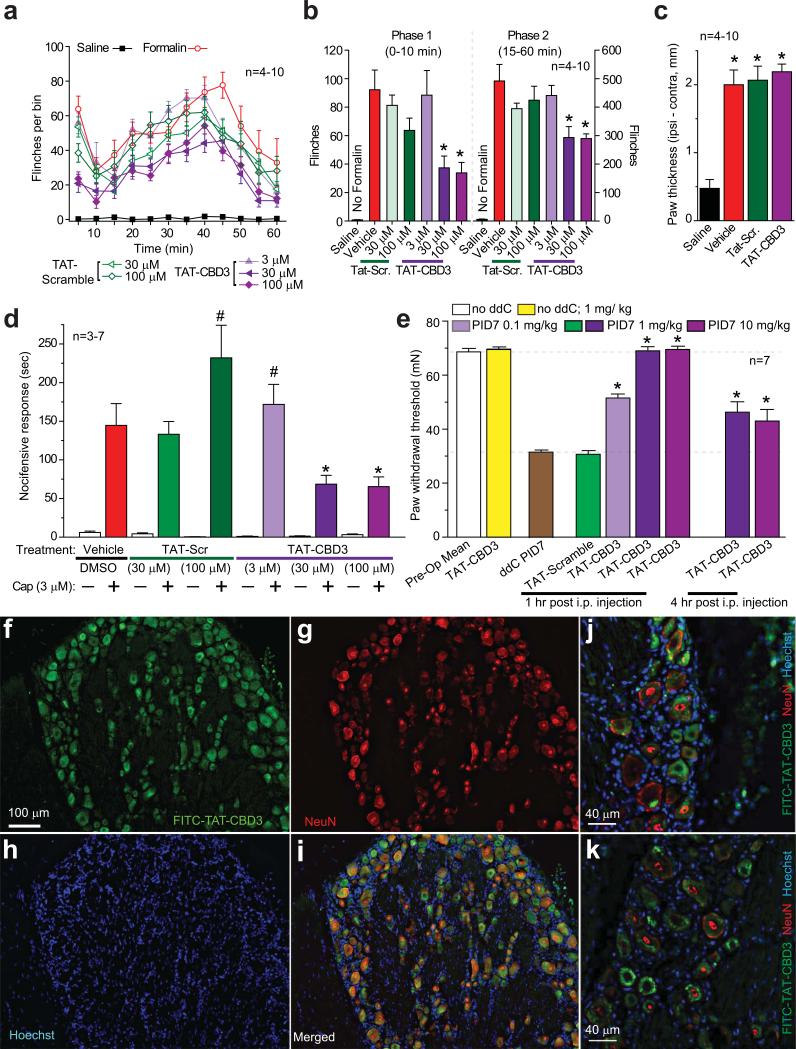
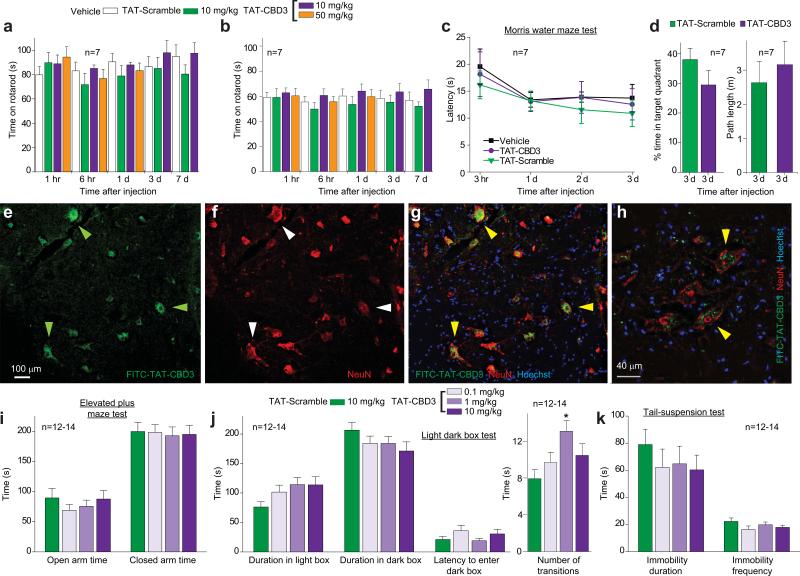
The use of N-type voltage-gated calcium channel (CaV2.2) blockers to treat pain is limited by many physiological side effects. Here we report that inflammatory and neuropathic hypersensitivity can be suppressed by inhibiting the binding of collapsin response mediator protein 2 (CRMP-2) to CaV2.2 and thereby reducing channel function. A peptide of CRMP-2 fused to the HIV transactivator of transcription (TAT) protein (TAT-CBD3) decreased neuropeptide release from sensory neurons and excitatory synaptic transmission in dorsal horn neurons, reduced meningeal blood flow, reduced nocifensive behavior induced by formalin injection or corneal capsaicin application and reversed neuropathic hypersensitivity produced by an antiretroviral drug. TAT-CBD3 was mildly anxiolytic without affecting memory retrieval, sensorimotor function or depression. At doses tenfold higher than that required to reduce hypersensitivity in vivo, TAT-CBD3 caused a transient episode of tail kinking and body contortion. By preventing CRMP-2-mediated enhancement of CaV2.2 function, TAT-CBD3 alleviated inflammatory and neuropathic hypersensitivity, an approach that may prove useful in managing chronic pain.
Figures
Comment in
-
Pain: Blocking painful interactions.Nat Rev Neurosci. 2011 Jun 22;12(8):431. doi: 10.1038/nrn3069. Nat Rev Neurosci. 2011. PMID: 21694731 No abstract available.
References
-
- Crofford LJ. Adverse effects of chronic opioid therapy for chronic musculoskeletal pain. Nat. Rev. Rheumatol. 2010;6:191–197. - PubMed
-
- Staats PS, et al. Intrathecal ziconotide in the treatment of refractory pain in patients with cancer or AIDS: a randomized controlled trial. JAMA. 2004;291:63–70. - PubMed
-
- Rauck RL, et al. A randomized, double-blind, placebo-controlled study of intrathecal ziconotide in adults with severe chronic pain. J. Pain Symptom. Manage. 2006;31:393–406. - PubMed
-
- Wallace MS, et al. Intrathecal ziconotide for severe chronic pain: safety and tolerability results of an open-label, long-term trial. Anesth. Analg. 2008;106:628–37. table. - PubMed
Publication types
MeSH terms
Substances
Grants and funding
LinkOut - more resources
Full Text Sources
Other Literature Sources
Medical
Miscellaneous
