


Regulatory Effect of Peptidoglycan on the Expression of Toll-Like Receptor 2 mRNA and Proteins in Trophoblast Cell Line TEV-1 Cells
- PMID: 21647232
- PMCID: PMC3101954
- DOI: 10.5402/2011/692858
Regulatory Effect of Peptidoglycan on the Expression of Toll-Like Receptor 2 mRNA and Proteins in Trophoblast Cell Line TEV-1 Cells
Abstract
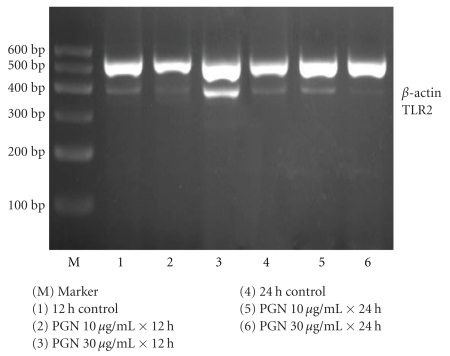
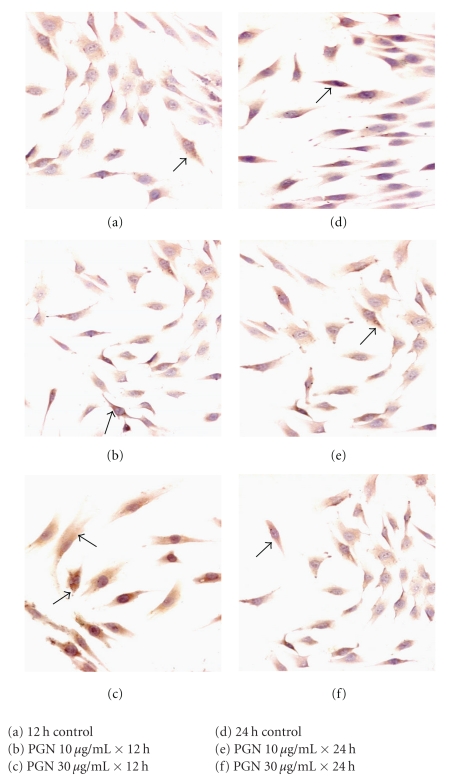
Objective. To investigate the regulatory effect of peptidoglycan on the expression of human Toll-like receptors 2 (TLR2) mRNA and proteins in the human extravillous trophoblast cell line (TEV-1). Methods. TEV-1 cells were incubated with different doses of peptidoglycan. The expression of TLR2 mRNA and protein was detected by reverse transcriptase-polymerase chain reaction (RT-PCR) and immunocytochemistry SP staining. Results. TLR2 was expressed in TEV-1 cells and localized to both the cytoplasm and plasma membrane. Compared with the untreated control, TEV-1 cells incubated with 30 μg/ml peptidoglycan significantly upregulated the expression of TLR2 mRNA and protein after 12 hours of treatment (P < .01). However, the expression of TLR2 mRNA and protein was decreased but had no significant difference compared with the control (P > .05) after 24 hours of treatment. On the other hand, 10 μg/ml peptidoglycan did not seem to have regulatory effect on mRNA and protein expression of TLR2 (P > .05). Conclusion. Peptidoglycan has a role in regulating the expression of TLR2 mRNA and protein in TEV-1 cells. It suggests that the trophoblast cells may play important role in the immune response at the fetal-maternal interface and affect the result of pregnancy by expressing TLR2.
Figures
References
-
- Von Dadelszen P, Magee LA. Could an infectious trigger explain the differential maternal response to the shared placental pathology of preeclampsia and normotensive intrauterine growth restriction? Acta Obstetricia et Gynecologica Scandinavica. 2002;81(7):642–648. - PubMed
-
- Gonçalves LF, Chaiworapongsa T, Romero R. Intrauterine infection and prematurity. Mental Retardation and Developmental Disabilities Research Reviews. 2002;8(1):3–13. - PubMed
-
- Romero R, Chaiworapongsa T, Espinoza J. Micronutrients and intrauterine infection, preterm birth and the fetal inflammatory response syndrome. Journal of Nutrition. 2003;133(5, article 1668S) - PubMed
-
- Medzhitov R, Janeway CA., Jr. Decoding the patterns of self and nonself by the innate immune system. Science. 2002;296(5566):298–300. - PubMed
-
- Häcker H, Redecke V, Blagoev B, et al. Specificity in Toll-like receptor signalling through distinct effector functions of TRAF3 and TRAF6. Nature. 2006;439(7073):204–207. - PubMed
LinkOut - more resources
Full Text Sources
