. 2011:7:442-95.
doi: 10.3762/bjoc.7.57. Epub 2011 Apr 18.

An overview of the key routes to the best selling 5-membered ring heterocyclic pharmaceuticals

Affiliations

An overview of the key routes to the best selling 5-membered ring heterocyclic pharmaceuticals

Marcus Baumann et al. Beilstein J Org Chem. 2011.

Abstract

This review presents a comprehensive overview on selected synthetic routes towards commercial drug compounds as published in both journal and patent literature. Owing to the vast number of potential structures, we have concentrated only on those drugs containing five-membered heterocycles and focused principally on the assembly of the heterocyclic core. In order to target the most representative chemical entities the examples discussed have been selected from the top 200 best selling drugs of recent years.

Keywords: five-membered rings; heterocycles; medicinal chemistry; pharmaceuticals; synthesis.


Figures
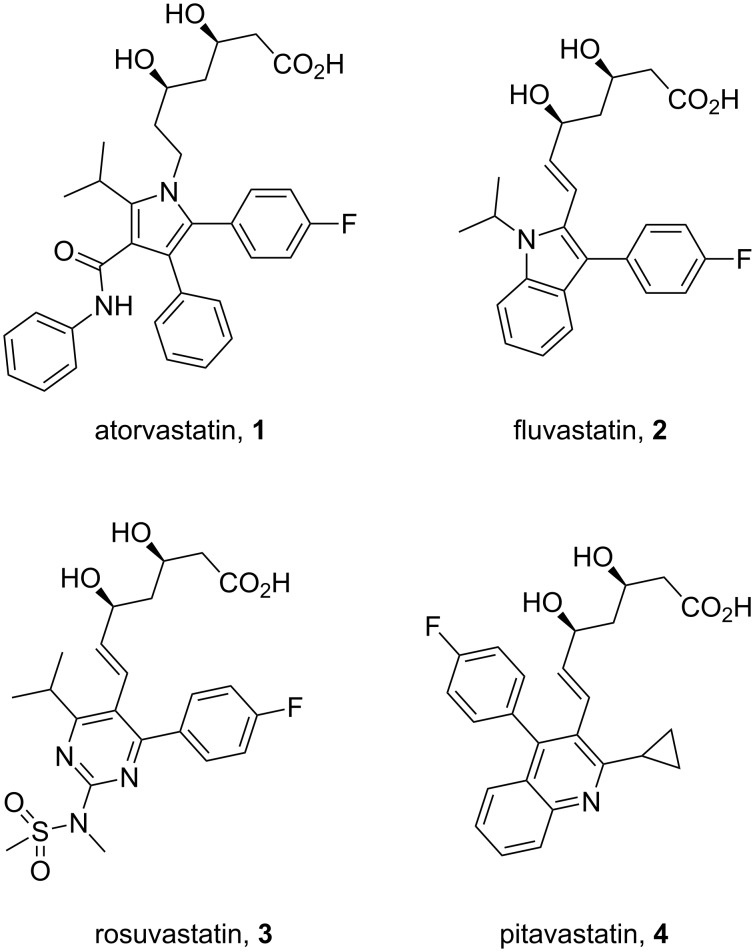
Figure 1
Figure 1
Structures of atorvastatin and other commercial statins.
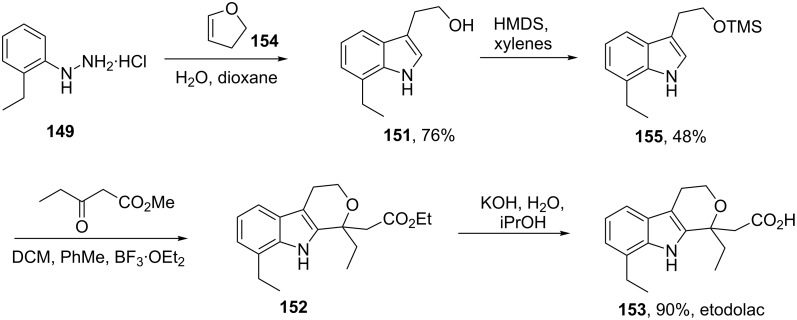
Figure 2
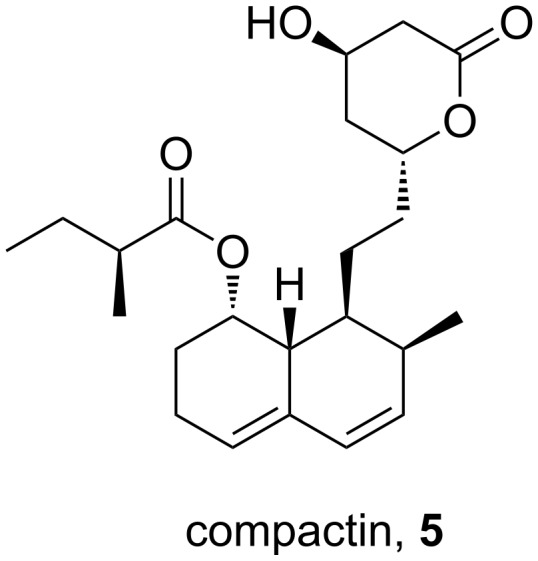
Figure 2
Structure of compactin.
Scheme 1
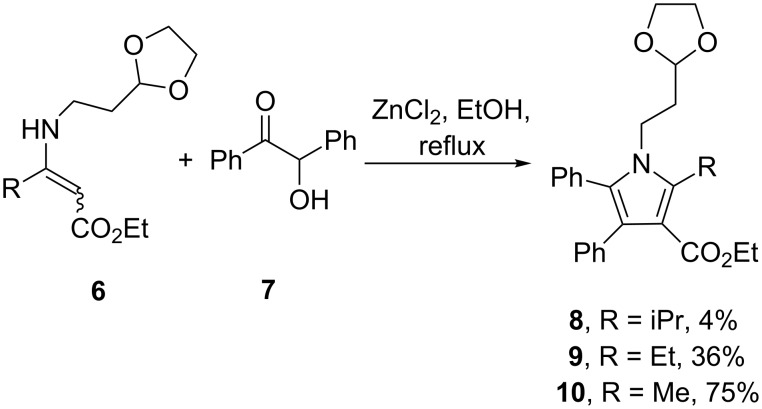
Scheme 1
Synthesis of pentasubstituted pyrroles.
Scheme 2
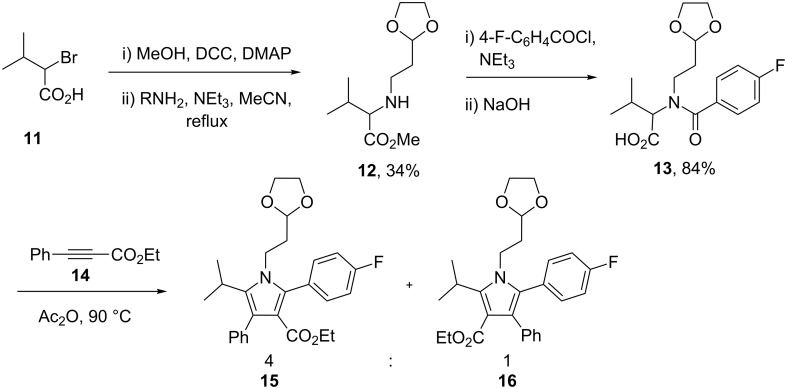
Scheme 2
[3 + 2] Cycloaddition to prepare 5-isopropylpyrroles.
Scheme 3
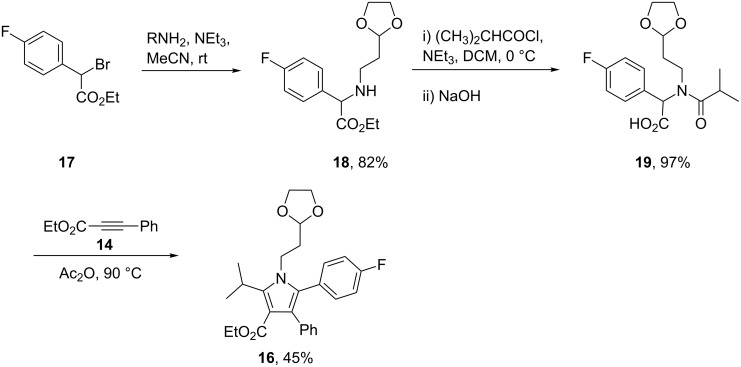
Scheme 3
Regiospecific [3 + 2] cycloaddition to prepare the pyrrole scaffold.
Scheme 4
Scheme 4
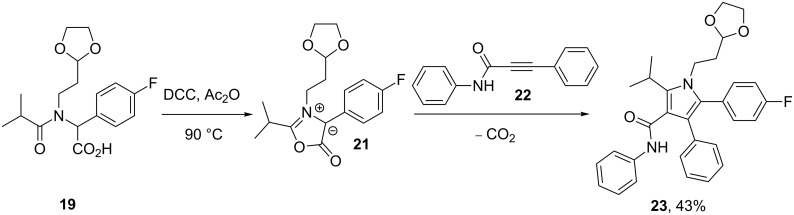
Formation of the pyrrole core of atorvastatin via [3 + 2] cycloaddition.
Scheme 5
Scheme 5
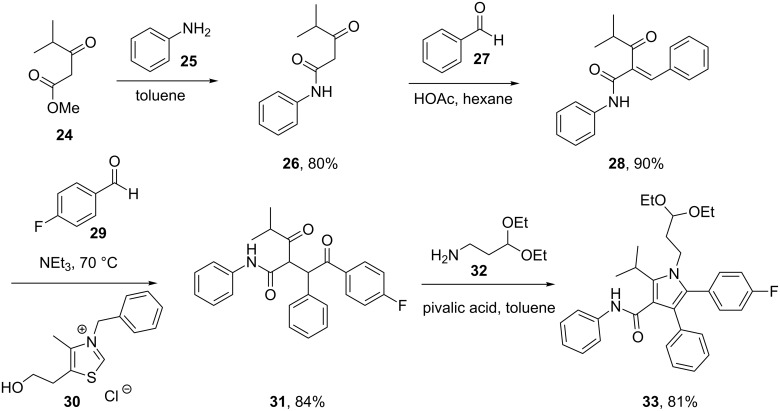
Formation of pyrrole 33 via the Paal–Knorr reaction.
Scheme 6
Scheme 6
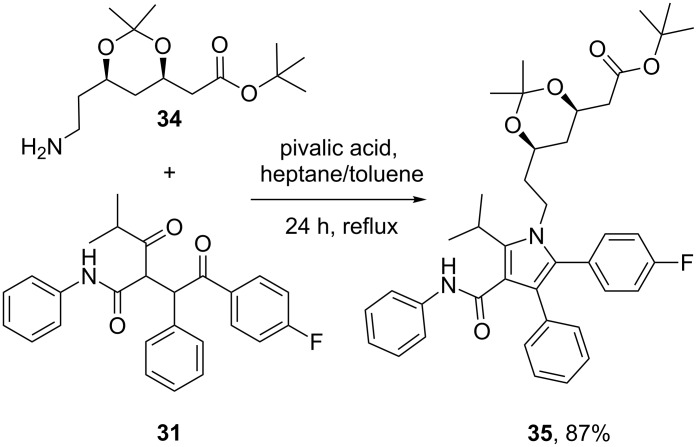
Convergent synthesis towards atorvastatin.
Figure 3
Figure 3
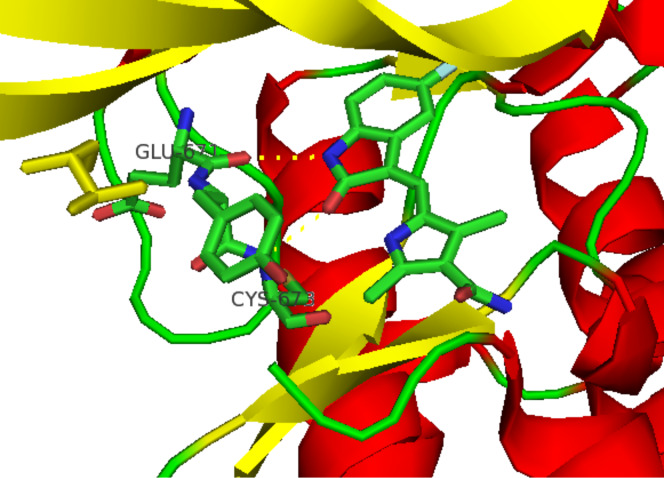
Binding pocket of sunitinib in the TRK KIT.
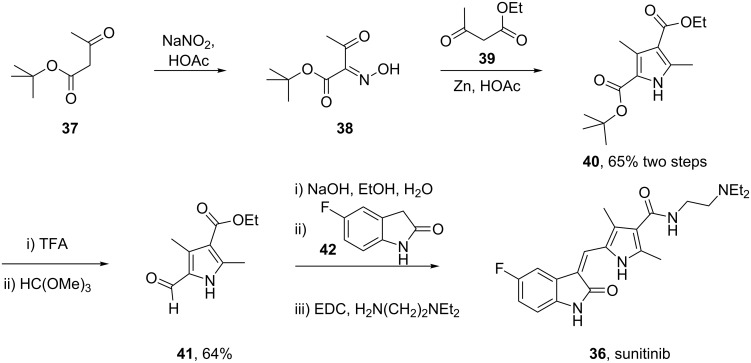
Scheme 7
Scheme 7
Synthesis of sunitinib.
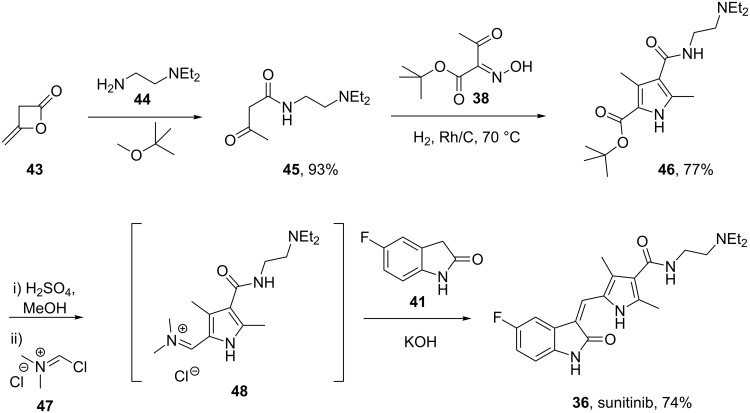
Scheme 8
Scheme 8
Alternative synthesis of sunitinib.
Scheme 9
Scheme 9
Key steps in the syntheses of sumatriptan and zolmitriptan.
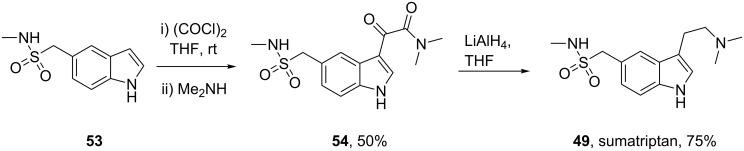
Scheme 10
Scheme 10
Introduction of the N,N-dimethylaminoethyl side chain.
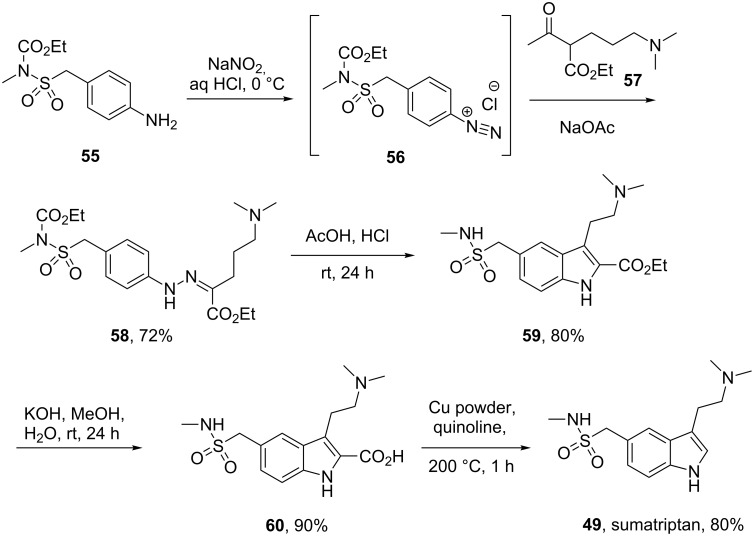
Scheme 11
Scheme 11
Japp–Klingemann reaction in the synthesis of sumatriptan.
Scheme 12
Scheme 12
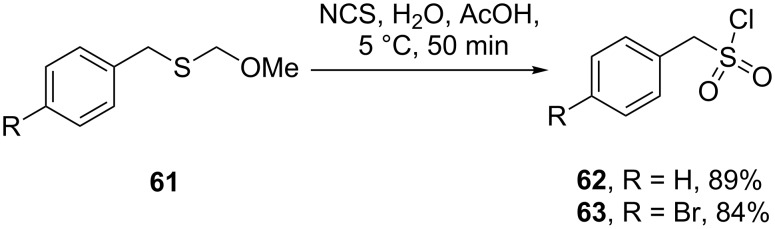
Synthesis of the intermediate sulfonyl chlorides 62 and 63.
Scheme 13
Scheme 13
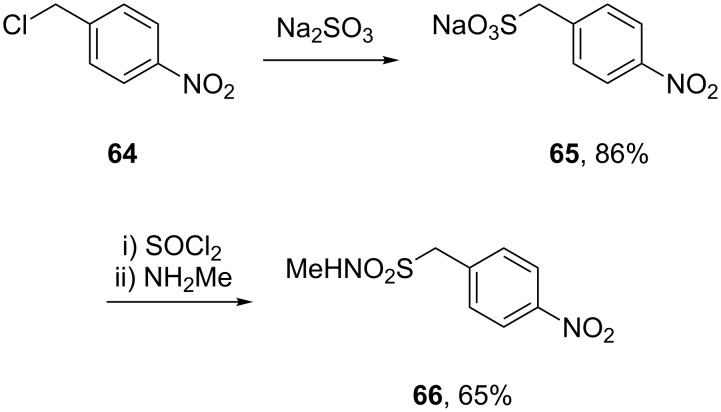
Alternative introduction of the sulfonamide.
Scheme 14
Scheme 14
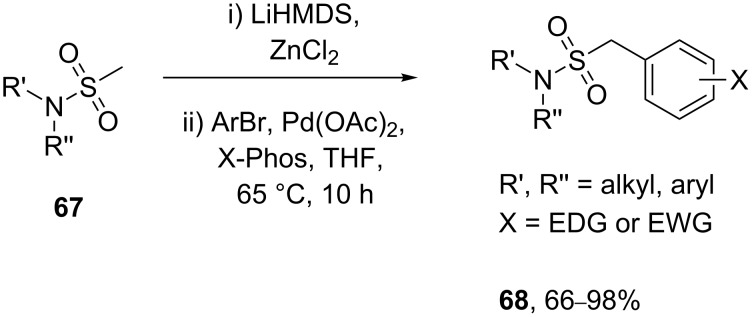
Negishi-type coupling to benzylic sulfonamides.
Scheme 15
Scheme 15
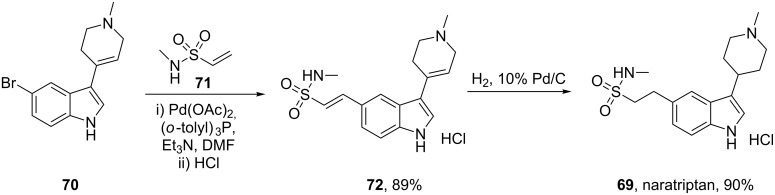
Heck reaction used to introduce the sulfonamide side chain of naratriptan.
Scheme 16
Scheme 16
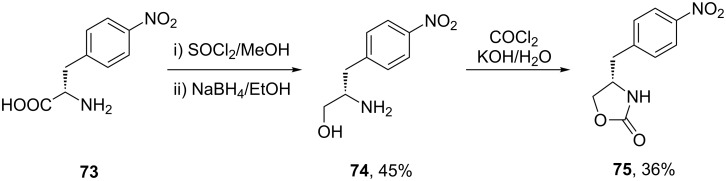
Synthesis of the oxazolinone appendage of zolmitriptan.
Scheme 17
Scheme 17
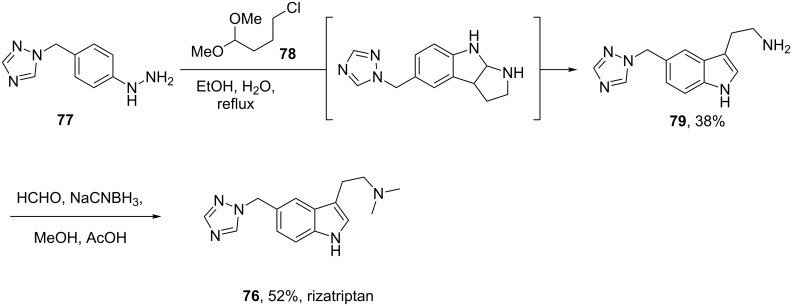
Grandberg indole synthesis used in the preparation of rizatriptan.
Scheme 18
Scheme 18
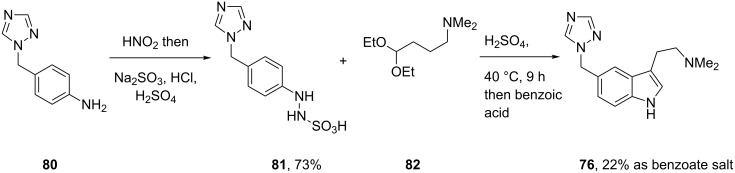
Improved synthesis of rizatriptan.
Scheme 19
Scheme 19
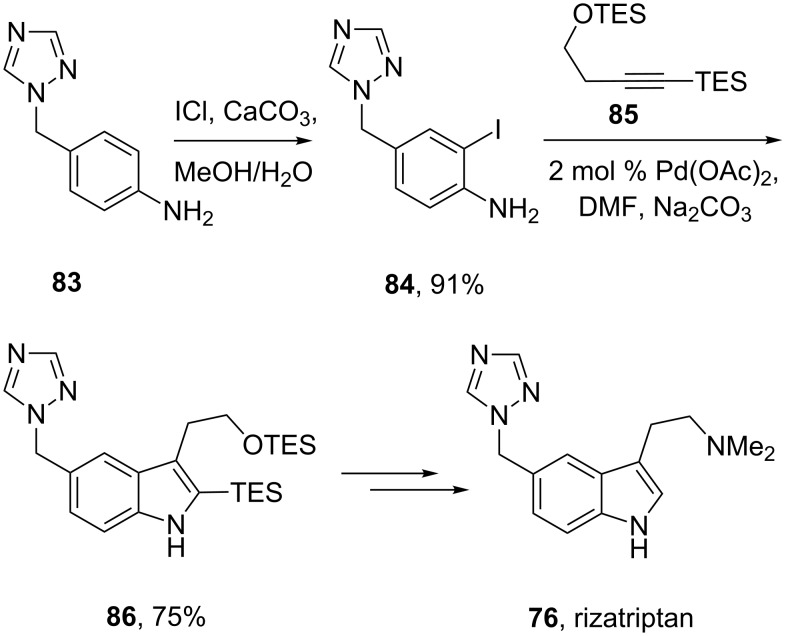
Larock-type synthesis of rizatriptan.
Scheme 20
Scheme 20
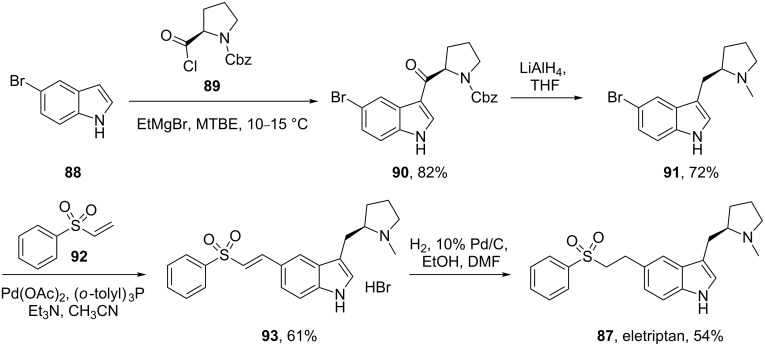
Synthesis of eletriptan.
Scheme 21
Scheme 21
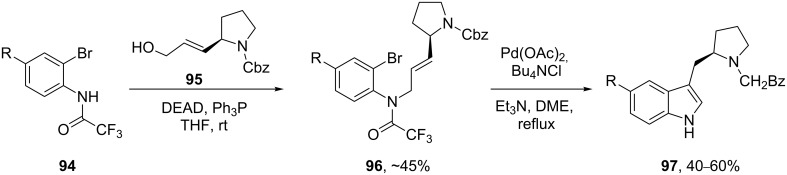
Heck coupling for the indole system in eletriptan.
Scheme 22
Scheme 22
Attempted Fischer indole synthesis of elatriptan.
Scheme 23
Scheme 23
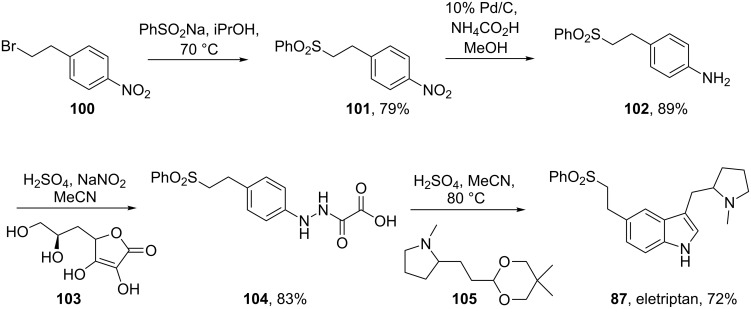
Successful Fischer indole synthesis for eletriptan.
Scheme 24
Scheme 24
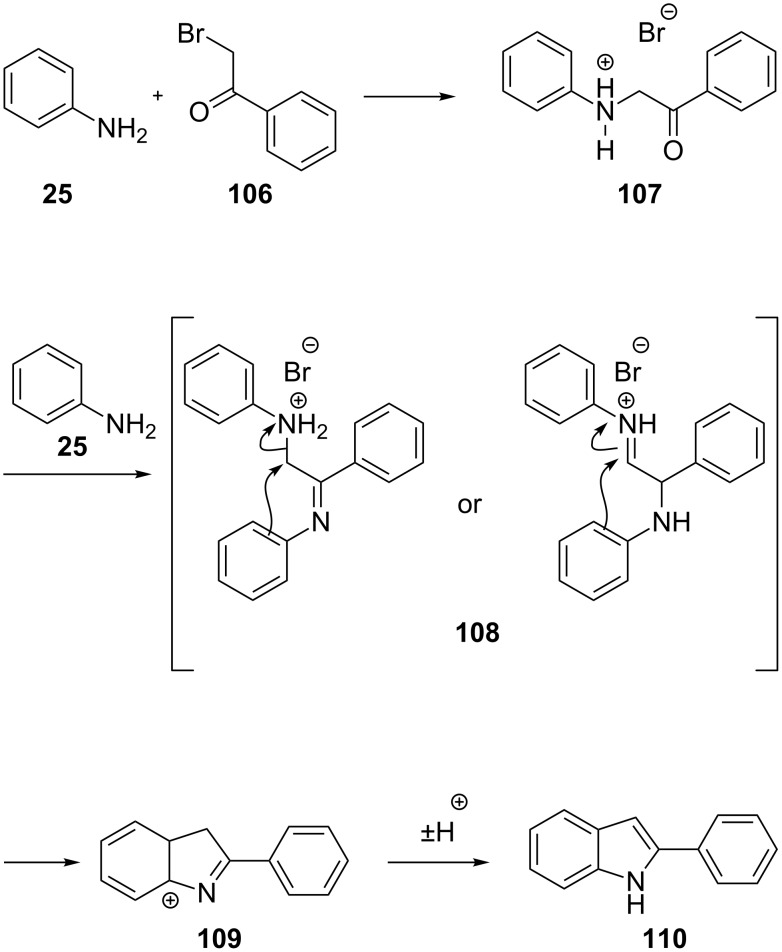
Mechanistic rationale for the Bischler–Möhlau reaction.
Scheme 25
Scheme 25
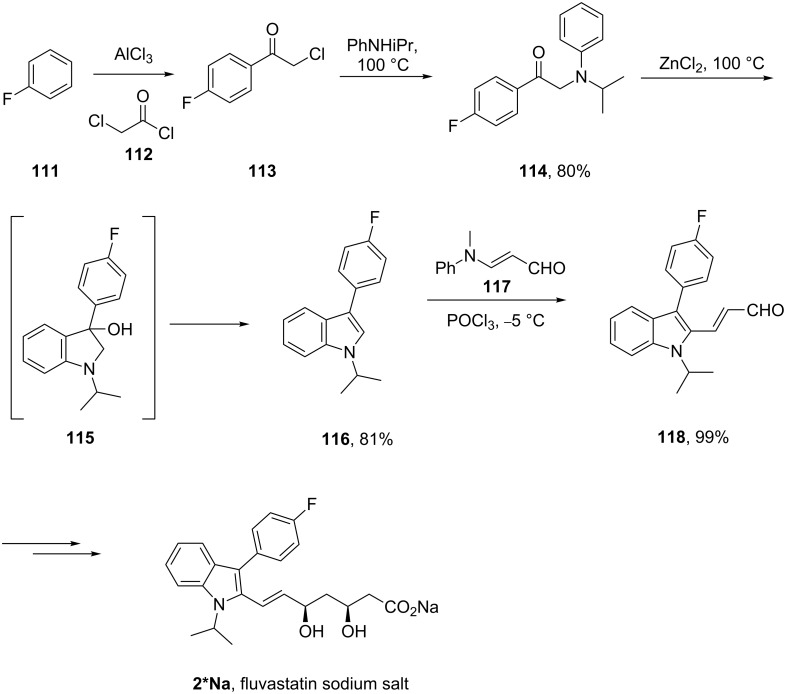
Bischler-type indole synthesis used in the fluvastatin sodium synthesis.
Scheme 26
Scheme 26
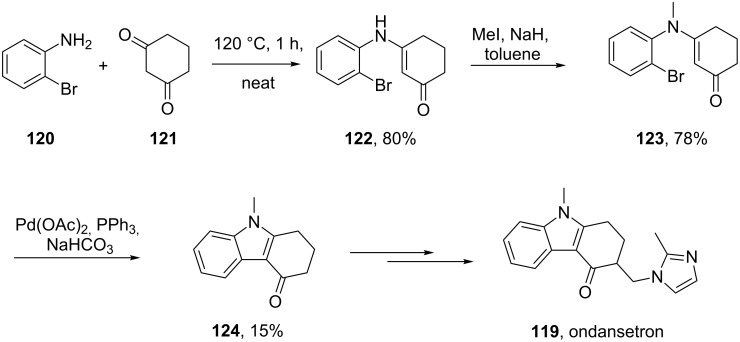
Palladium-mediated synthesis of ondansetron.
Scheme 27
Scheme 27
Fischer indole synthesis of ondansetron.
Scheme 28
Scheme 28
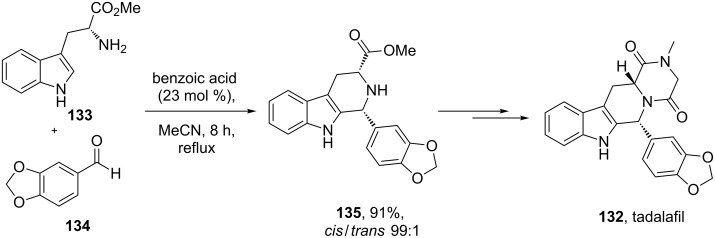
Optimised Pictet–Spengler reaction towards tadalafil.
Figure 4
Figure 4
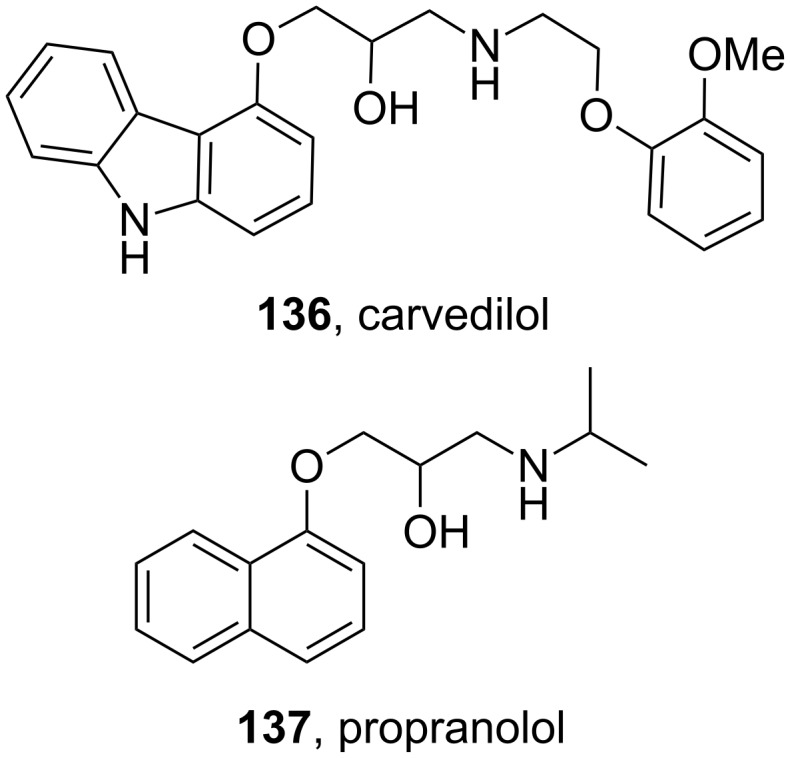
Structures of carvedilol 136 and propranolol 137.
Scheme 29
Scheme 29
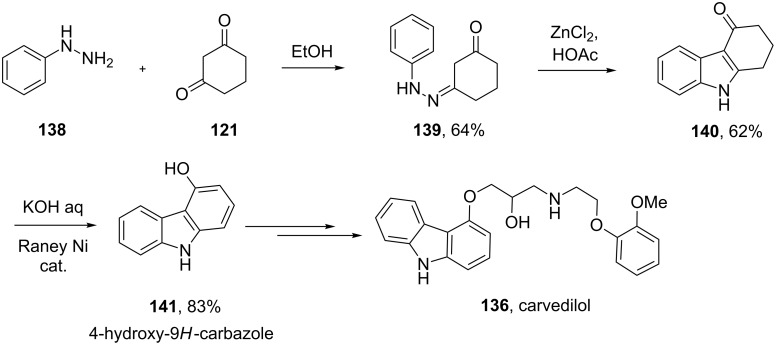
Synthesis of the carbazole core of carvedilol.
Scheme 30
Scheme 30
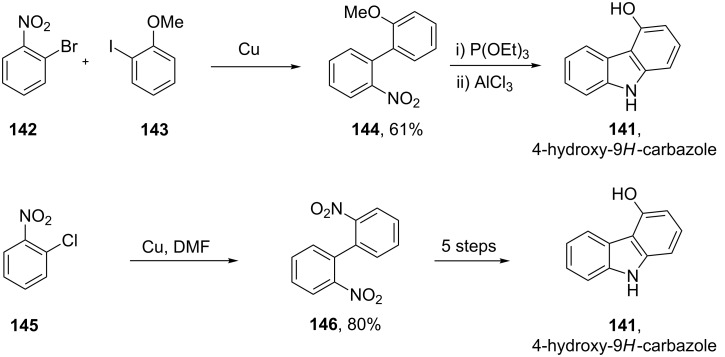
Alternative syntheses of 4-hydroxy-9H-carbazole.
Scheme 31
Scheme 31
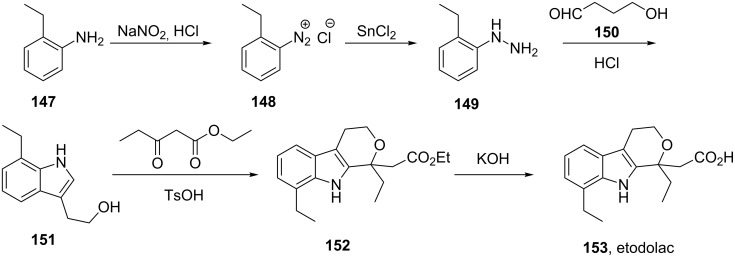
Convergent synthesis of etodolac.
Scheme 32
Scheme 32
Alternative synthesis of etodolac.
Figure 5
Figure 5
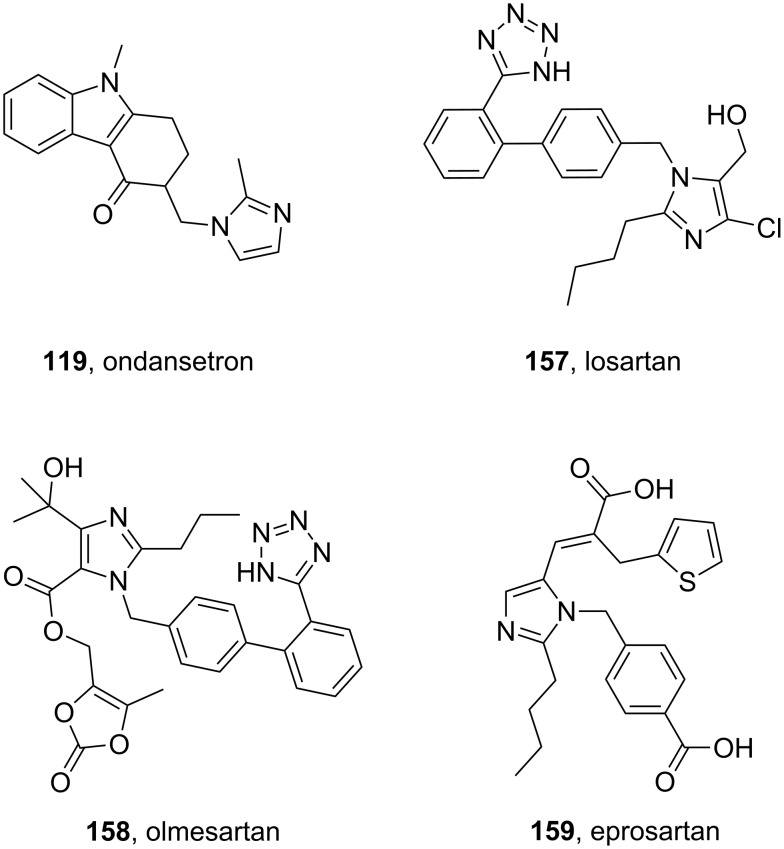
Structures of imidazole-containing drugs.
Scheme 33
Scheme 33
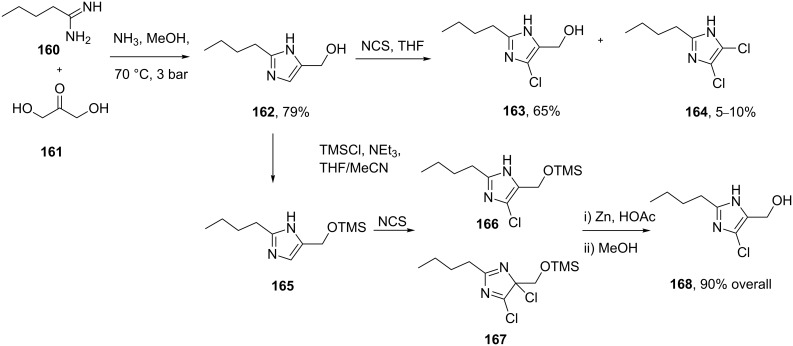
Synthesis of functionalised imidazoles towards losartan.
Scheme 34
Scheme 34
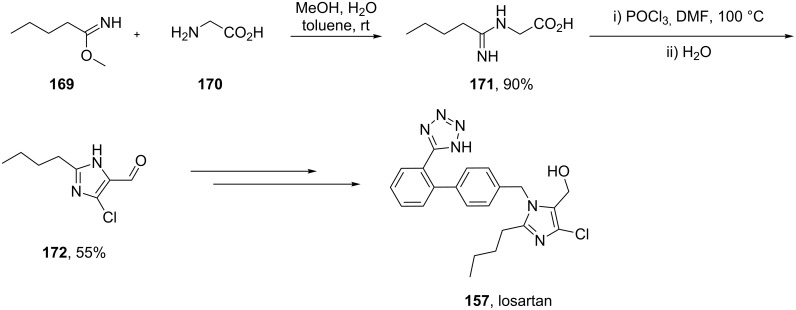
Direct synthesis of the chlorinated imidazole in losartan.
Scheme 35
Scheme 35
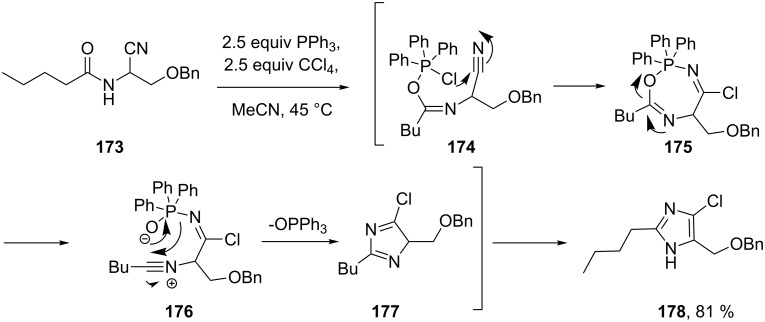
Synthesis of trisubstituted imidazoles.
Scheme 36
Scheme 36
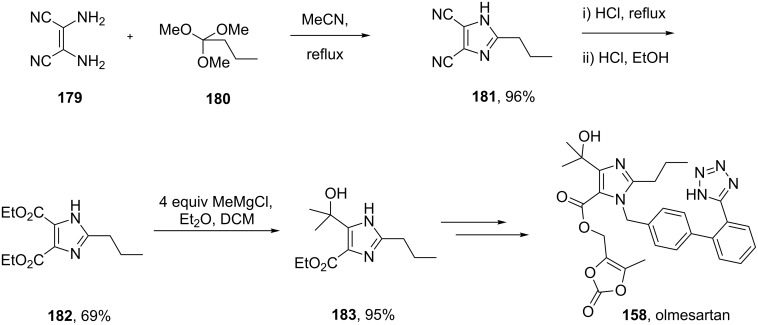
Preparation of the imidazole ring in olmesartan.
Scheme 37
Scheme 37
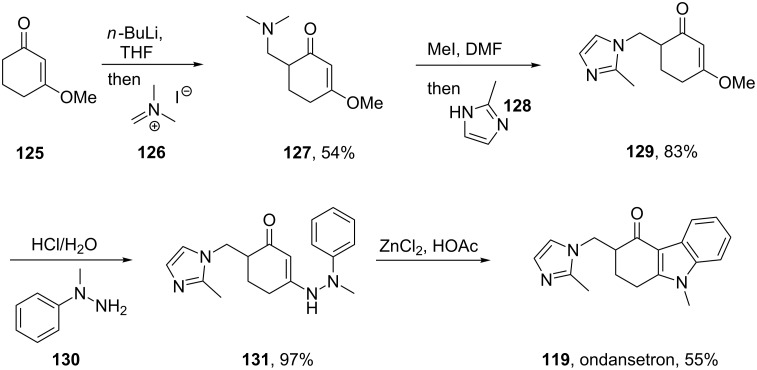
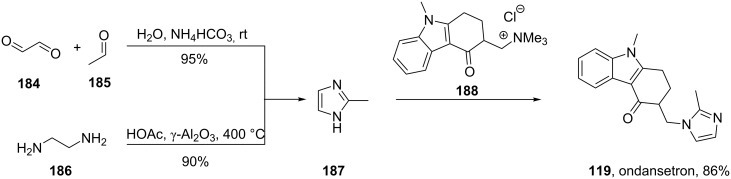
Synthesis of ondansetron.
Scheme 38
Scheme 38
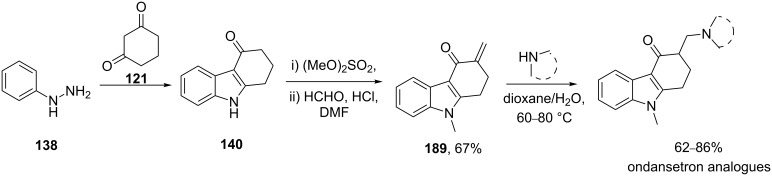
Alternative route to ondansetron and its analogues.
Scheme 39
Scheme 39
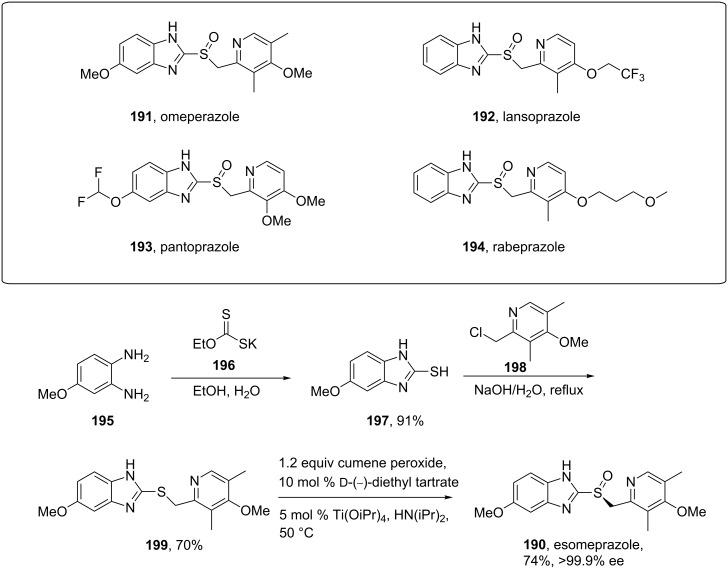
Proton pump inhibitors and synthesis of esomeprazole.
Scheme 40
Scheme 40
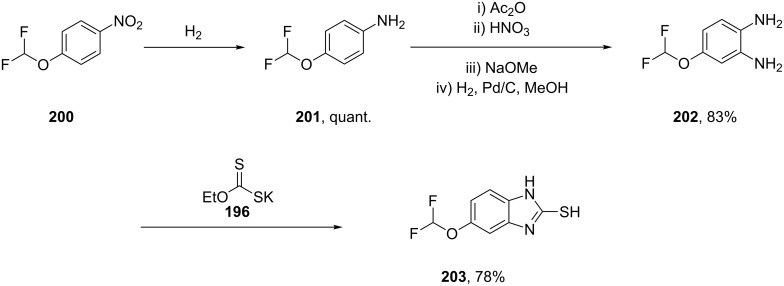
Synthesis of benzimidazole core pantoprazole.
Figure 6
Figure 6
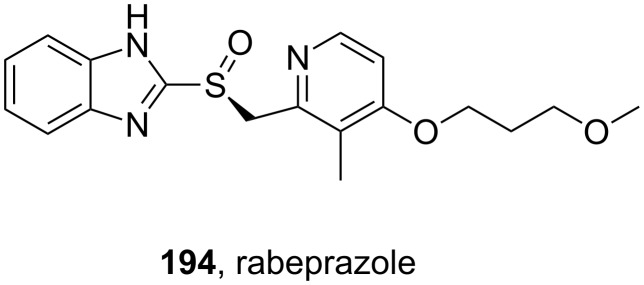
Structure of rabeprazole 194.
Scheme 41
Scheme 41
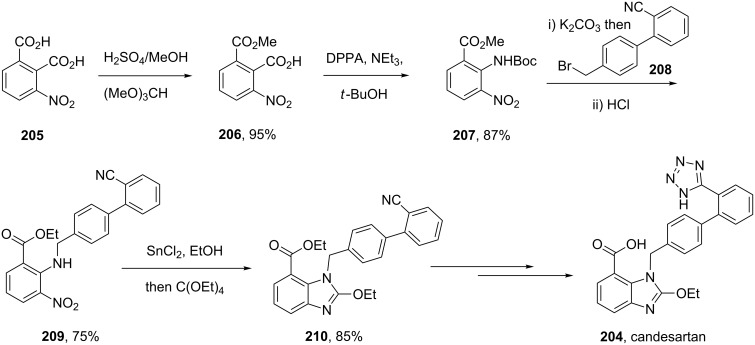
Synthesis of candesartan.
Scheme 42
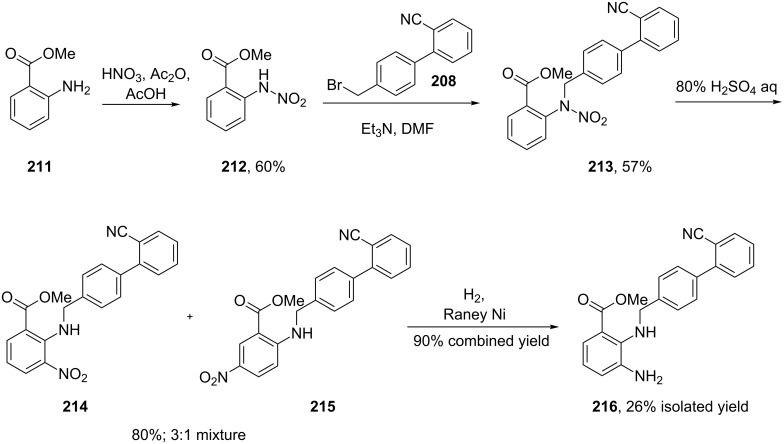
Scheme 42
Alternative access to the candesartan key intermediate 216.
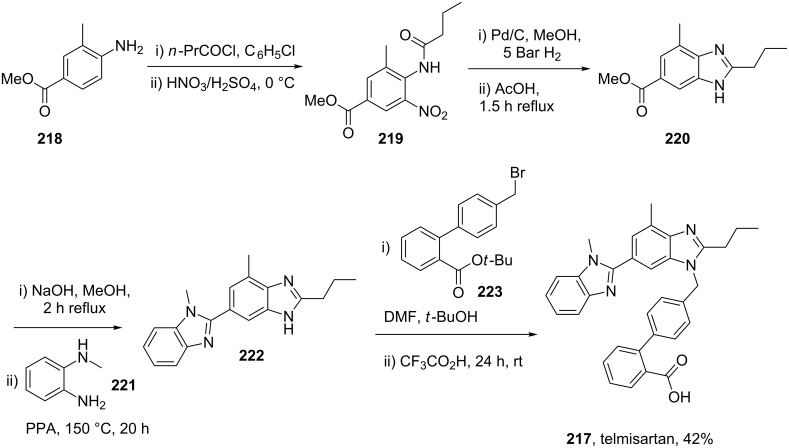
Scheme 43
Scheme 43
.Medicinal chemistry route to telmisartan.
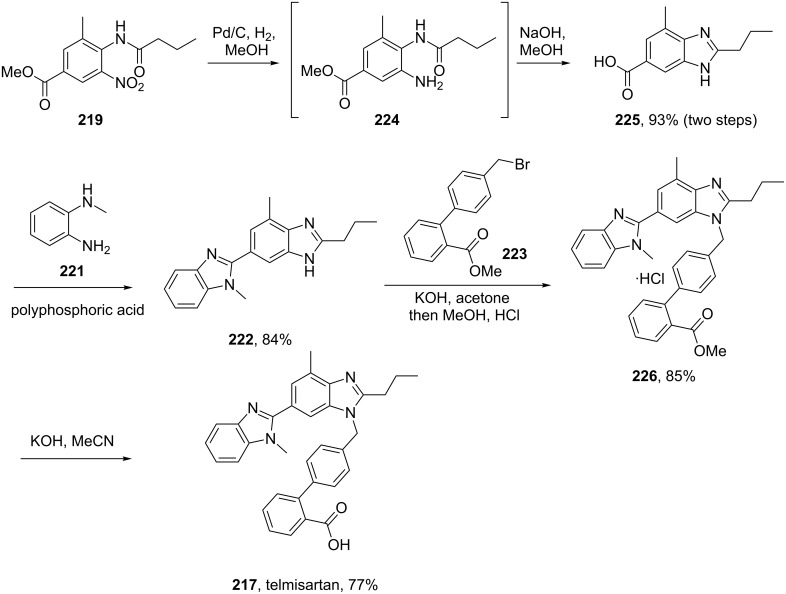
Scheme 44
Scheme 44
Improved synthesis of telmisartan.
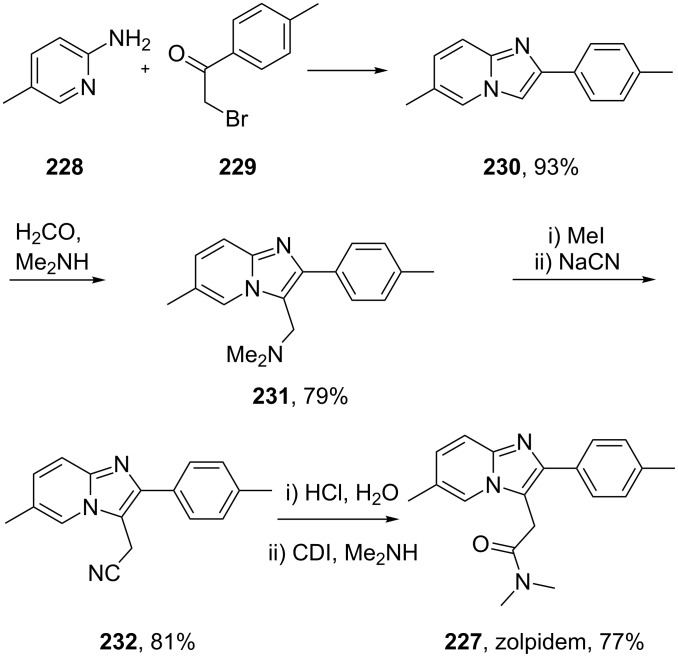
Scheme 45
Scheme 45
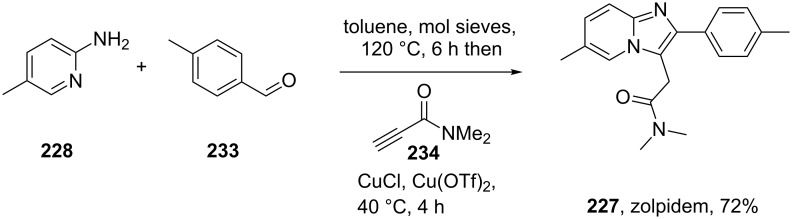
Synthesis of zolpidem.
Scheme 46
Scheme 46
Copper-catalysed 3-component coupling towards zolpidem.
Figure 7
Figure 7
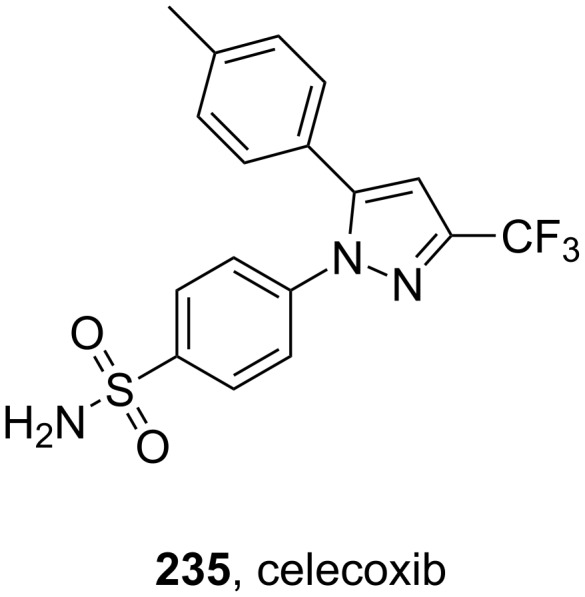
Structure of celecoxib.
Scheme 47
Scheme 47
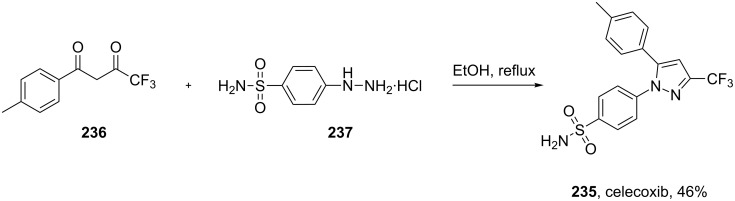
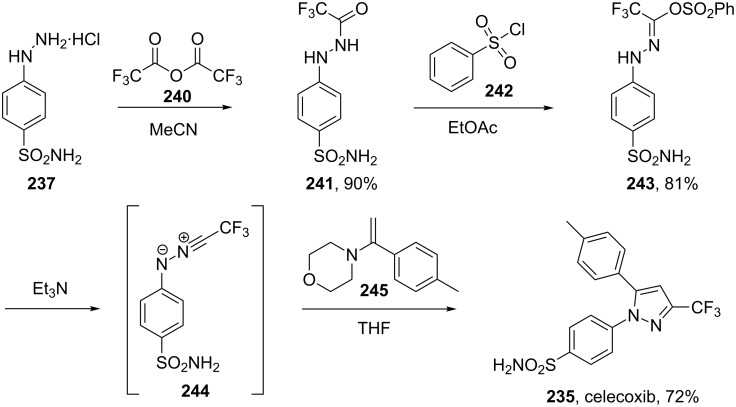
Preparation of celecoxib.
Scheme 48
Scheme 48
Alternative synthesis of celecoxib.
Scheme 49
Scheme 49
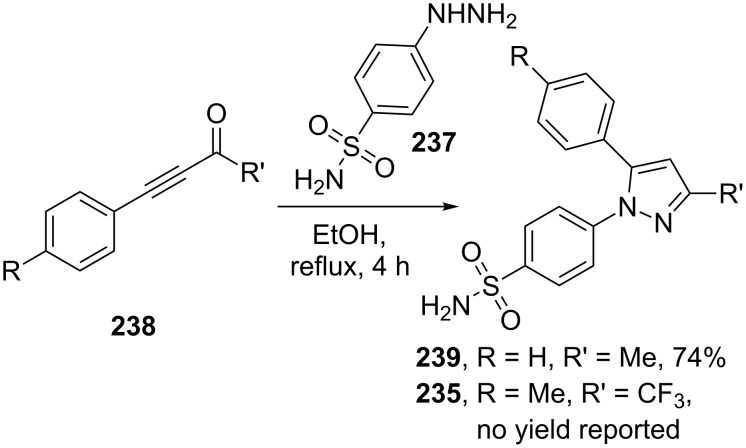
Regioselective access to celecoxib.
Scheme 50
Scheme 50
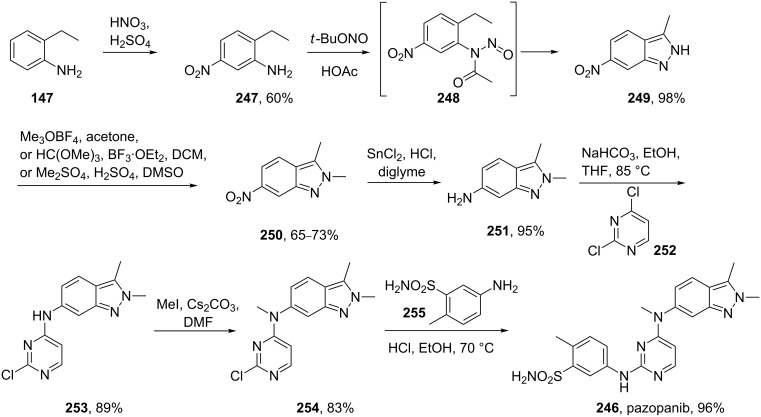
Synthesis of pazopanib.
Scheme 51
Scheme 51
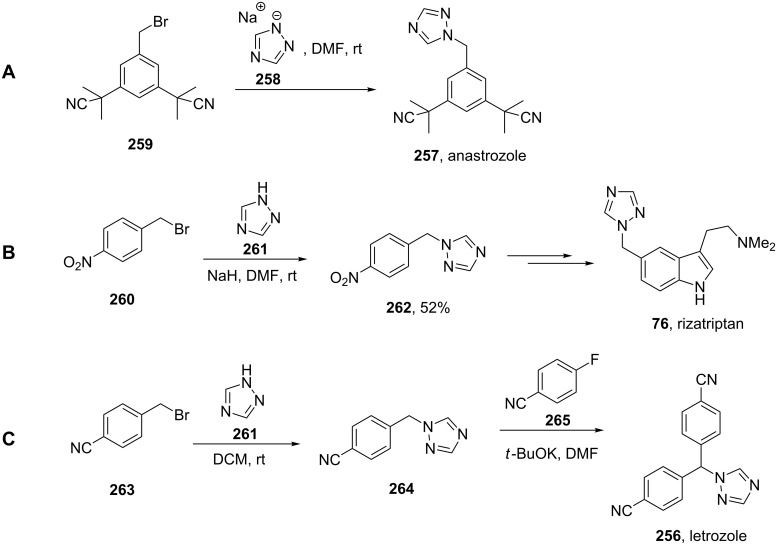
Syntheses of anastrozole, rizatriptan and letrozole.
Scheme 52
Scheme 52
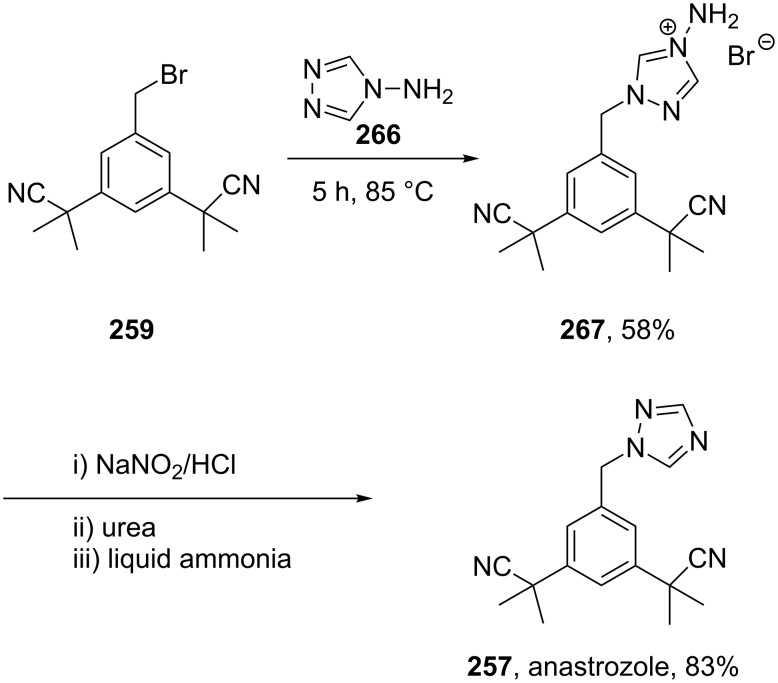
Regioselective synthesis of anastrozole.
Scheme 53
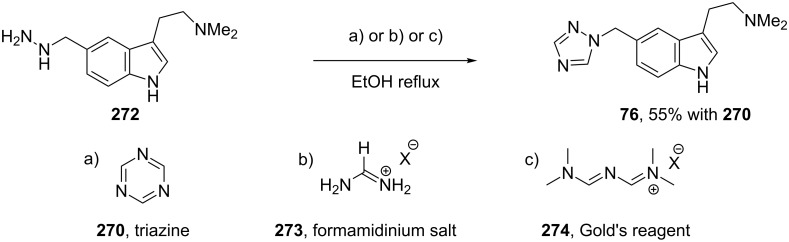
Scheme 53
Triazine-mediated triazole formation towards anastrozole.
Scheme 54
Scheme 54
Alternative routes to 1,2,4-triazoles.
Scheme 55
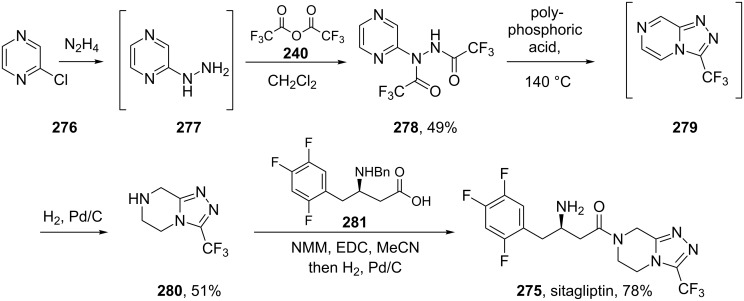
Scheme 55
Initial synthetic route to sitagliptin.
Figure 8
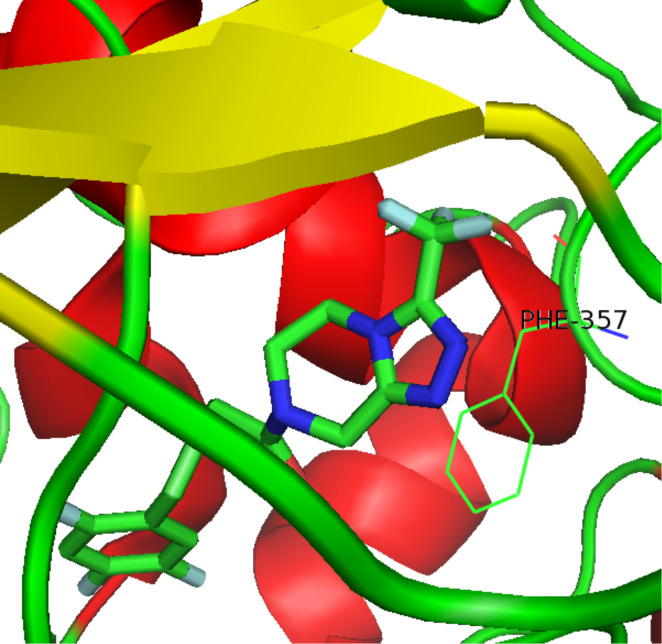
Figure 8
Binding of sitagliptin within DPP-IV.
Scheme 56
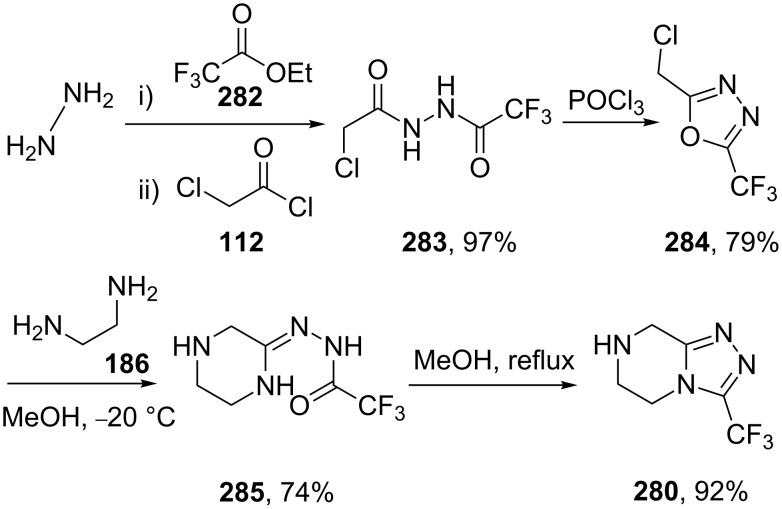
Scheme 56
The process route to sitagliptin key intermediate 280.
Scheme 57
Scheme 57
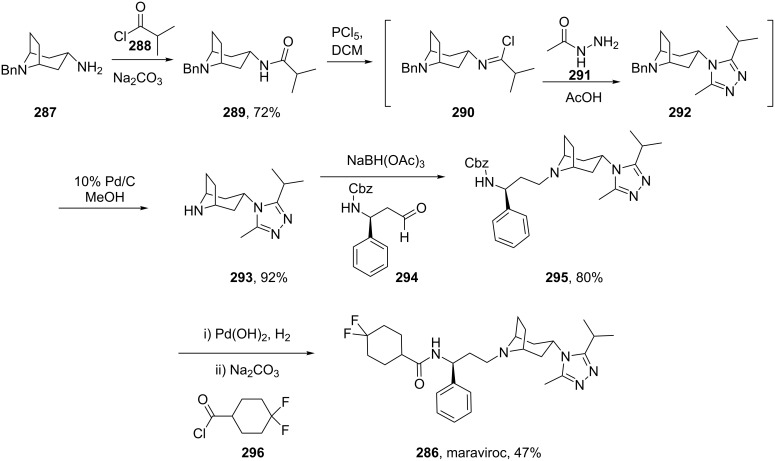
Synthesis of maraviroc.
Scheme 58
Scheme 58
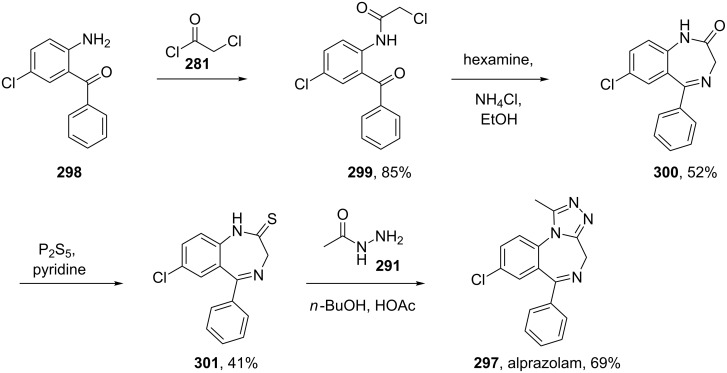
Synthesis of alprazolam.
Scheme 59
Scheme 59
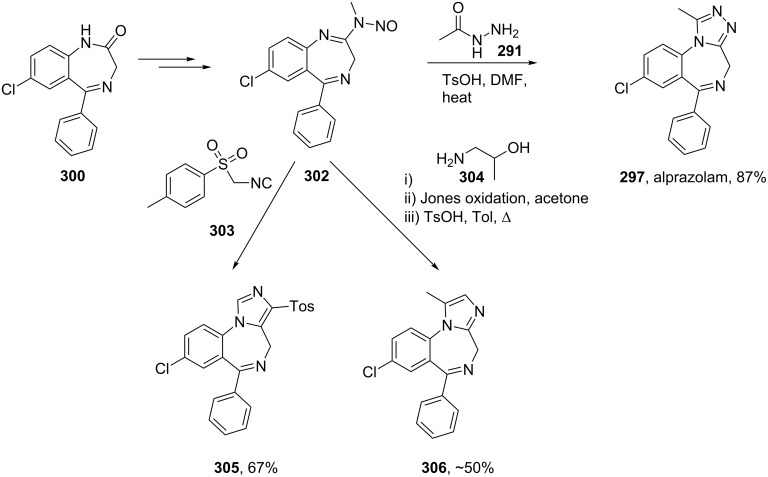
The use of N-nitrosoamidine derivatives in the preparation of fused benzodiazepines.
Figure 9
Figure 9
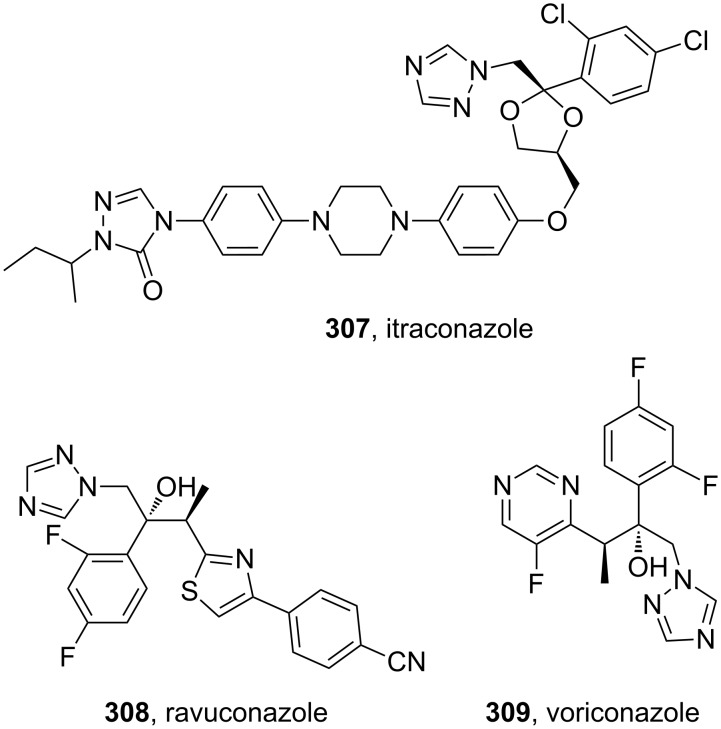
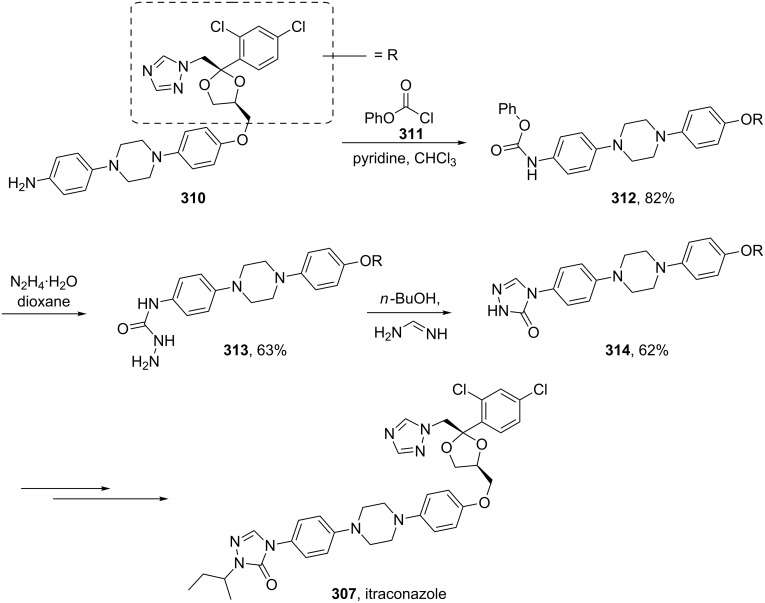
Structures of itraconazole, ravuconazole and voriconazole.
Scheme 60
Scheme 60
Synthesis of itraconazole.
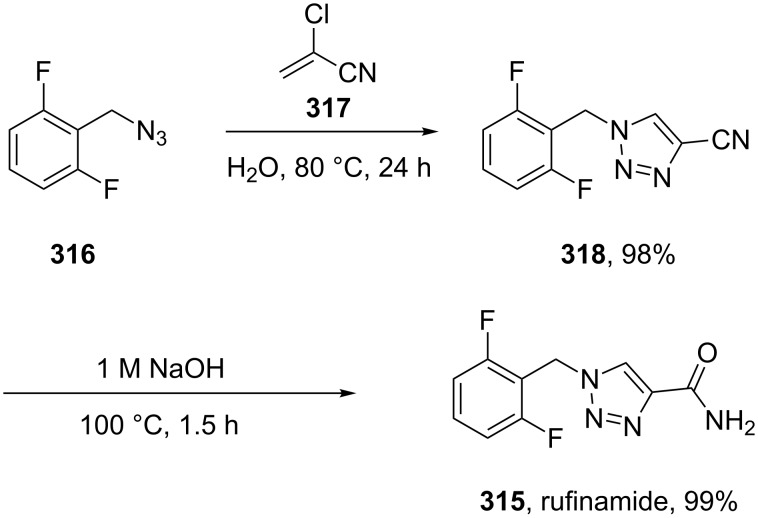
Scheme 61
Scheme 61
Synthesis of rufinamide.
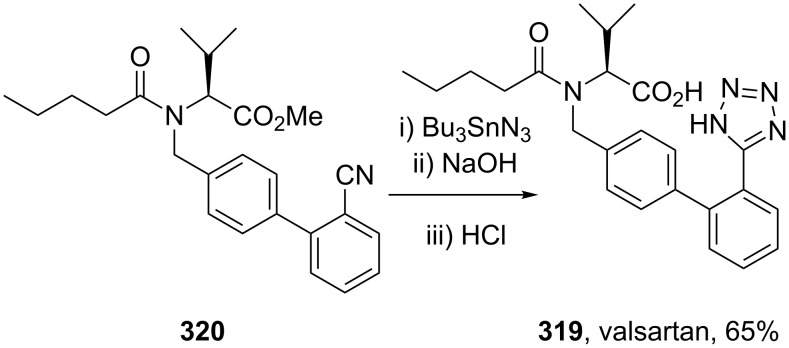
Scheme 62
Scheme 62
Representative tetrazole formation in valsartan.
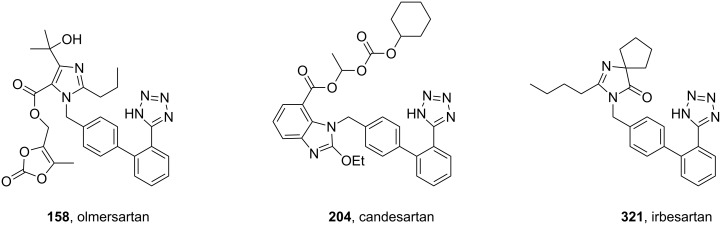
Figure 10
Figure 10
Structure of tetrazole containing olmesartan, candesartan and irbesartan.
Scheme 63
Scheme 63
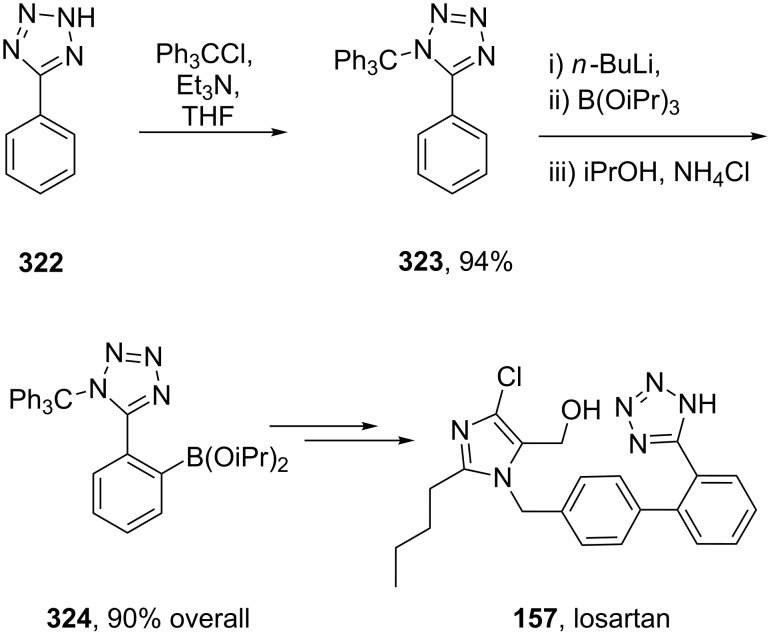
Early stage introduction of the tetrazole in losartan.
Scheme 64
Scheme 64
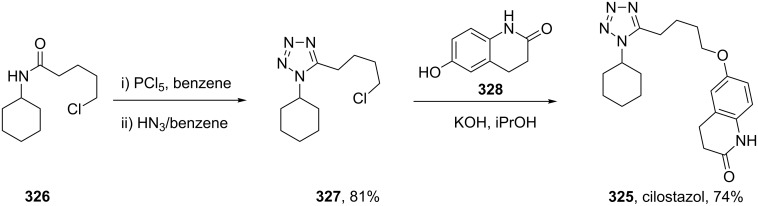
Synthesis of cilostazol.
Figure 11
Figure 11
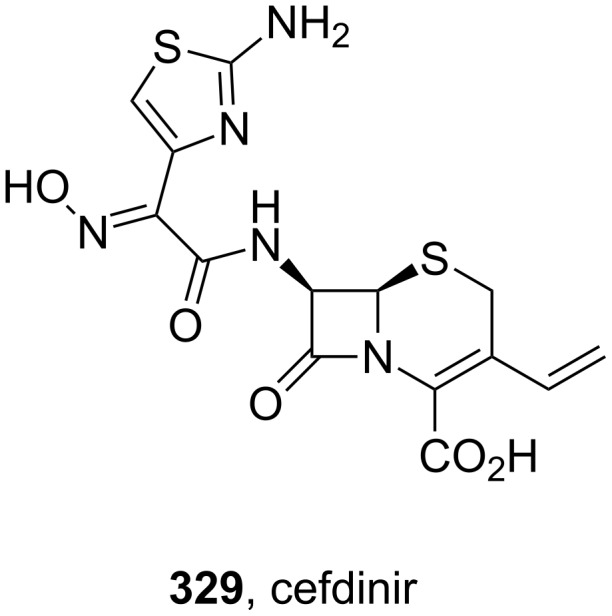
Structure of cefdinir.
Scheme 65
Scheme 65
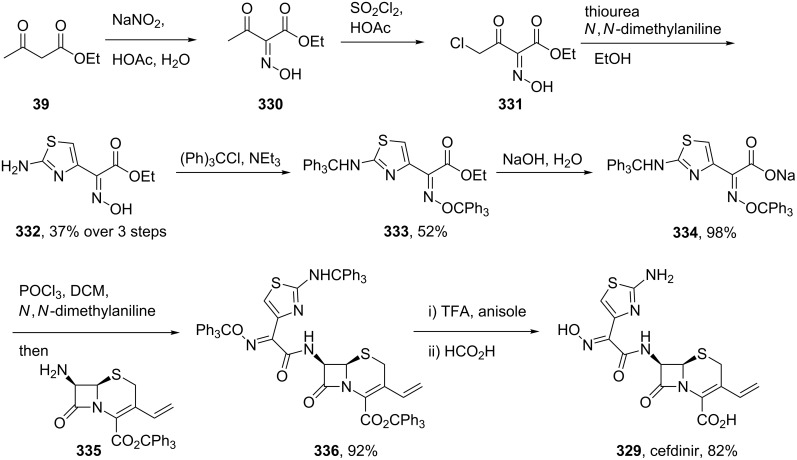
Semi-synthesis of cefdinir.
Scheme 66
Scheme 66
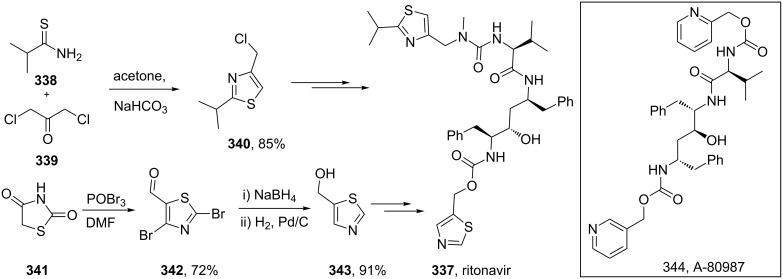
Thiazole syntheses towards ritonavir.
Scheme 67
Scheme 67
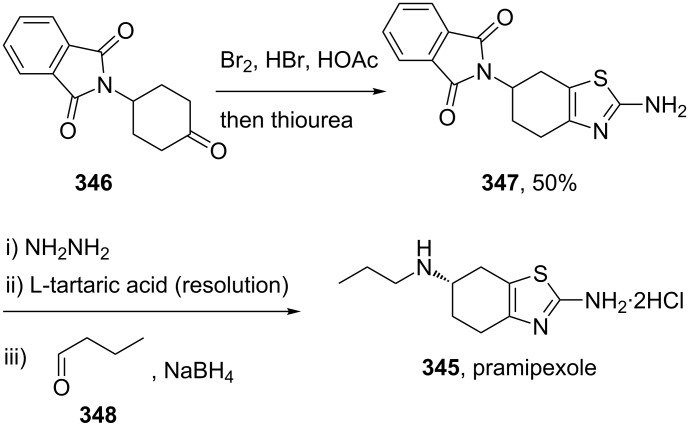
Synthesis towards pramipexole.
Scheme 68
Scheme 68
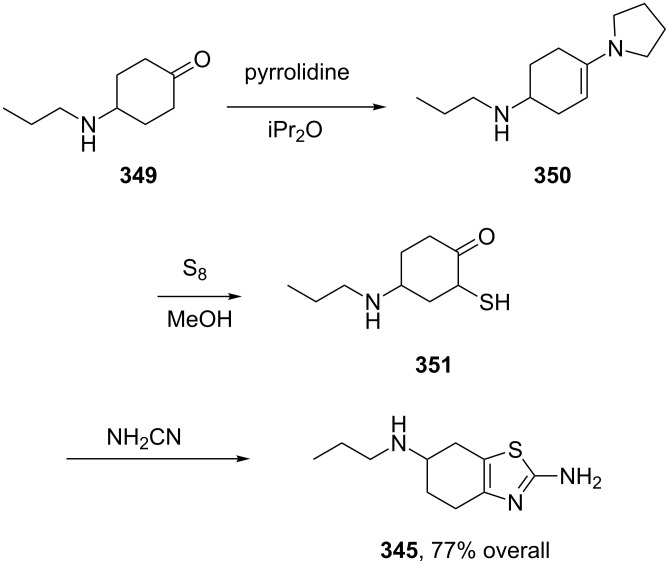
Alternative route to pramipexole.
Scheme 69
Scheme 69
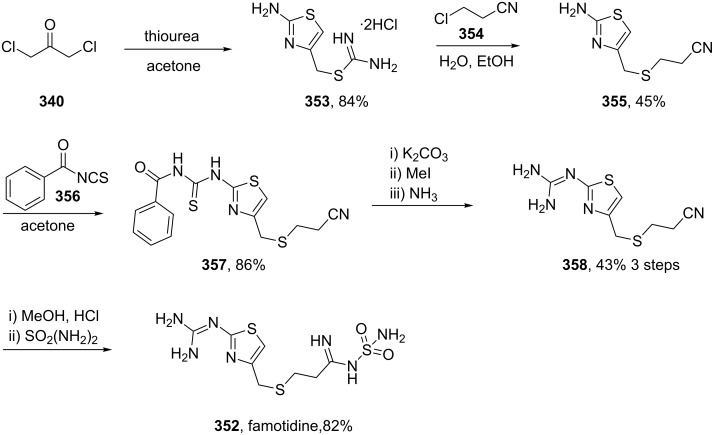
Synthesis of famotidine.
Scheme 70
Scheme 70
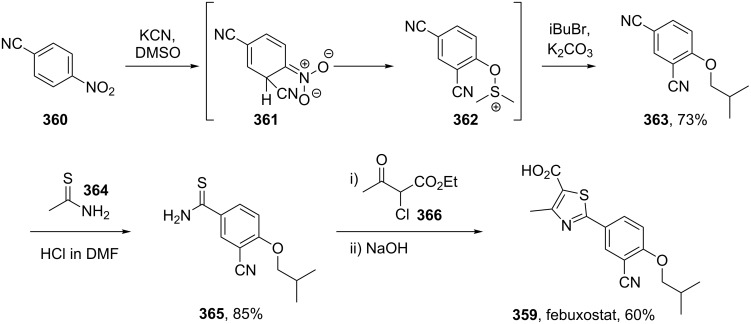
Efficient synthesis of the hyperuricemic febuxostat.
Scheme 71
Scheme 71
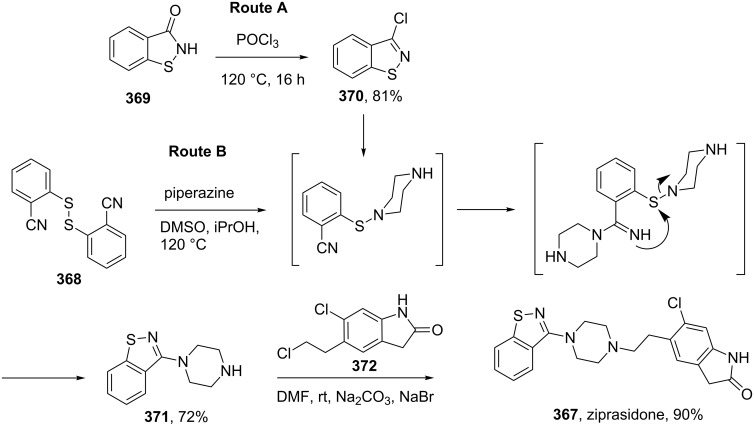
Synthesis of ziprasidone.
Figure 12
Figure 12
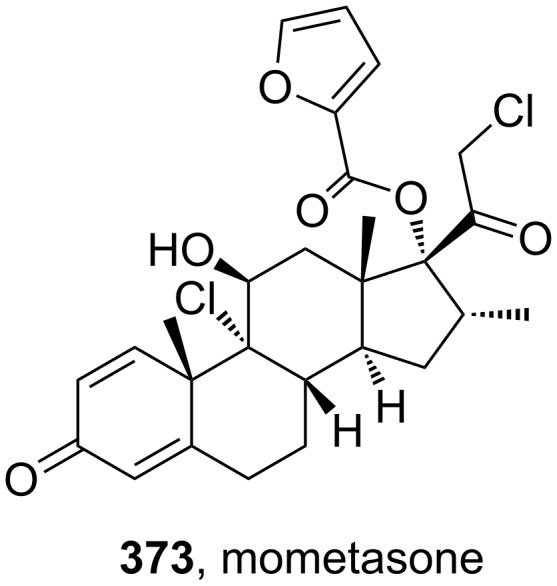
Structure of mometasone.
Scheme 72
Scheme 72
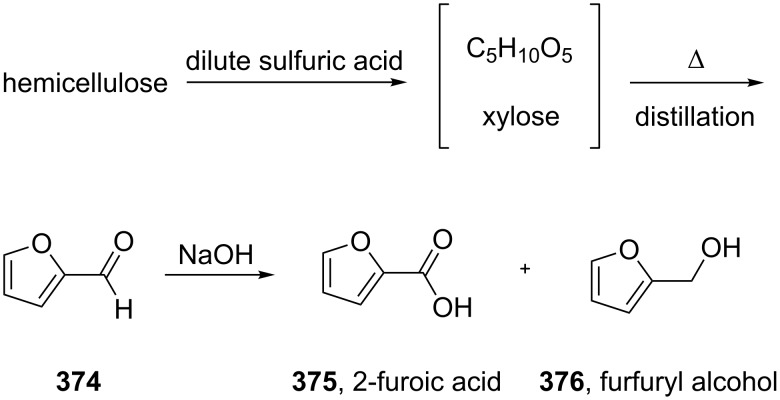
Industrial access to 2-furoic acid present in mometasone.
Scheme 73
Scheme 73
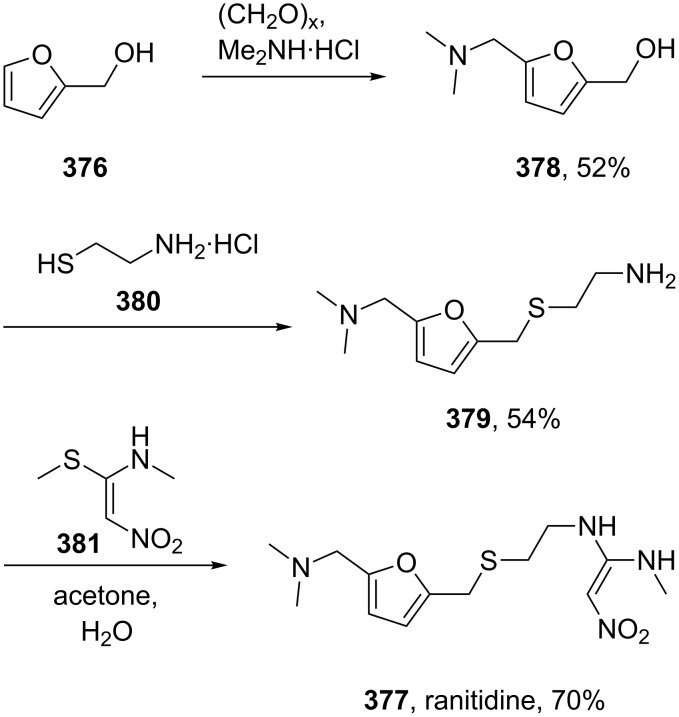
Synthesis of ranitidine from furfuryl alcohol.
Scheme 74
Scheme 74
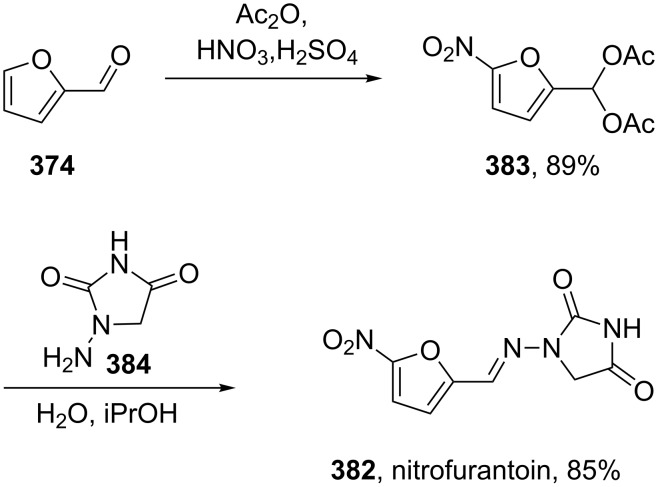
Synthesis of nitrofurantoin.
Scheme 75
Scheme 75
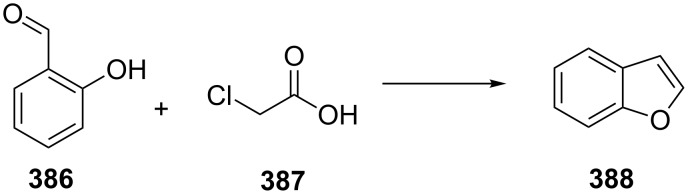
Synthesis of benzofuran.
Scheme 76
Scheme 76
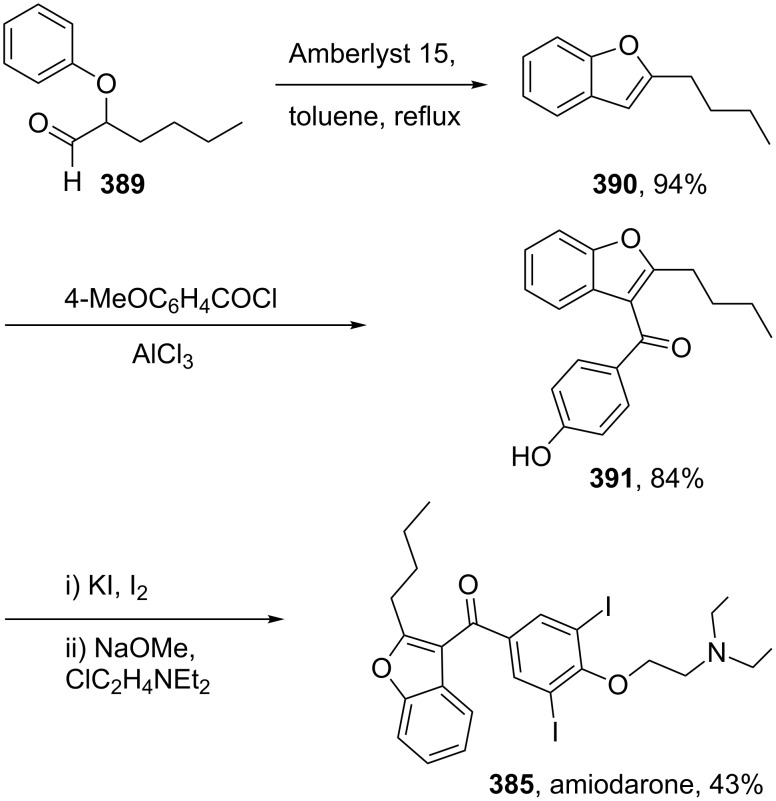
Synthesis of amiodarone.
Scheme 77
Scheme 77
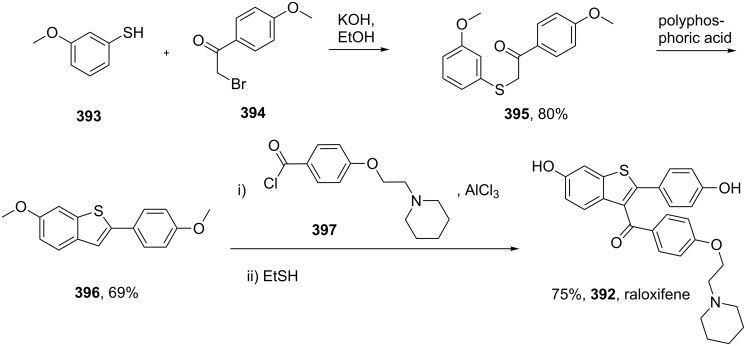
Synthesis of raloxifene.
Scheme 78
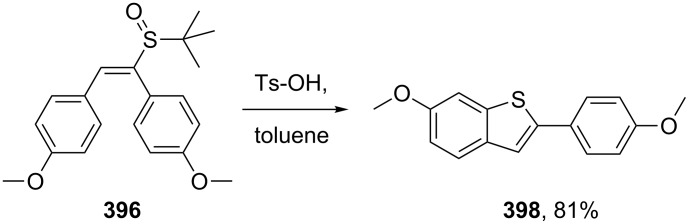
Scheme 78
Alternative access to the benzo[b]thiophene core of raloxifene.
Scheme 79
Scheme 79
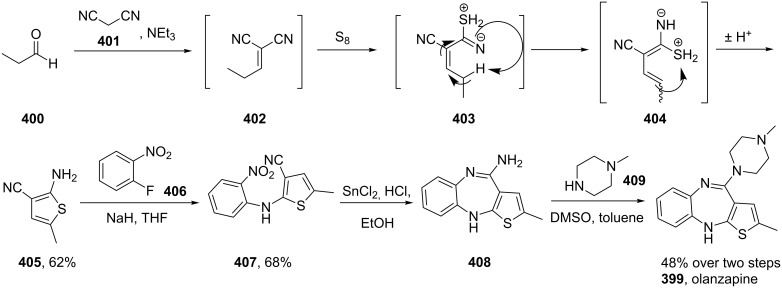
Gewald reaction in the synthesis of olanzapine.
Scheme 80
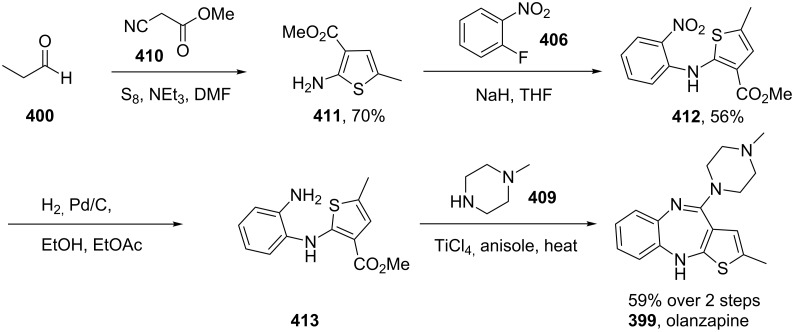
Scheme 80
Alternative synthesis of olanzapine.
Figure 13
Figure 13
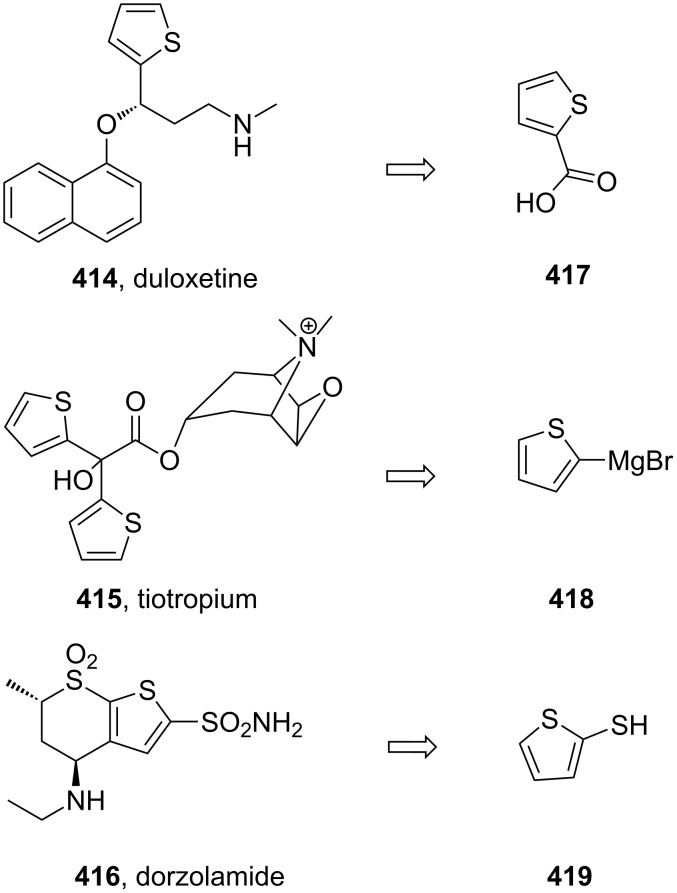
Access to simple thiophene-containing drugs.
Scheme 81
Scheme 81
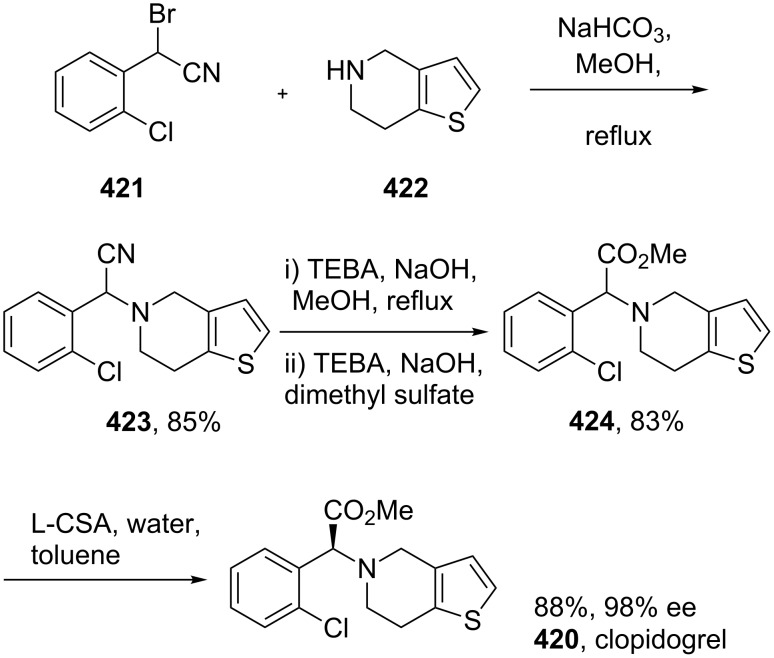
Synthesis of clopidogrel.
Scheme 82
Scheme 82
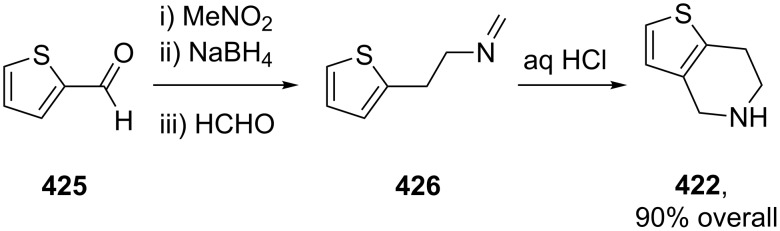
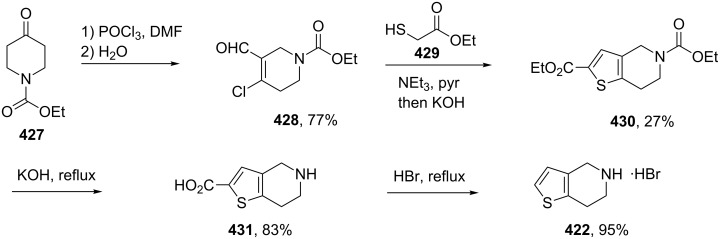
Pictet–Spengler reaction in the preparation of tetrahydrothieno[3,2-c]pyridine (422).
Scheme 83
Scheme 83
Alternative synthesis of key intermediate 422.
Figure 14
Figure 14
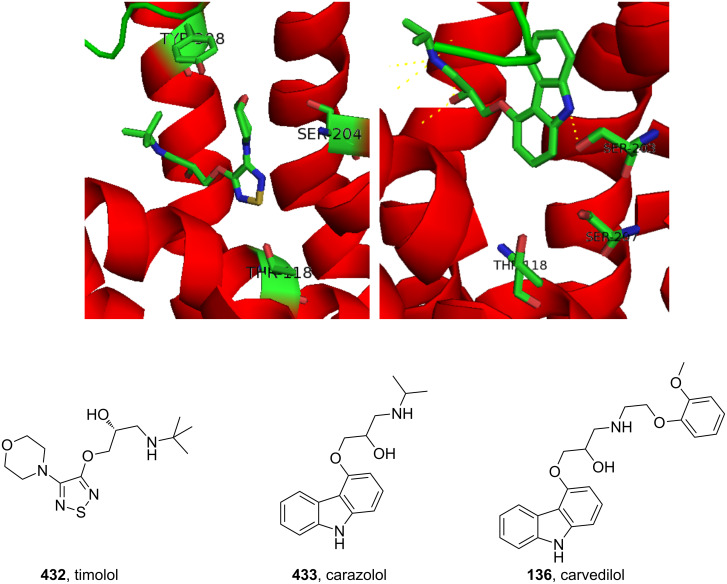
Co-crystal structures of timolol (left) and carazolol (right) in the β-adrenergic receptor.
Scheme 84
Scheme 84
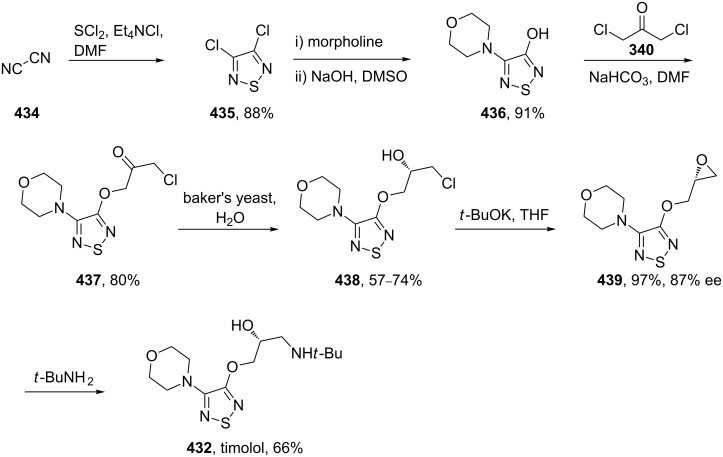
Synthesis of timolol.
Scheme 85
Scheme 85
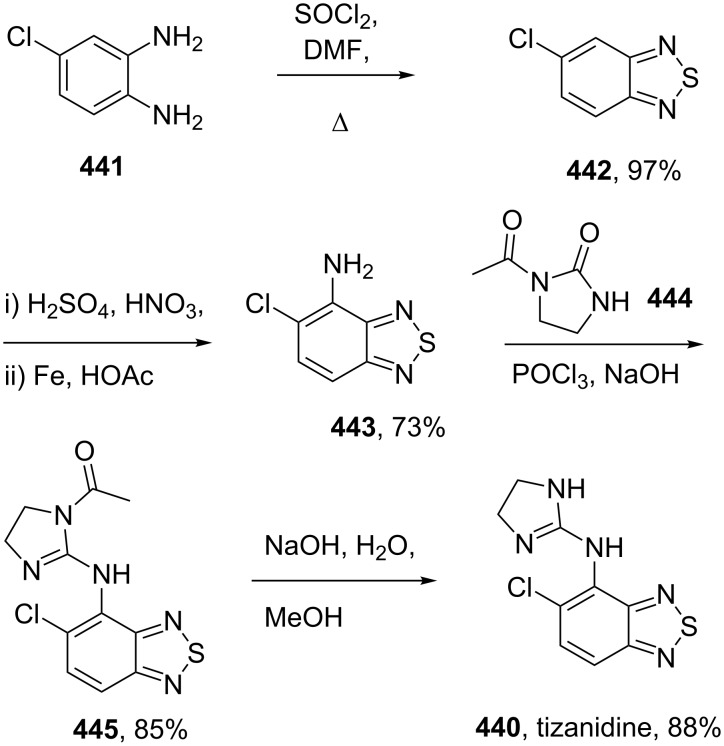
Synthesis of tizanidine 440.
Scheme 86
Scheme 86
Synthesis of leflunomide.
Scheme 87
Scheme 87
Synthesis of sulfamethoxazole.
Scheme 88
Scheme 88
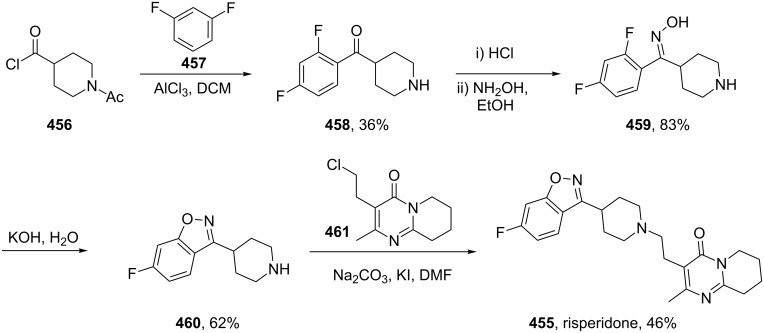
Synthesis of risperidone.
Figure 15
Figure 15
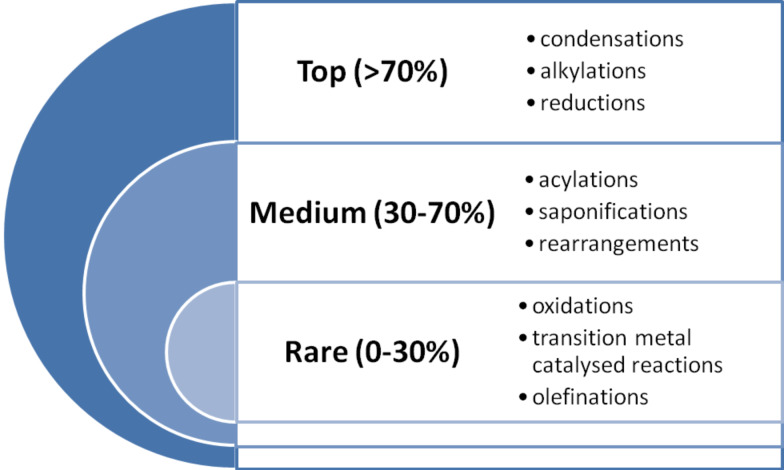
Relative abundance of selected transformations.
Figure 16
Figure 16
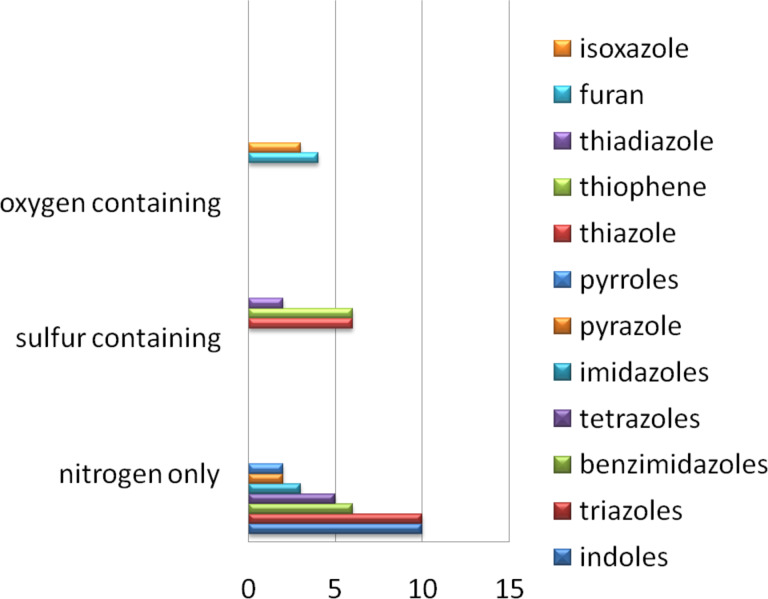
The abundance of heterocycles within top 200 drugs (5-membered rings).

References

    1. MIDAS World Review (TM), January 2009 - December 2009, IMS Health Incorporated.

    1. McGrath N A, Brichacek M, Njardarson J T. J Chem Educ. 2010;87:1348–1349. doi: 10.1021/ed1003806. - DOI
    1. Roth B D, Blankley C J, Chucholowski A W, Ferguson E, Hoefle M L, Ortwine D F, Newton R S, Sekerke C S, Sliskovic D R, Wilson M. J Med Chem. 1991;34:357–366. doi: 10.1021/jm00105a056. - DOI - PubMed
    1. Roth B D, inventor. Trans-6-[2-(3- or 4-carboxamido-substituted pyrrol-1-yl)alkyl]-4-hydroxypyran-2-one Inhibitors of Cholesterol Synthesis. 4,681,893. U.S. Patent. 1987 Jul 21;
    1. Sagyam R R, Padi P R, Ghanta M R, Vurimidi H. J Heterocycl Chem. 2007;44:923–926. doi: 10.1002/jhet.5570440429. - DOI

LinkOut - more resources