


Induction of macrophage chemotaxis by aortic extracts from patients with Marfan syndrome is related to elastin binding protein
- PMID: 21647416
- PMCID: PMC3103536
- DOI: 10.1371/journal.pone.0020138
Induction of macrophage chemotaxis by aortic extracts from patients with Marfan syndrome is related to elastin binding protein
Abstract
Marfan syndrome is an autosomal dominantly inherited disorder of connective tissue with prominent skeletal, ocular, and cardiovascular manifestations. Aortic aneurysm and dissection are the major determinants of premature death in untreated patients. In previous work, we showed that extracts of aortic tissues from the mgR mouse model of Marfan syndrome showed increased chemotactic stimulatory activity related to the elastin-binding protein. Aortic samples were collected from 6 patients with Marfan syndrome and 8 with isolated aneurysms of the ascending aorta. Control samples were obtained from 11 organ donors without known vascular or connective tissue diseases. Soluble proteins extracted from the aortic samples of the two patient groups were compared against buffer controls and against the aortic samples from controls with respect to the ability to induce macrophage chemotaxis as measured using a modified Boyden chamber, as well as the reactivity to a monoclonal antibody BA4 against bioactive elastin peptides using ELISA. Samples from Marfan patients displayed a statistically significant increase in chemotactic inductive activity compared to control samples. Additionally, reactivity to BA4 was significantly increased. Similar statistically significant increases were identified for the samples from patients with idiopathic thoracic aortic aneurysm. There was a significant correlation between the chemotactic index and BA4 reactivity, and the increases in chemotactic activity of extracts from Marfan patients could be inhibited by pretreatment with lactose, VGVAPG peptides, or BA4, which indicates the involvement of EBP in mediating the effects. Our results demonstrate that aortic extracts of patients with Marfan syndrome can elicit macrophage chemotaxis, similar to our previous study on aortic extracts of the mgR mouse model of Marfan syndrome (Guo et al., Circulation 2006; 114:1855-62).
Conflict of interest statement
Figures
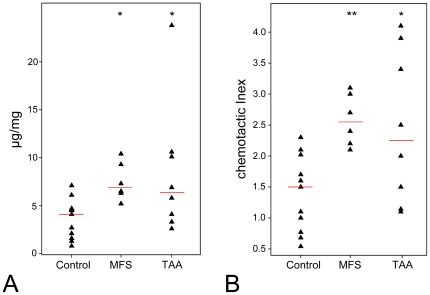

 0.05, **
 0.01.
0.01.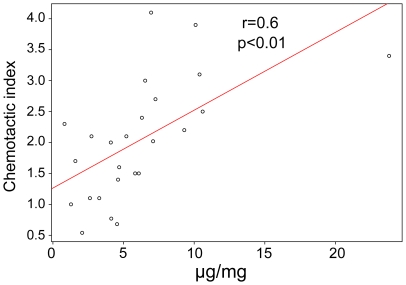
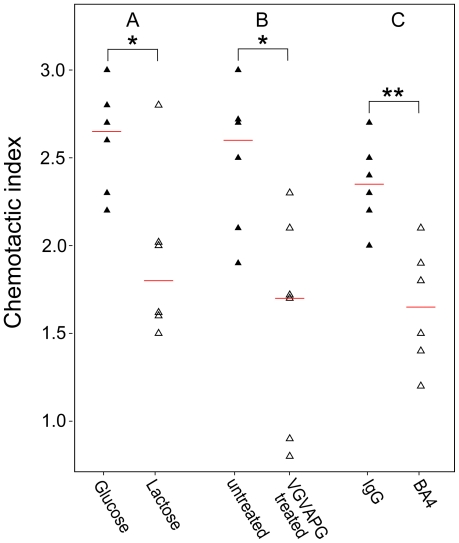

 0.05, **
 0.01.
0.01.References
-
- von Kodolitsch Y, Rybczynski M, Bernhardt A, Mir TS, Treede H, et al. Marfan syndrome and the evolving spectrum of heritable thoracic aortic disease: do we need genetics for clinical decisions? Vasa. 2010;39:17–32. - PubMed
-
- Isogai Z, Ono RN, Ushiro S, Keene DR, Chen Y, et al. Latent transforming growth factor beta-binding protein 1 interacts with fibrillin and is a microfibril-associated protein. J Biol Chem. 2003;278:2750–2757. - PubMed
Publication types
MeSH terms
Substances
LinkOut - more resources
Full Text Sources
Other Literature Sources
Medical
