


Long-term health and work outcomes of renal transplantation and patterns of work status during the end-stage renal disease trajectory
- PMID: 21656250
- PMCID: PMC3173627
- DOI: 10.1007/s10926-011-9317-1
Long-term health and work outcomes of renal transplantation and patterns of work status during the end-stage renal disease trajectory
Abstract
Introduction: The aim of this study was to examine the health- and work outcomes of renal transplant recipients long-term after transplantation as well as the pattern of work status, work ability and disability benefits during the end-stage renal disease (ESRD) trajectory that precedes transplantation.
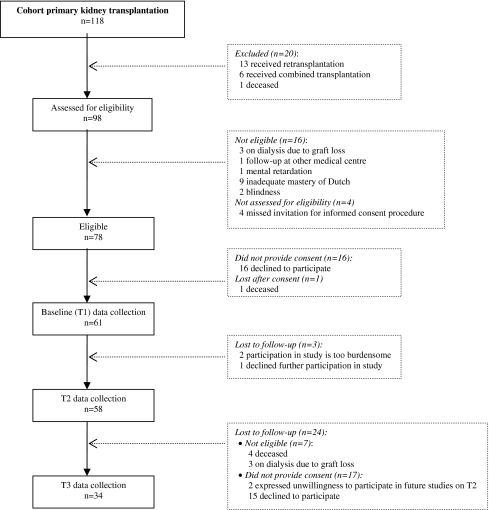
Methods: 34 transplant recipients completed interviews 3, 13 months and >6 years posttransplantation. Health status (SF-36), work ability (WAI), and fatigue (CIS) were assessed by questionnaires, clinical data were derived from medical charts, and data on functional limitations were extracted from the social security system database. The work status trajectory preceding transplantation was examined retrospectively.
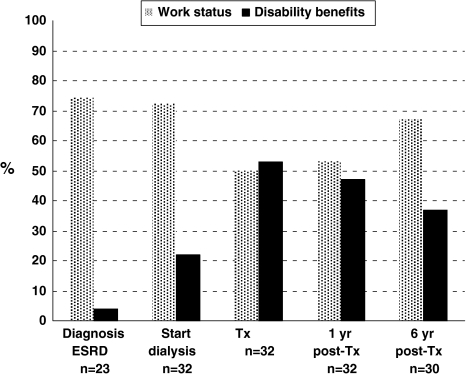
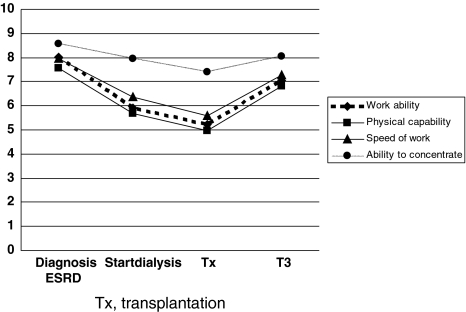
Results: Of the 34 third wave transplant recipients, 29% were severely fatigued. Compared with the general working population, recipients experienced worse general health and less vitality. Non-working recipients had worse renal function and general health, and more limitations in physical functioning compared to working recipients. The WAI score indicated moderate work ability for 60% of the employed recipients. Although 67% were employed (45% parttime), 30% of those working still received some disability benefits. Social insurance physicians found variable levels of functional limitations. The mean work status trajectory showed more sickness absence and less work ability during dialysis, but after transplantation, both work status and work ability generally improved.
Conclusions: Transplant recipients have a compromised health status which leads to functional limitations and disability. Although work status improved after transplantation, a substantial number of the transplant recipients received disability benefits. The negative health consequences of anti-rejection medications may play an important role in long-term work ability. These results indicate that a 'new' kidney has advantages over dialysis with respect to work, but does not necessarily leads to 'normal' work outcomes.
Figures
References
-
- Goodman WG, Danovitch GM. Options for patients with end-stage renal disease. In: Danovitch GM, editor. Handbook of kidney transplantation. Philadelphia: Lippincott Williams and Wilkins; 2001. pp. 1–16.
Publication types
MeSH terms
LinkOut - more resources
Full Text Sources
Medical
