


The p53 tumor suppressor protein regulates hematopoietic stem cell fate
- PMID: 21660944
- PMCID: PMC3081536
- DOI: 10.1002/jcp.22561
The p53 tumor suppressor protein regulates hematopoietic stem cell fate
Abstract
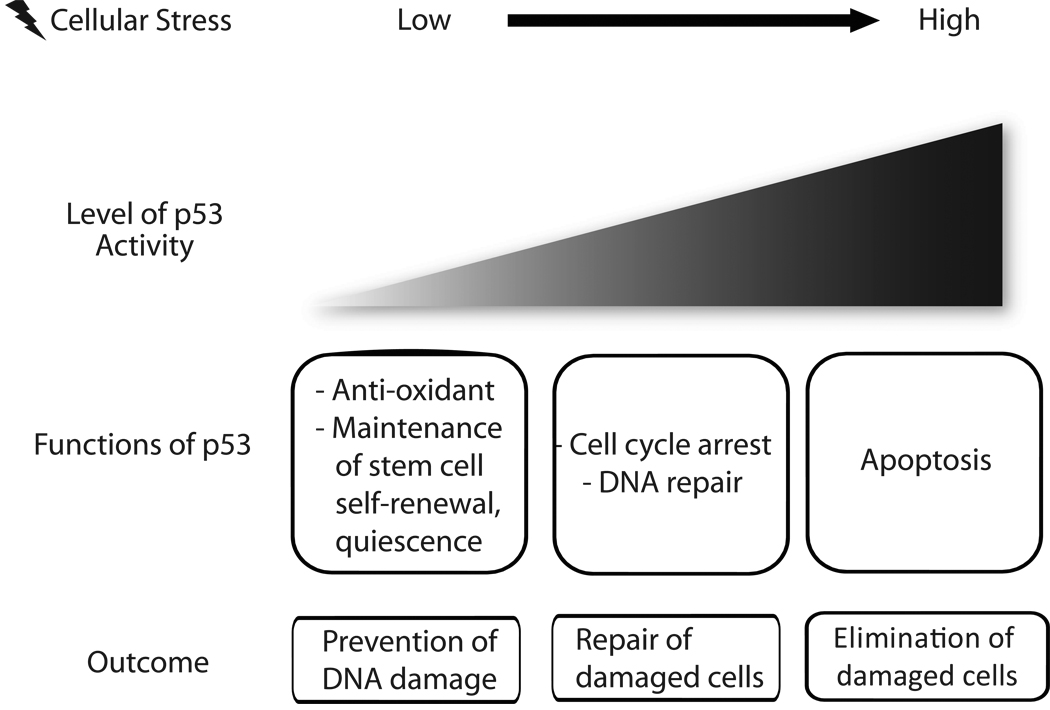
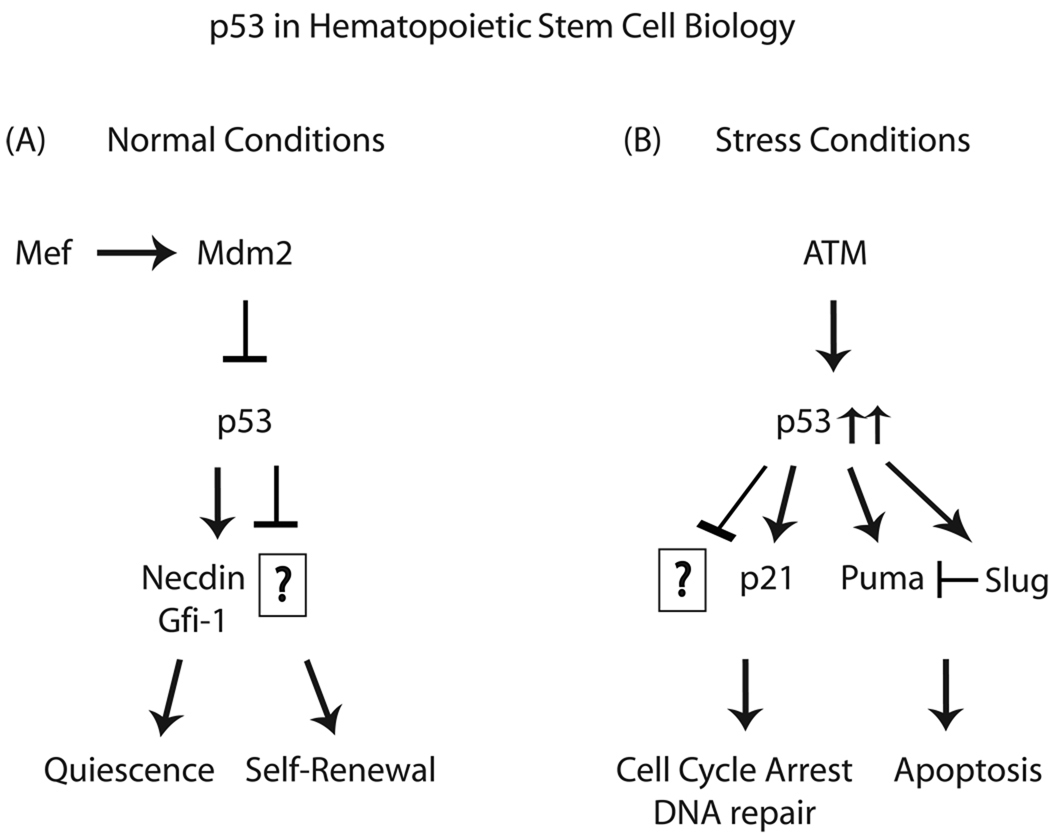
The p53 tumor suppressor protein is a key transcription factor that regulates several signaling pathways involved in the cell's response to stress. Through stress-induced activation, p53 accumulates and triggers the expression of target genes that protect the genetic integrity of all cells including hematopoietic stem cells (HSCs). These protective mechanisms include cell-cycle arrest, DNA repair, induction of apoptosis, or initiation of senescence. In addition to its function under stress conditions, p53 has important functions during steady-state hematopoiesis, regulating HSC quiescence and self-renewal. In addition, it appears that p53 levels affect HSC competition for the hematopoietic niche, with the less p53 activated HSCs preferentially surviving. The specific genes and precise mechanisms underlying p53's effects on normal HSCs are slowly being clarified. p53 also plays an important role in leukemia stem cell (LSC) behavior, with p53 loss affecting drug resistance and disease progression. Pharmacologic activation of p53 function could overcome the adverse impact of p53 inactivation in LSCs. Thus, understanding the p53 regulatory mechanisms active in HSCs and LSCs may promote the development of new therapeutic strategies that could eliminate the population of largely quiescent LSCs.
Copyright © 2010 Wiley-Liss, Inc.
Figures
References
-
- Akala OO, Park IK, Qian D, Pihalja M, Becker MW, Clarke MF. Long-term haematopoietic reconstitution by Trp53−/−p16Ink4a−/−p19Arf−/− multipotent progenitors. Nature. 2008;453(7192):228–232. - PubMed
-
- Arai F, Hirao A, Ohmura M, Sato H, Matsuoka S, Takubo K, Ito K, Koh GY, Suda T. Tie2/angiopoietin-1 signaling regulates hematopoietic stem cell quiescence in the bone marrow niche. Cell. 2004;118(2):149–161. - PubMed
-
- Attar EC, Scadden DT. Regulation of hematopoietic stem cell growth. Leukemia. 2004;18(11):1760–1768. - PubMed
-
- Baker SJ, Fearon ER, Nigro JM, Hamilton SR, Preisinger AC, Jessup JM, vanTuinen P, Ledbetter DH, Barker DF, Nakamura Y, White R, Vogelstein B. Chromosome 17 deletions and p53 gene mutations in colorectal carcinomas. Science. 1989;244(4901):217–221. - PubMed
Publication types
MeSH terms
Substances
Grants and funding
LinkOut - more resources
Full Text Sources
Medical
Research Materials
Miscellaneous
