


Efficacy of a referral and physical activity program for survivors of prostate cancer [ENGAGE]: rationale and design for a cluster randomised controlled trial
- PMID: 21663698
- PMCID: PMC3141765
- DOI: 10.1186/1471-2407-11-237
Efficacy of a referral and physical activity program for survivors of prostate cancer [ENGAGE]: rationale and design for a cluster randomised controlled trial
Abstract
Background: Despite evidence that physical activity improves the health and well-being of prostate cancer survivors, many men do not engage in sufficient levels of activity. The primary aim of this study (ENGAGE) is to determine the efficacy of a referral and physical activity program among survivors of prostate cancer, in terms of increasing participation in physical activity. Secondary aims are to determine the effects of the physical activity program on psychological well-being, quality of life and objective physical functioning. The influence of individual and environmental mediators on participation in physical activity will also be determined.
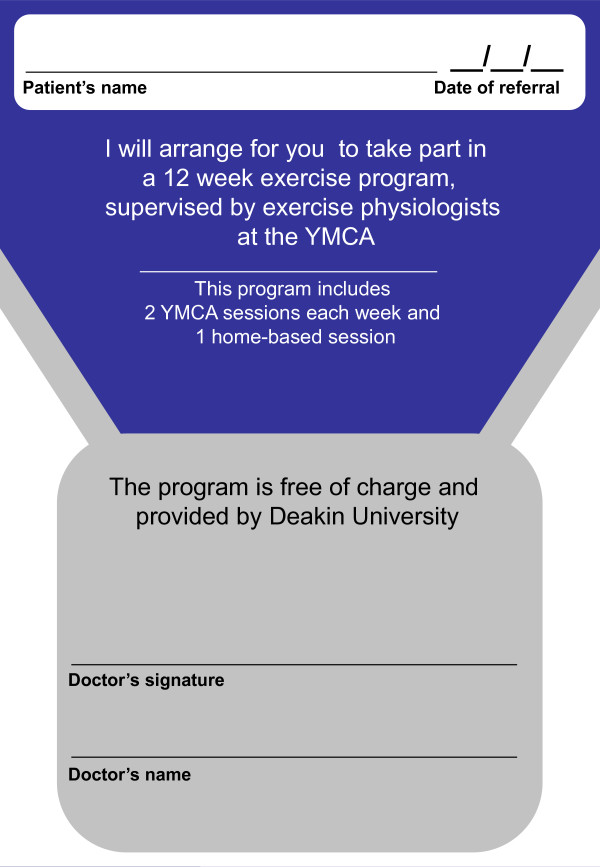
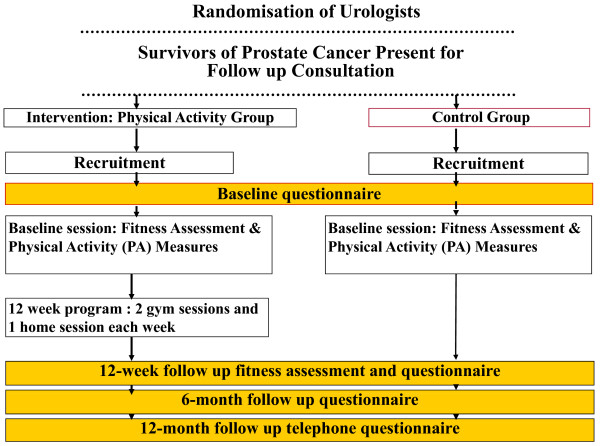
Methods/design: This study is a cluster randomised controlled trial. Clinicians of prostate cancer survivors will be randomised into either the intervention or control condition. Clinicians in the intervention condition will refer eligible patients (n=110) to participate in an exercise program, comprising 12 weeks of supervised exercise sessions and unsupervised physical activity. Clinicians allocated to the control condition will provide usual care to eligible patients (n=110), which does not involve the recommendation of the physical activity program. Participants will be assessed at baseline, 12 weeks, 6 months, and 12 months on physical activity, quality of life, anxiety, depression, self-efficacy, outcome expectations, goals, and socio-structural factors.
Discussion: The findings of this study have implications for clinicians and patients with different cancer types or other chronic health conditions. It will contribute to our understanding on the potential impact of clinicians promoting physical activity to patients and the long term health benefits of participating in physical activity programs.
Trial registration: Australia and New Zealand Clinical Trials Register (ANZCTR): ACTRN12610000609055Deakin University Human Research Ethics Approval 2011-085.
© 2011 Livingston et al; licensee BioMed Central Ltd.
Figures
References
-
- Ferlay J, Shin H, Bray F, Forman D, Mathers C, Parkin DM. GLOBOCAN 2008, Cancer Incidence and Mortality Worldwide: IARC CancerBase No. 10 [Internet] Lyon, France: International Agency for Research on Cancer; 2010.
-
- Australian Institute of Health and Welfare. Cancer in Australia: An overview. Cancer series no. 60. Cat. no. CAN 56. Canberra, Australia: AIHW; 2010.
-
- Australian Institute of Health and Welfare. Cancer in Australia: In Brief 2010. Canberra: AIHW; 2010.
Publication types
MeSH terms
LinkOut - more resources
Full Text Sources
Medical
