Review
. 2011 Oct 22;346(1-2):102-9.
doi: 10.1016/j.mce.2011.05.041. Epub 2011 Jun 1.

Genetic counseling for isolated GnRH deficiency

Affiliations
Review

Genetic counseling for isolated GnRH deficiency

Margaret G Au et al. Mol Cell Endocrinol. .

Abstract

As our understanding of the complexities of the various etiologies and complex genetic architecture of GnRH deficiency grows, so too does the need to apply newly-developed genetic tools in a way that: (a) is meaningful to individuals and their families; (b) integrates all of the phenotypic features of this syndrome into a rationale; and (c) provides up-to-date diagnostic technologies in a cost-effective algorithm of genetic testing. Genetic counseling aims to accomplish these goals through ascertainment of detailed family histories, targeted comprehensive phenotypic evaluations, informed selection of genetic testing, interpretation of genetic test results, and the provision of highly specific risk assessments and psychological support to individuals diagnosed with this reproductive condition. This chapter offers a guide to incorporating this rapidly evolving state of knowledge of the pedigree and phenotypes into the process of selecting and prioritizing genetic testing. In addition, the provision of risk assessment that accounts for nuanced genetic concepts such as variable expressivity, incomplete penetrance, and oligogenicity, all of which are emerging features of the genetics of this clinical syndrome, is considered. Beyond translating genetic information, genetic counseling should address the psychological impact of embarrassment, shame, anxiety, and guilt that are often seen among individuals with reproductive disorders.


Figures

Figure 1
Figure 1
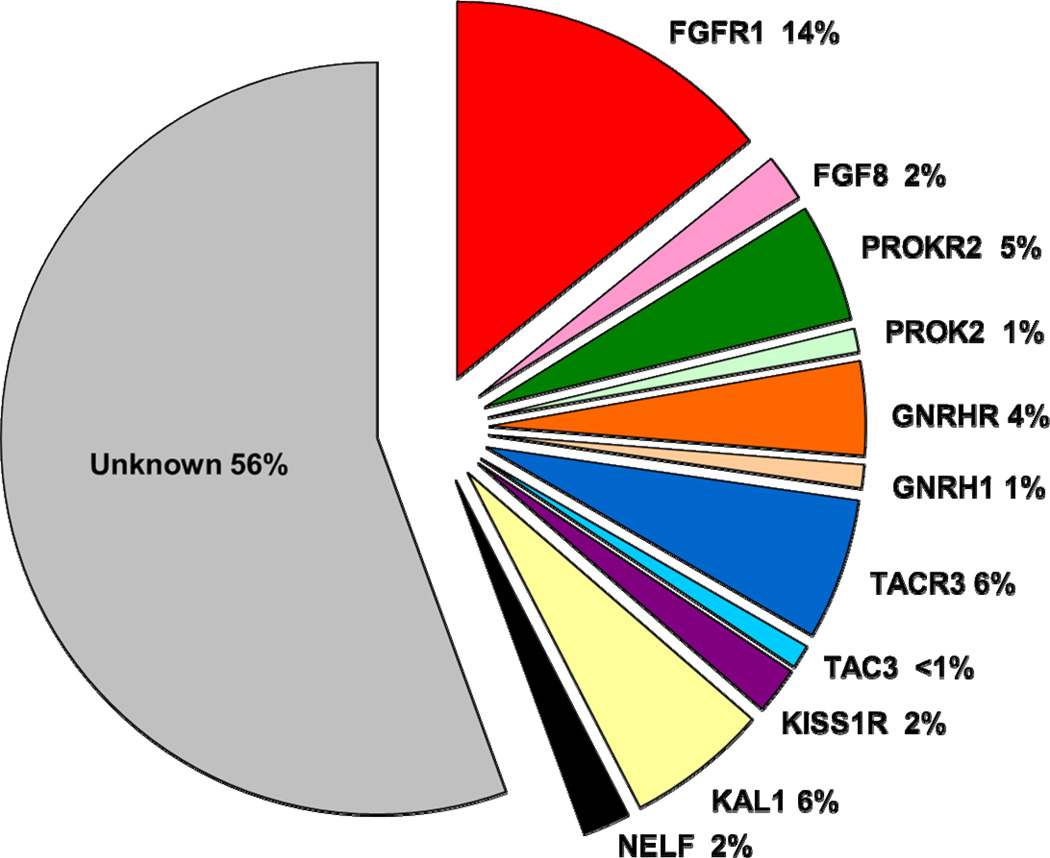
Prevalence of rare sequence variants (present in less than 1% of the healthy control population) in the IGD study participants screened through the Reproductive Endocrine Unit at Massachusetts General Hospital. Rare sequence variants in known IGD genes have been detected in approximately 44% of our patient cohort with IGD, while the majority of patients with IGD have an unknown genetic etiology.
Figure 2
Figure 2
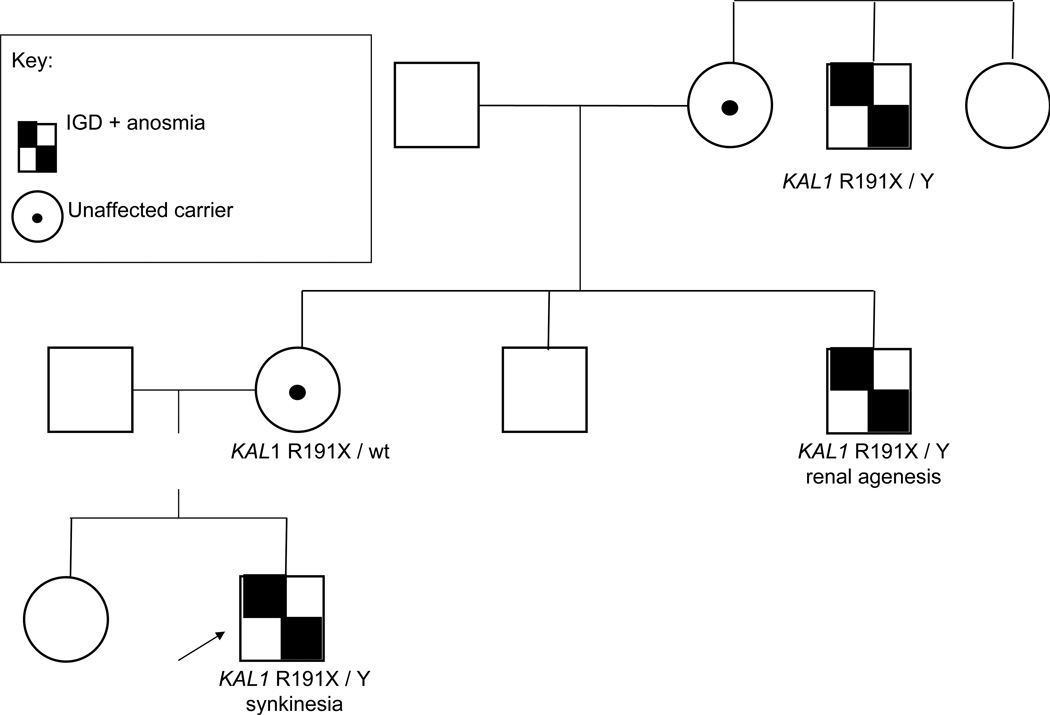
A family with IGD + anosmia (Kallmann syndrome) demonstrating x-linked recessive inheritance and phenotypic features typical of KAL1. The proband, indicated by the arrow, has synkinesia in addition to his anosmic IGD, and carries a R191X mutation on the KAL1 gene on his X chromosome and a normal Y chromosome. His maternal uncle carries the same KAL1 mutation and has Kallmann syndrome with renal agenesis, and his maternal great-uncle with the mutation also has Kallmann syndrome. Typical of an x-linked recessive pedigree, no male-to-male transmission is seen and female carriers are asymptomatic.
Figure 3
Figure 3
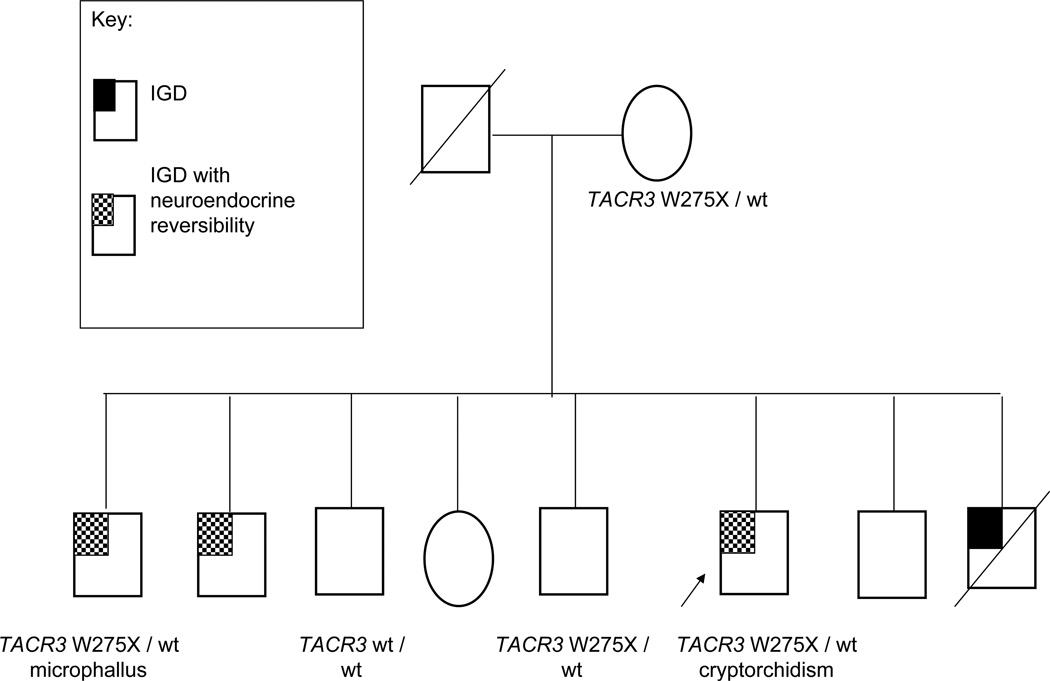
A TACR3 positive family with IGD demonstrating complex autosomal recessive inheritance. Typical of an autosomal recessive pedigree, the affected family members with IGD are siblings and the mother is a carrier of a single TACR3 mutation. However, in true autosomal recessive inheritance, affected family members are expected to carry a genetic variant on each allele, while only one mutated allele has been identified in the affected members of this family. The microphallus seen in one of the brothers with IGD, as well as the neuroendocrine reversibility, can be subtle clues to suspect a TACR3 or TAC3 mutation..
Figure 4
Figure 4
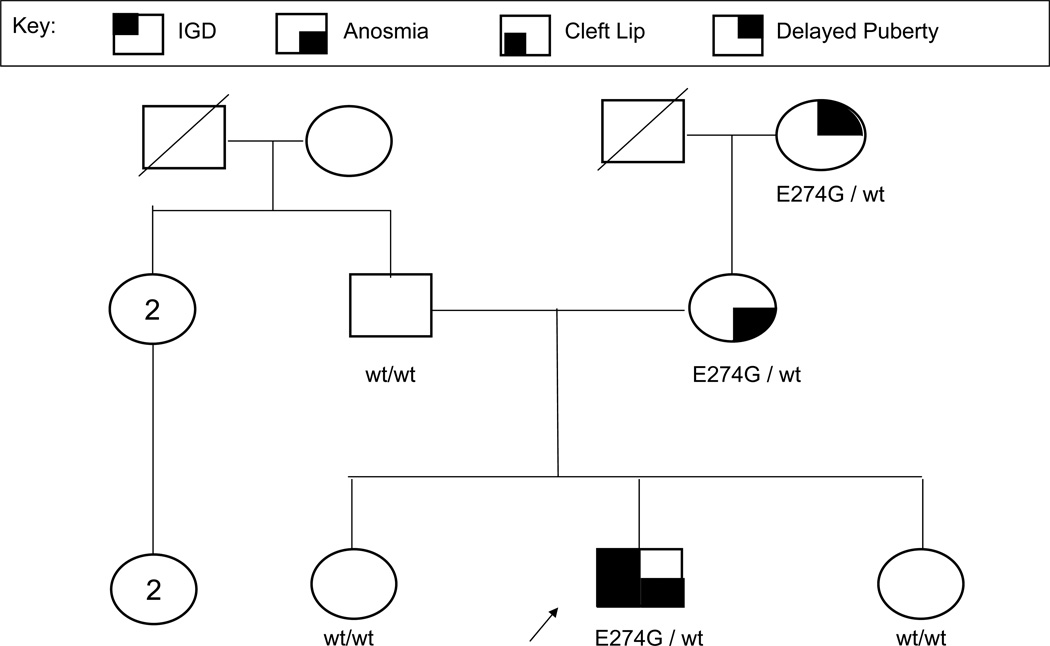
An IGD pedigree showcasing autosomal dominant inheritance with variable expressivity. As is typical for an autosomal dominant inheritance pattern, several generations have an “affected” family member. Affected individuals have one wild-type FGFR1 allele and one mutated FGFR1 allele. Additionally, the concept of variable expressivity is shown by the grandmother with delayed puberty, the mother with anosmia and normal puberty, and the proband (indicated by the arrow) with IGD, anosmia, and cleft lip, though all have the same genetic change.
Figure 5
Figure 5
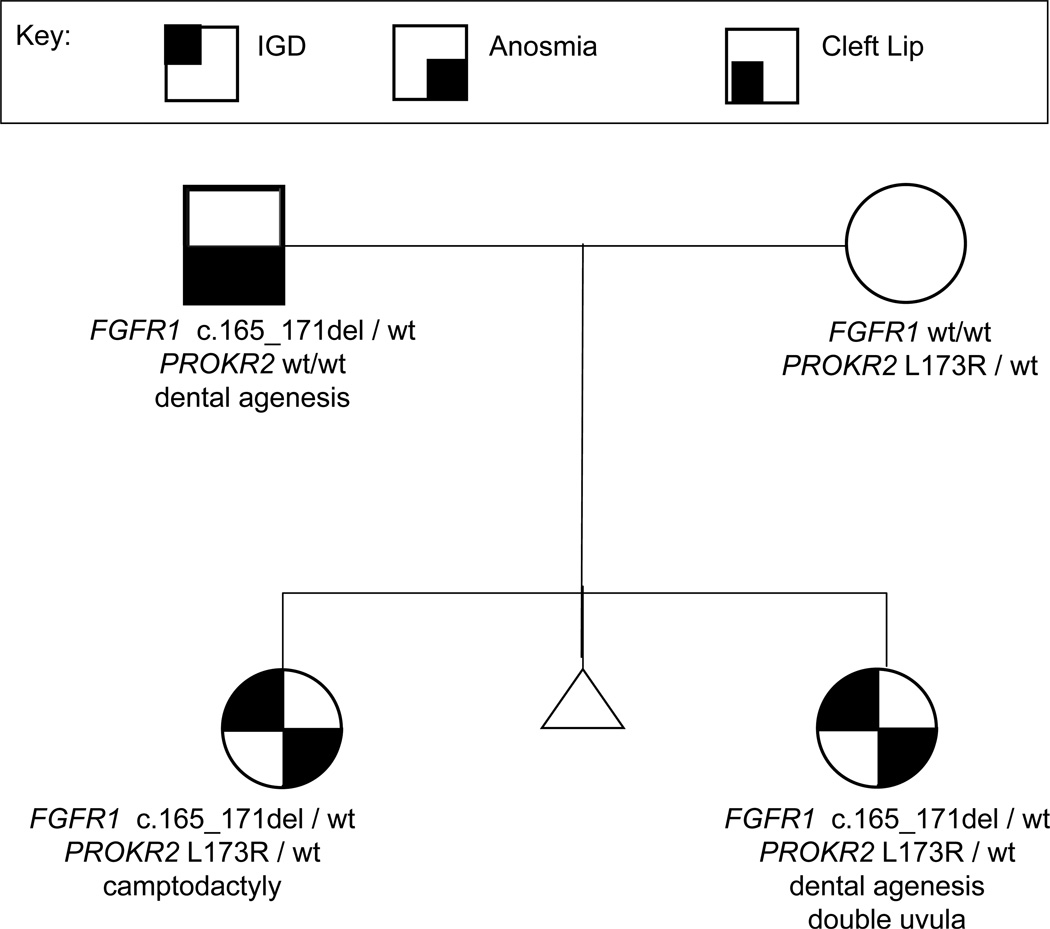
An example of a family displaying digenic causes of IGD. Given the non-reproductive phenotypes present in the family (camptodactyly, dental agenesis, cleft lip), it seemed likely that the family would carry the FGFR1 variant which was identified in both daughters with Kallmann syndrome (IGD + anosmia). However, the additional presence of a PROKR2 variant helps clarify the more severe phenotype in the daughters. The PROKR2 variant likely modifies the phenotypic effects of FGFR1 leading to IGD for the daughters who have a rare sequence variant in each gene.
Figure 6
Figure 6
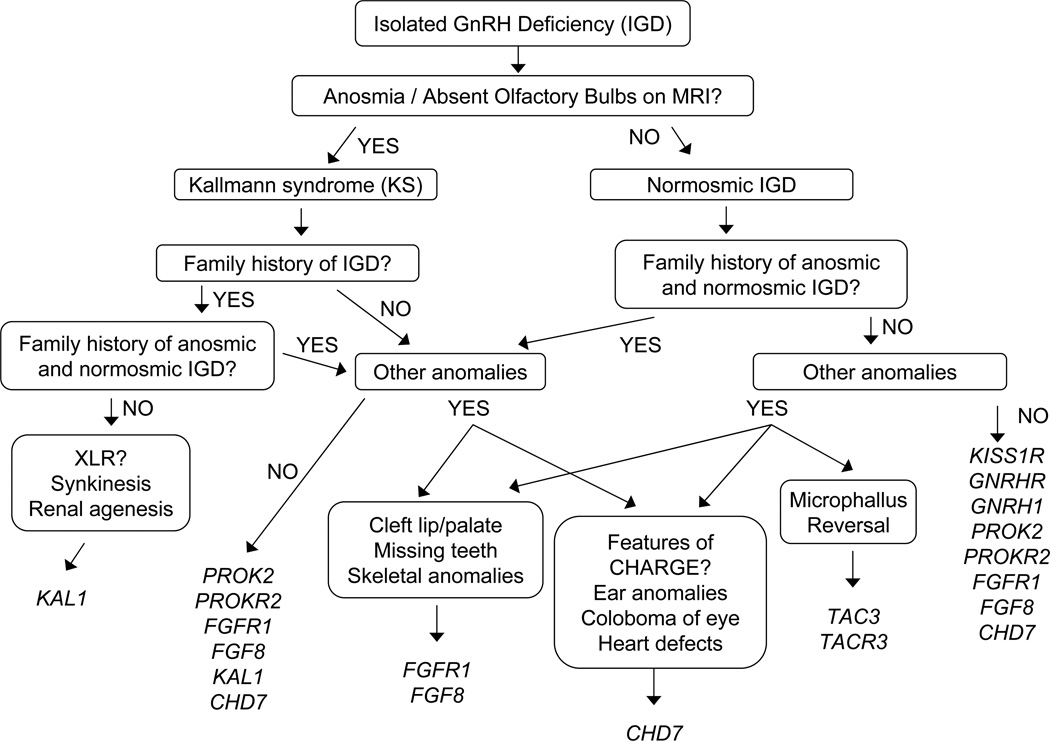
A proposed algorithm for prioritizing genetic testing for IGD based on phenotypic information. Based on non-reproductive phenotypes present in patients and families with IGD, screening of patients with IGD for genetic variants can be prioritized. While clinical testing for all genes is not currently available, this tiered screening approach may be useful in saving health-care dollars as clinical testing for IGD becomes more readily available.

References

    1. Abreu AP, Trarbach EB, de Castro M, Frade Costa EM, Versiani B, Matias Baptista MT, Garmes HM, Mendonca BB, Latronico AC. Loss-of-function mutations in the genes encoding prokineticin-2 or prokineticin receptor-2 cause autosomal recessive Kallmann syndrome. J. Clin. Endocrinol. Metab. 2008;93:4113–4118. - PubMed
    1. American Society of Human Genetics Board of Directors and the American College of Medical Genetics Board of Directors. Points to consider: Ethical, legal, and psychosocial implications of genetic testing in children and adolescents. Am. J. Hum. Genet. 1995;57:1233–1241. - PMC - PubMed
    1. Baum A, Friedman AL, Zakowski SG. Stress and Genetic Testing for Disease Risk. Health Psychology. 1997;16(1):8–19. - PubMed
    1. Bédécarrats GY, Kaiser UB. Mutations in the human gonadotropin-releasing hormone receptor: insights into receptor biology and function. Semin. Reprod. Med. 2007;25:368–378. - PubMed
    1. Bouligand J, Ghervan C, Tello JA, Brailly-Tabard S, Salenave S, Chanson P, Lombes M, Millar RP, Guiochon-Mantel A, Young J. Isolated familial hypogonadotropic hypogonadism and a GNRH1 mutation. N Engl J Med. 2009;360:2742–2748. - PubMed

Publication types

Substances