


Adipose tissue depot-specific differences in adipocyte apolipoprotein E expression
- PMID: 21664633
- PMCID: PMC3192295
- DOI: 10.1016/j.metabol.2011.04.012
Adipose tissue depot-specific differences in adipocyte apolipoprotein E expression
Abstract
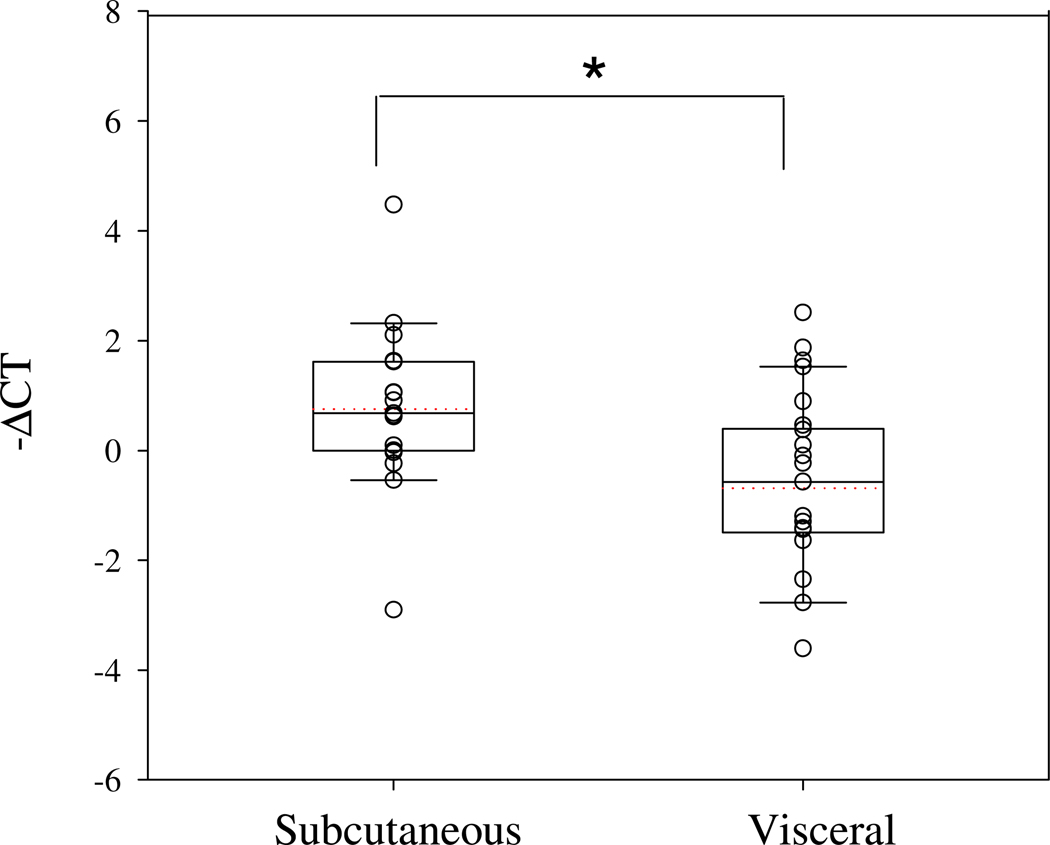
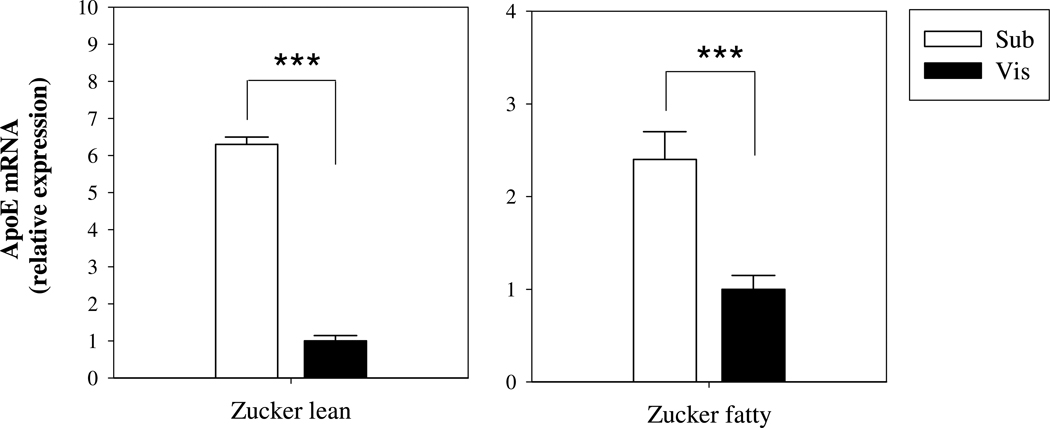
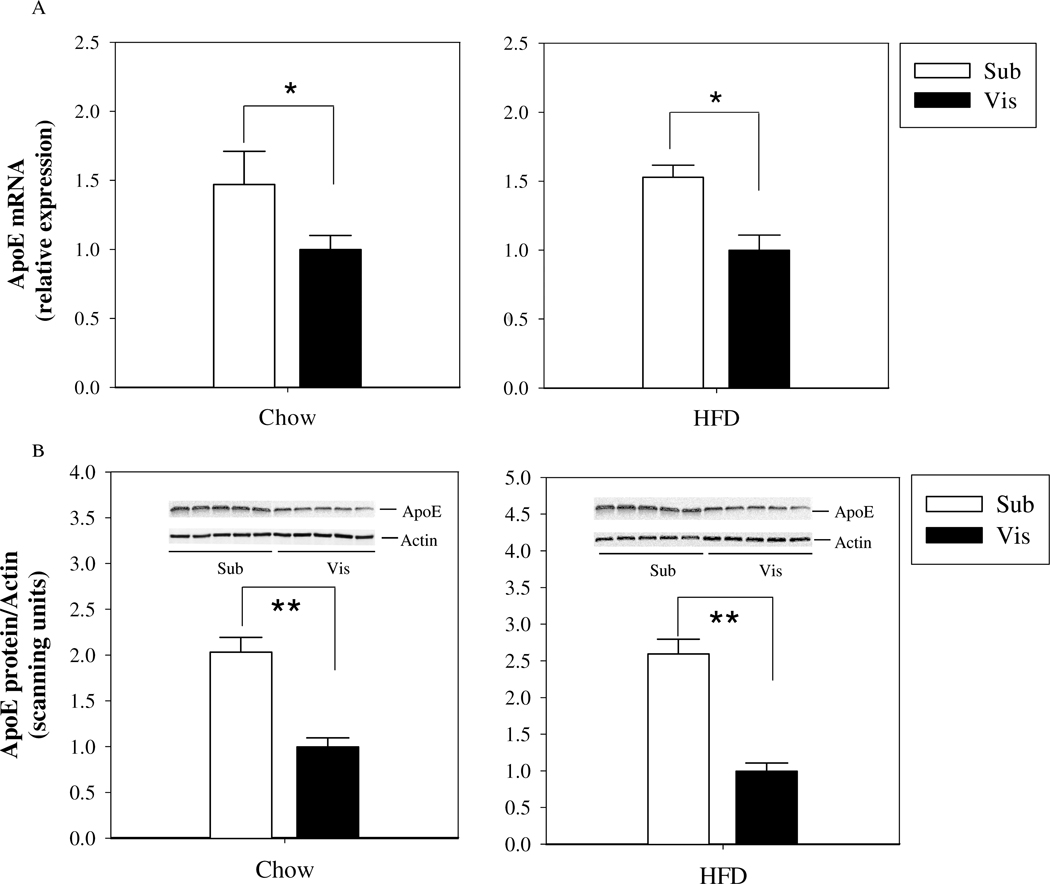
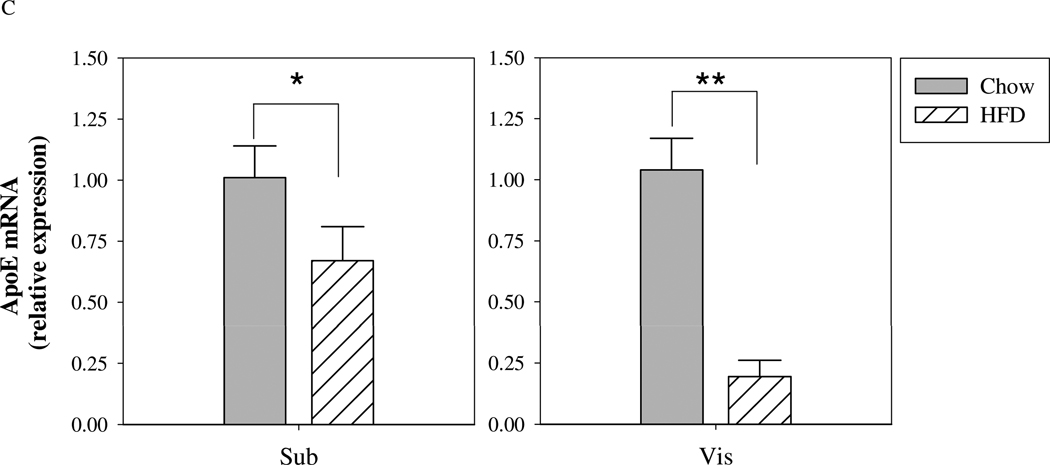
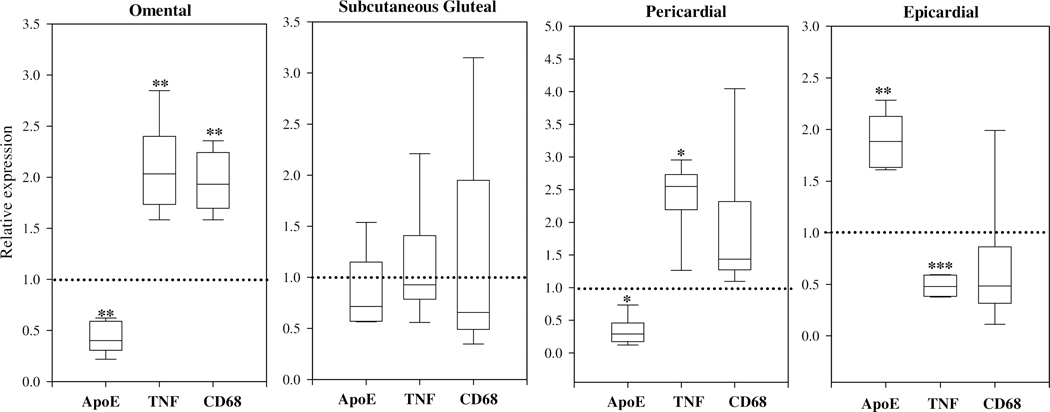
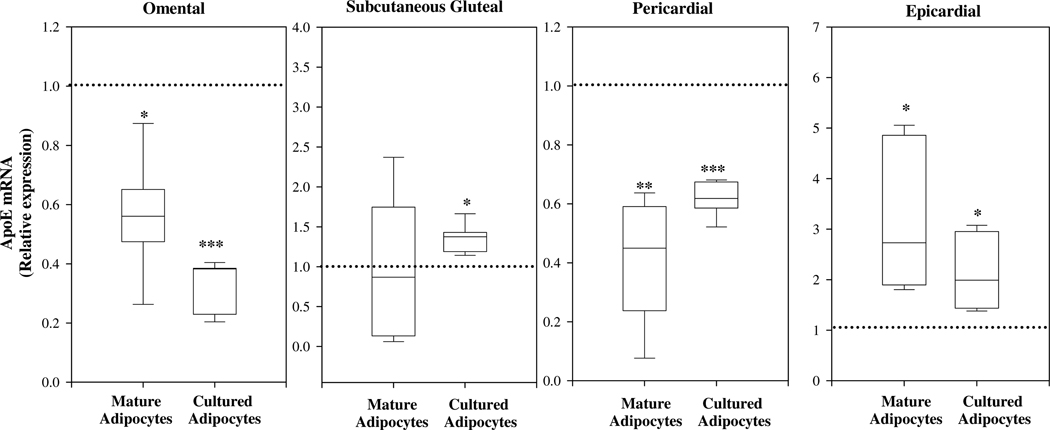
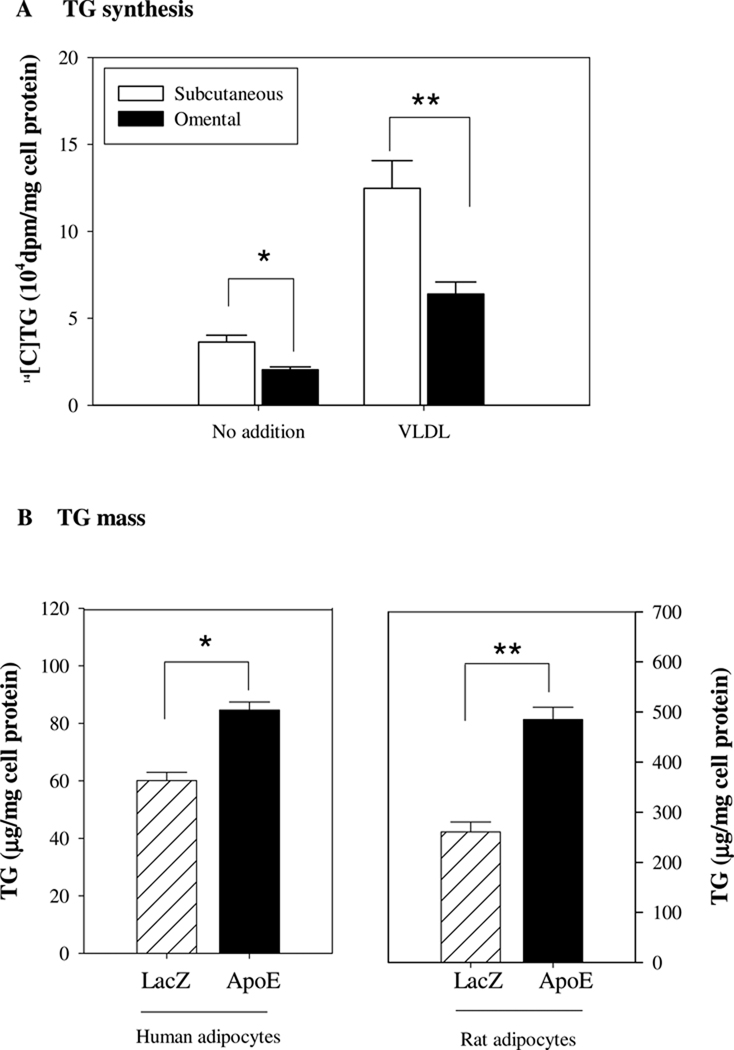
Important differences in gene expression have been documented in adipocytes derived from specific adipose tissue depots. We have previously documented an important role for adipocyte apolipoprotein E (apoE) in modulating adipocyte and adipose tissue triglyceride and lipoprotein metabolism. We now evaluate the endogenous expression of apoE in adipocytes isolated from unique adipose tissue depots in 4 different species. Adipocyte apoE expression is higher in subcutaneous fat compared with visceral fat in humans, mice, rats, and baboons. In baboons, evaluation of apoE expression in 5 adipose tissue depots (subcutaneous abdominal, subcutaneous gluteal, visceral, pericardial, epicardial) showed that, compared with subcutaneous abdominal adipocytes, the level of apoE expression is similar in subcutaneous gluteal, lower in visceral and pericardial, and higher in epicardial adipocytes. Consistent with previously demonstrated suppression of adipocyte apoE by adipose tissue inflammation, adipose tissue depots with lower apoE expression demonstrated greater infiltration of macrophages and an increased expression of tumor necrosis factor-α messenger RNA. Depot-specific differences in apoE expression were maintained after in vitro differentiation. Adipocytes isolated from depots with lower apoE expression manifested lower rates of triglyceride synthesis in the absence and presence of triglyceride-rich lipoproteins. Adenoviral-mediated increase of apoE expression in omental adipocytes increased triglyceride synthesis in these cells. Our results demonstrate significant heterogeneity in adipocyte apoE expression across adipose tissue depots in several species. Because of its role in modulating adipocyte triglyceride and lipoprotein metabolism, depot-specific differences in endogenous adipocyte apoE could have important implications for modulating the accumulation of lipid in these depots.
Copyright © 2011 Elsevier Inc. All rights reserved.
Figures
References
-
- Ford ES, Mokdad AH. Epidemiology of obesity in the Western Hemisphere. J Clin Endocrinol Metab. 2008;93 Suppl 1:S1–S8. - PubMed
-
- Despres JP, Lemieux I, Bergeron J, et al. Abdominal obesity and the metabolic syndrome: contribution to global cardiometabolic risk. Arterioscler Thromb Vasc Biol. 2008;28:1039–1049. - PubMed
-
- Canoy D, Boekholdt SM, Wareham N, et al. Body fat distribution and risk of coronary heart disease in men and women in the European Prospective Investigation Into Cancer and Nutrition in Norfolk cohort: a population-based prospective study. Circulation. 2007;116:2933–2943. - PubMed
-
- Pou KM, Massaro JM, Hoffmann U, et al. Visceral and subcutaneous adipose tissue volumes are cross-sectionally related to markers of inflammation and oxidative stress: the Framingham Heart Study. Circulation. 2007;116:1234–1241. - PubMed
Publication types
MeSH terms
Substances
Grants and funding
LinkOut - more resources
Full Text Sources
Medical
Miscellaneous
