


Contingency management for alcohol use reduction: a pilot study using a transdermal alcohol sensor
- PMID: 21665385
- PMCID: PMC3190068
- DOI: 10.1016/j.drugalcdep.2011.04.023
Contingency management for alcohol use reduction: a pilot study using a transdermal alcohol sensor
Abstract
Background: Contingency management (CM) has not been thoroughly evaluated as a treatment for alcohol abuse or dependence, in part because verification of alcohol use reduction requires frequent in-person breath tests. Transdermal alcohol sensors detect alcohol regularly throughout the day, providing remote monitoring and allowing for rapid reinforcement of reductions in use.
Methods: The purpose of this study was to evaluate the efficacy of CM for reduction in alcohol use, using a transdermal alcohol sensor to provide a continuous measure of alcohol use. Participants were 13 heavy drinking adults who wore the Secure Continuous Remote Alcohol Monitoring (SCRAM) bracelet for three weeks and provided reports of alcohol and drug use using daily web-based surveys. In Week 1, participants were asked to drink as usual; in Weeks 2 and 3, they were reinforced on an escalating schedule with values ranging from $5 to $17 per day on days when alcohol use was not reported or detected by the SCRAM.
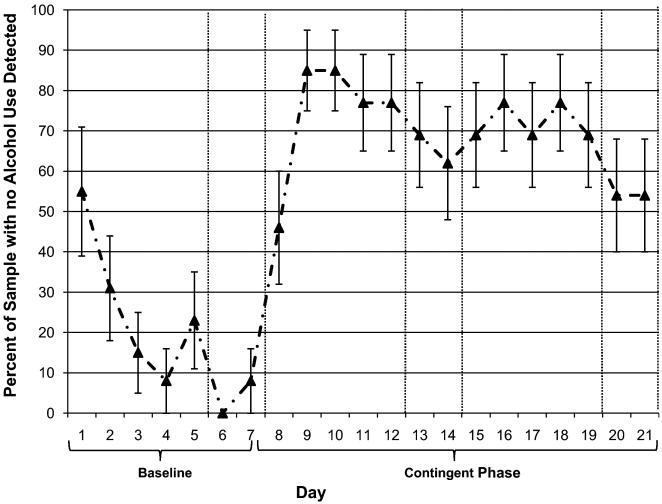
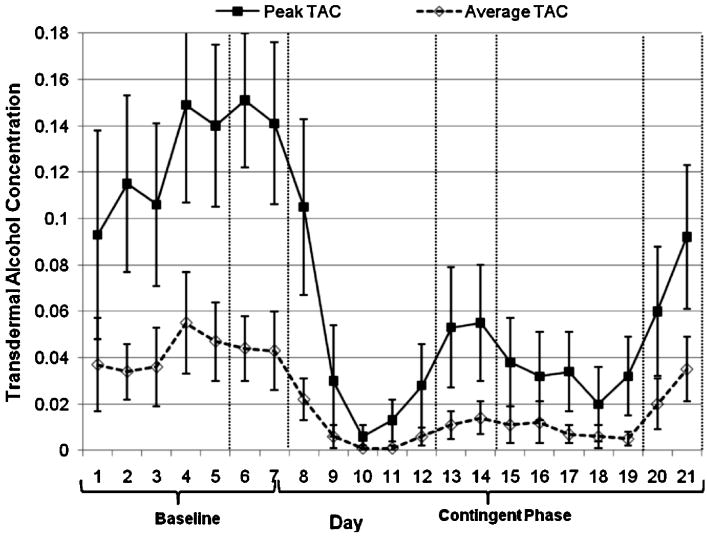
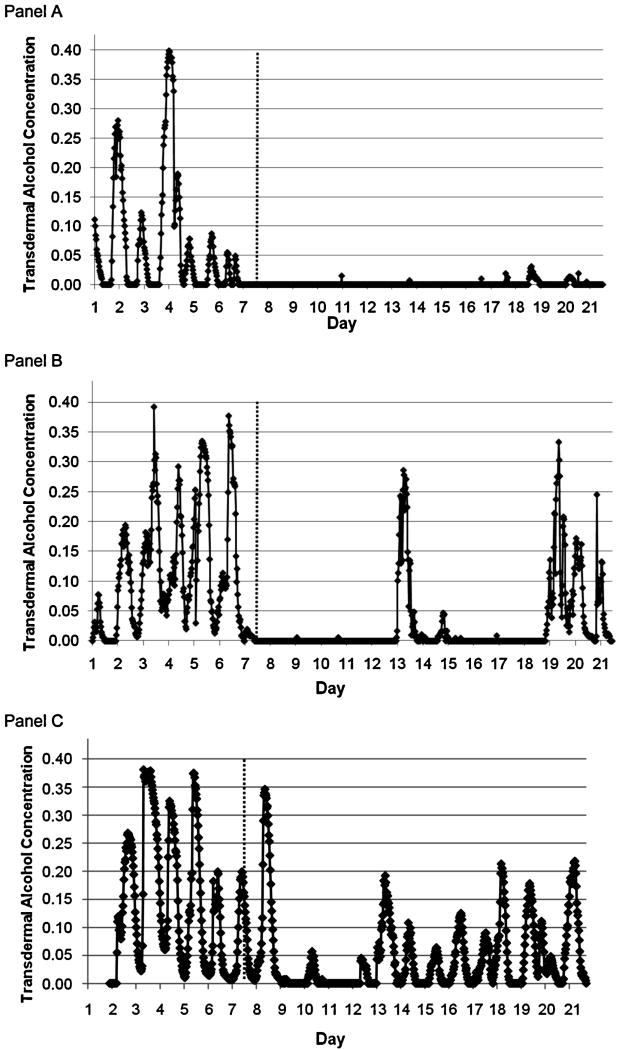
Results: Self-reports of percent days abstinent and drinks per week, and transdermal measures of average and peak transdermal alcohol concentration and area under the curve declined significantly in Weeks 2-3. A nonsignificant but large effect size for reduction in days of tobacco use also was found. An adjustment to the SCRAM criteria for detecting alcohol use provided an accurate but less conservative method for use with non-mandated clients.
Conclusion: Results support the efficacy of CM for alcohol use reductions and the feasibility of using transdermal monitoring of alcohol use for clinical purposes.
Copyright © 2011 Elsevier Ireland Ltd. All rights reserved.
Figures
References
-
- Alessi SM, Hanson T, Wieners M, Petry NM. Low-cost contingency management in community clinics: delivering incentives partially in group therapy. Exp Clin Psychopharmacol. 2007;15:293–300. - PubMed
-
- Anderson JC, Hlastala MP. The kinetics of transdermal ethanol exchange. J Appl Physiol. 2006;100:649–655. - PubMed
-
- First MB, Gibbon M, Spitzer RL, Williams JBW. User's Guide for the Structured Clinical Interview for DSM-IV Axis I Disorders-Research Version. Biometrics Research Department, New York State Psychiatric Institute; New York: 1996.
Publication types
MeSH terms
Substances
Grants and funding
LinkOut - more resources
Full Text Sources
Medical
