


Evaluating microcystin exposure risk through fish consumption
- PMID: 21671629
- PMCID: PMC3148776
- DOI: 10.1021/es200285c
Evaluating microcystin exposure risk through fish consumption
Abstract
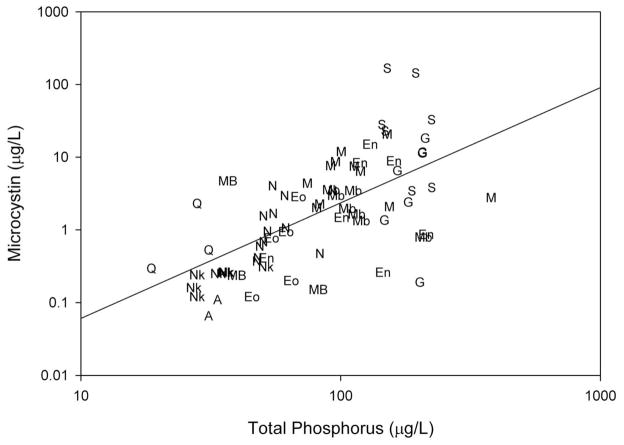
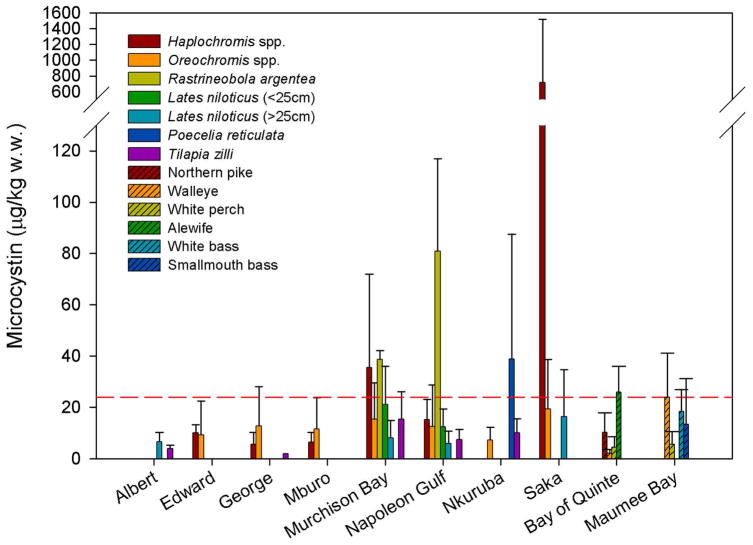
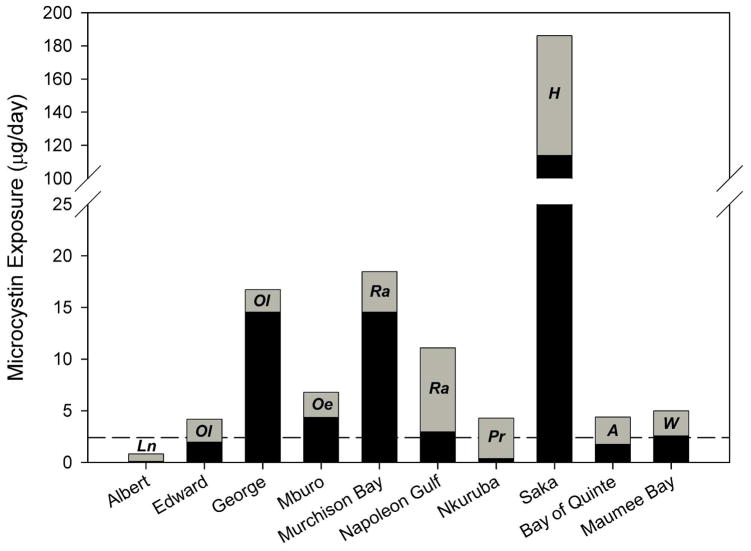
Microcystin is a cyanobacterial hepatotoxin that is found worldwide, and poses a serious threat to the ecological communities in which it is found as well as to those who rely on these waters for drinking, sanitation, or as a food source. Microcystin is known to accumulate in fish and other aquatic biota, however the prevalence of microcystin in fish tissue and the human health risks posed by microcystin exposure through fish consumption remain poorly resolved. Here we show that microcystin is pervasive in water and fish from several tropical (Ugandan) and temperate (North American) lakes, including lakes that support some of the largest freshwater fisheries in the world. We establish that fish consumption can be an important and sometimes dominant route of microcystin exposure for humans, and can cause consumers to exceed recommended total daily intake guidelines for microcystin. These results highlight the importance of monitoring microcystin concentrations in fish, and the need to consider potential exposure to microcystin through fish consumption in order to adequately assess human exposure risk.
Figures
References
-
- de Figueiredo DR, Azeiteiro UM, Esteves SM, Goncalves FJM, Pereira MJ. Microcystin-producing blooms––a serious global public health issue. Ecotox Environ Safe. 2004;59:151–163. - PubMed
-
- Paerl HW, Huisman J. Climate change: a catalyst for global expansion of harmful cyanobacterial blooms. Environ Microbiol Reports. 2009;1:27–37. - PubMed
-
- Sivonen L, Jones G. In: Toxic Cyanobacteria in Water: A Guide to Public Health Significance, Monitoring and Management. Chorus I, Bartram J, editors. E&FN Spon; London: 1999. pp. 41–111.
-
- Falconer I, Humpage A. Tumour promotion by cyanobacterial toxins. Phycologia. 1996;35:6–11.
-
- Chen J, Xie P, Li L, Xu J. First identification of the hepatotoxic microcystins in the serum of a chronically exposed human population together with indication of hepatocellular damage. Toxicol Sci. 2009;108:81–89. - PubMed
Publication types
MeSH terms
Substances
Grants and funding
LinkOut - more resources
Full Text Sources
Medical
