Predictors of drinking during pregnancy: a systematic review
- PMID: 21671775
- PMCID: PMC3159119
- DOI: 10.1089/jwh.2010.2216
Predictors of drinking during pregnancy: a systematic review
Abstract
Background: Many pregnant women continue to drink alcohol despite clinical recommendations and public health campaigns about the risks associated with alcohol use during pregnancy. This review examines the predictors of prenatal alcohol use, with the long-term goal of developing more effective preventive efforts.
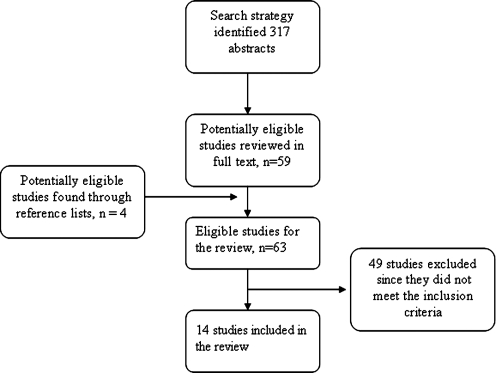
Methods: A literature search of several databases for relevant articles was undertaken. Studies were included if they occurred in the context of antenatal care, collected data during the woman's pregnancy (between 1999 and 2009), investigated predictors of any drinking, had a population-based orientation (e.g., did not focus only on high-risk drinkers), and were published in English in a scientific peer-reviewed journal between 1999 and 2009.
Results: Fourteen studies published between 2002 and 2009 fulfilled the inclusion criteria (United States, 4; Europe, 4; Australia and New Zealand, 3; Japan, 2; and Uganda, 1). The predictors of prenatal alcohol use most consistently identified were prepregnancy alcohol consumption and having been abused or exposed to violence. Less consistent predictors of drinking during pregnancy were high income/social class and positive dependence screen. Unemployment, marital status, and education level were examined in many studies but found to be predictive only infrequently.
Conclusions: Women's prepregnancy alcohol consumption (i.e., quantity and frequency of typical drinking) and exposure to abuse or violence were consistently associated with drinking during pregnancy. Antenatal care providers should assess these factors for improved detection of women at risk for alcohol-exposed pregnancies.
Figures
References
-
- Mills JL. Graubard BI. Harley EE, et al. Maternal alcohol consumption and birth weight. How much drinking during pregnancy is safe? JAMA. 1984;252:1875–1879. - PubMed
-
- Carmichael Olson H. Streissguth AP. Sampson PD. Barr HM. Bookstein FL. Thiede K. Association of prenatal alcohol exposure with behavioral and learning problems in early adolescence. J Am Acad Child Adolesc Psychiatry. 1997;36:1187–1894. - PubMed
-
- Sood B. Delaney-Black V. Covington C, et al. Prenatal alcohol exposure and childhood behavior at age 6 to 7 years: I. Dose-response effect. Pediatrics. 2001;108:E34. - PubMed
-
- Fetal alcohol syndrome: Diagnosis, epidemiology, prevention and treatment. In: Stratton K, editor; Howe C, editor; Battaglia F, editor. Washington, DC: National Academy Press; 1996.
Publication types
MeSH terms
Grants and funding
LinkOut - more resources
Full Text Sources
Medical