. 2011 Aug 15;51(4):876-83.
doi: 10.1016/j.freeradbiomed.2011.05.034. Epub 2011 Jun 2.

Vitamin B12 protects against superoxide-induced cell injury in human aortic endothelial cells

Affiliations

Vitamin B12 protects against superoxide-induced cell injury in human aortic endothelial cells

Edward S Moreira et al. Free Radic Biol Med. .

Abstract

Superoxide (O(2)(•-)) is implicated in inflammatory states including arteriosclerosis and ischemia-reperfusion injury. Cobalamin (Cbl) supplementation is beneficial for treating many inflammatory diseases and also provides protection in oxidative-stress-associated pathologies. Reduced Cbl reacts with O(2)(•-) at rates approaching that of superoxide dismutase (SOD), suggesting a plausible mechanism for its anti-inflammatory properties. Elevated homocysteine (Hcy) is an independent risk factor for cardiovascular disease and endothelial dysfunction. Hcy increases O(2)(•-) levels in human aortic endothelial cells (HAEC). Here, we explore the protective effects of Cbl in HAEC exposed to various O(2)(•-) sources, including increased Hcy levels. Hcy increased O(2)(•-) levels (1.6-fold) in HAEC, concomitant with a 20% reduction in cell viability and a 1.5-fold increase in apoptotic death. Pretreatment of HAEC with physiologically relevant concentrations of cyanocobalamin (CNCbl) (10-50nM) prevented Hcy-induced increases in O(2)(•-) and cell death. CNCbl inhibited both Hcy and rotenone-induced mitochondrial O(2)(•-) production. Similarly, HAEC challenged with paraquat showed a 1.5-fold increase in O(2)(•-) levels and a 30% decrease in cell viability, both of which were prevented with CNCbl pretreatment. CNCbl also attenuated elevated O(2)(•-) levels after exposure of cells to a Cu/Zn-SOD inhibitor. Our data suggest that Cbl acts as an efficient intracellular O(2)(•-) scavenger.


Figures

Figure 1
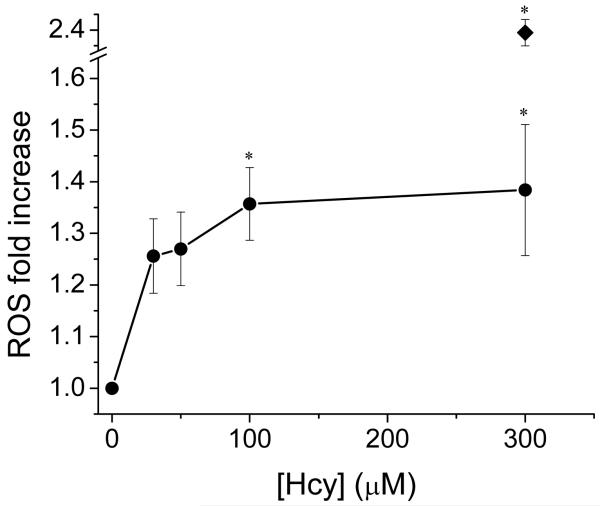
Figure 1. L-Hcy-induced ROS increase
Pre-confluent HAEC were incubated with increasing concentrations of L-Hcy in the presence of 3 μM DCFA. After 48 h ROS production was assessed fluorometrically. *p < 0.05 compared to control cells not exposed to L-Hcy. Positive control exposed to 200 μM H2O2 (◆). Data are expressed as mean ± SEM; N = 3.
Figure 2
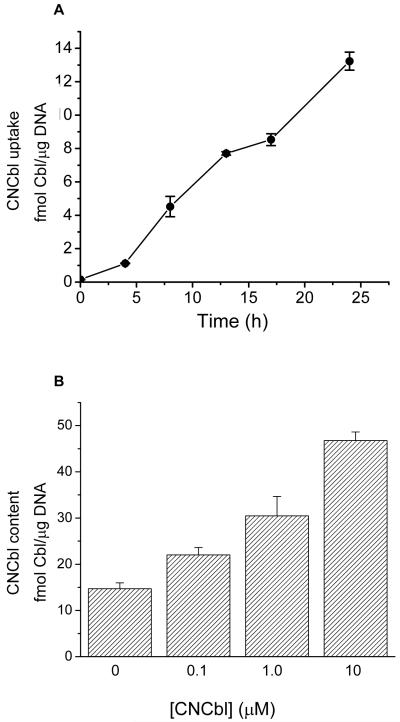
Figure 2. Effect of exogenous CNCbl on intracellular Cbl content
A. Pre-confluent HAEC were incubated with 0.2 nM 57(Co)-CNCbl for up to 24 h, then harvested at different time points. The intracellular Cbl uptake was determined by counting the cell-associated radioactivity. Data represents mean ± SEM; N = 3. B. Pre-confluent HAEC were incubated with or without varying concentrations of CNCbl for 24 h, and intracellular Cbl content was determined by the SimulTRAC radioassay. Data represents mean ± SEM; N = 3.
Figure 3
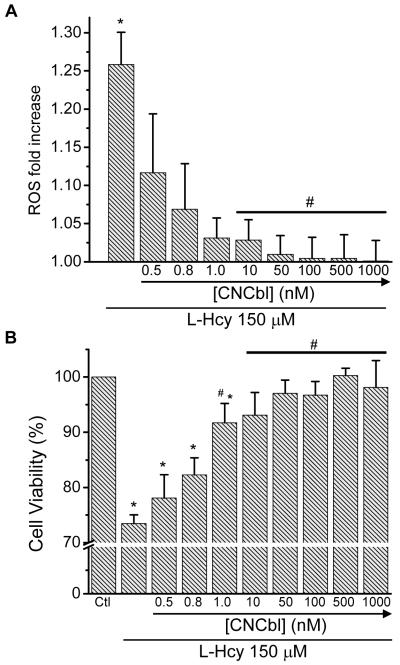
Figure 3. Cbl protection against L-Hcy-induced oxidative stress
Pre-confluent HAEC were incubated with increasing concentrations of CNCbl for 24 h prior to the addition of 150 μM L-Hcy. ROS was measured by detecting oxidation of 3 μM DCFA. A. ROS fold-increase after 48 h. B. Cell viability after 48 h as measured with MTT assay. Data are expressed as mean ± SEM; N = 7; *p<0.05 with respect to control cells not exposed to L-Hcy; #p<0.05 with respect to L-Hcy-treated cells not exposed to CNCbl
Figure 4
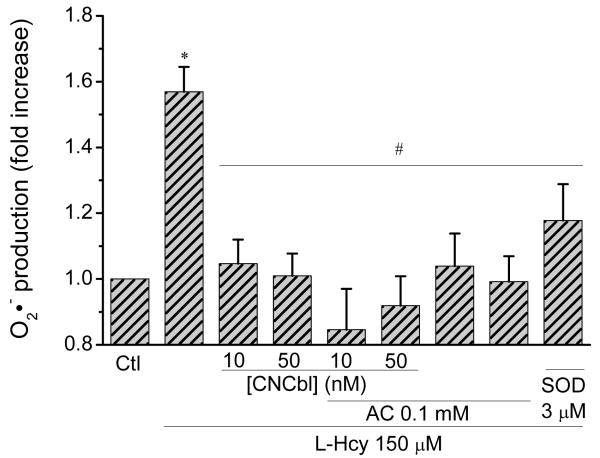
Figure 4. Cbl protection against L-Hcy induced superoxide production
Pre-confluent HAEC were incubated in the absence or in the presence of 10 or 50 nM CNCbl for 24 h. Cells were washed with PBS, prior to incubation with 150 μM L-Hcy with or without 0.1 mM apocynin or 3 μM SOD. Hydroxyethidium fluorescence was measured with a fluorescent plate reader after 24 hr. * p < 0.05 with respect to untreated HAEC; # p < 0.05 with respect to L-Hcy-treated cells. Data are expressed as mean ± SEM; N = 6 except for the SOD experiment where N = 3.
Figure 5
Figure 5. Subcellular localization of Hcy-induced oxidative stress
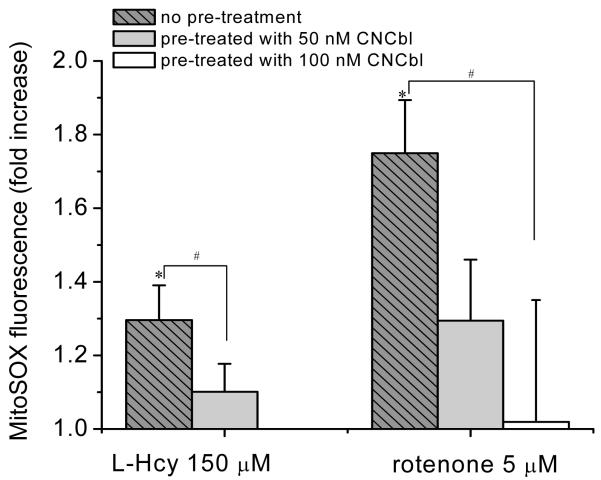
HAEC were incubated in the absence or in the presence of CNCbl (50 nM or 100 nM) for 24 h. HAEC were washed and exposed to L-Hcy (150 μM, 24 h) or rotenone (5 μM; 1 h). Mitochondrial O2•− was detected by quantifying mitoSOX fluorescence in a microplate reader (λex/em = 510/580 nm). Data are expressed as mean ± SEM; N ≥ 4; * p < 0.05 compared to control, # p < 0.05.
Figure 6
Figure 6. Effect of Cbl on paraquat-induced O2•− levels and cell death
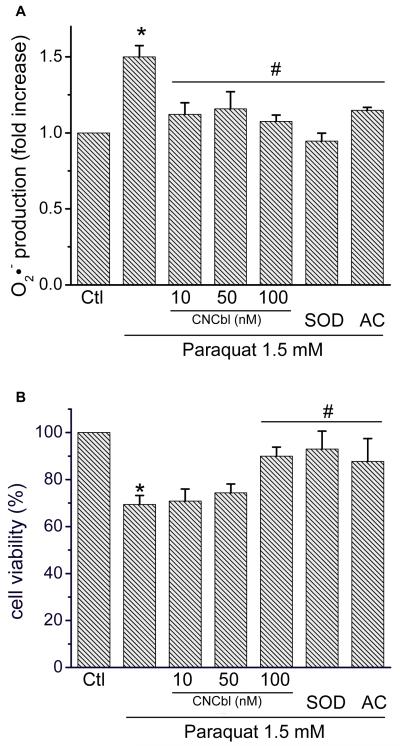
HAEC were incubated in the absence or in the presence of varying concentrations of CNCbl for 24 h prior to subjection to paraquat (1.5 mM). DHE (5 μM) was added for the final 1 h of treatment. Also shown are the effects of SOD (3 μM) and apocynin (AC, 0.1 mM) on the paraquat-induced increase in O2•− and cell death. A. O2•− measured as hydroxyethidium fluorescence (λex/em = 520/605 nm) compared to untreated cells. B. Cell viability was assessed with the MTT assay. Data expressed as ± SEM; N = 3; * p < 0.05 compared to control, # p < 0.05 compared to paraquat alone.
Figure 7
Figure 7. Cbl attenuates the DETC-induced increase in superoxide levels
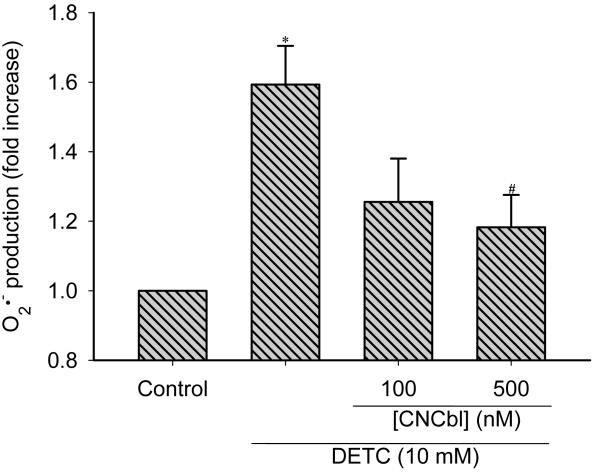
Pre-confluent HAEC were incubated in the absence or in the presence of 100 or 500 nM CNCbl for 24 h. Cells were washed with PBS, prior to incubation with 10 mM DETC. After 2 h, cells were incubated with 5 μM DHE for 1 h. Hydroxyethidium fluorescence was measured with a fluorescent plate reader. * p < 0.05 with respect to untreated HAEC; # p < 0.05 with respect to DETC alone. Data are expressed as mean ± SEM; N = 5.
Figure 8
Figure 8. Cbl protection against L-Hcy-induced cell death
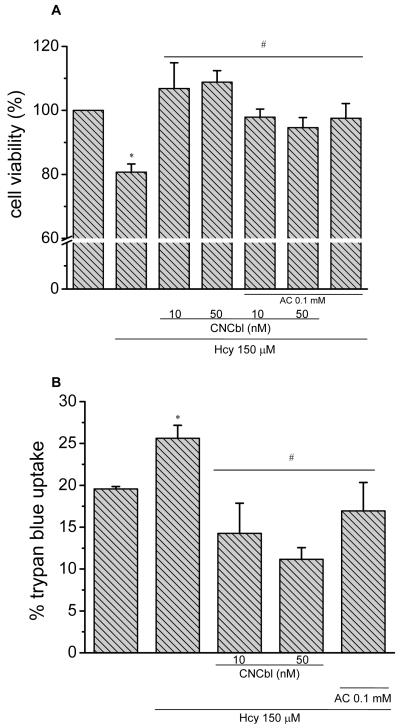
Pre-confluent HAEC were incubated in the presence or absence of 10 or 50 nM CNCbl for 24 h prior to adding 150 μM L-Hcy for 24 h in the presence or absence of apocynin (0.1 mM). *p < 0.05 with respect to control cells not exposed to L-Hcy; #p < 0.05 with respect to L-Hcy-treated HAEC. A. Cell viability by the MTT assay. Data are expressed as mean ± SEM; N = 4. B. Trypan blue uptake. Data are expressed as mean ± SEM; N = 3.
Figure 9
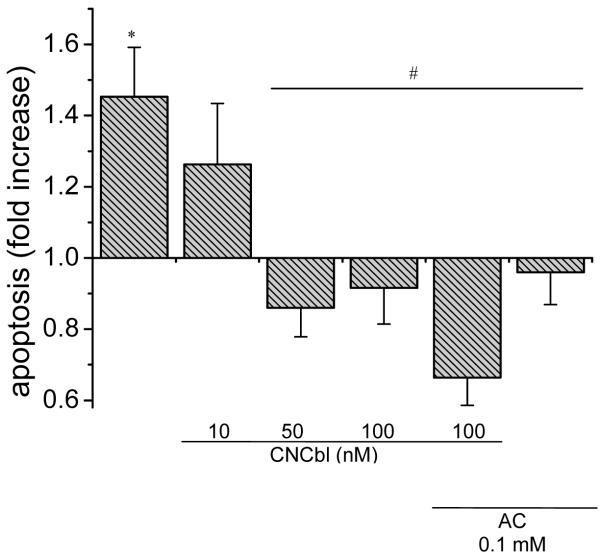
Figure 9. Cbl protection against L-Hcy-induced apoptosis
Pre-confluent HAEC were incubated in the presence of absence of varying concentrations of CNCbl for 24 h prior to exposing the cells to 150 μM L-Hcy in the presence or absence of apocynin (0.1 mM). Shown also are corresponding data for apocynin and apocynin + CNCbl. Apoptotic DNA fragmentation was measured by ELISA. Data are expressed as mean ± SEM; N = 4; *p < 0.05 with respect to control; #p < 0.05 with respect to L-Hcy-treated HAEC.

References

    1. Olteanu H, Banerjee R. Redundancy in the pathway for redox regulation of mammalian methionine synthase: reductive activation by the dual flavoprotein, novel reductase 1. J Biol Chem. 2003;278(40):38310–4. - PubMed
    1. Padovani D, Banerjee R. Assembly and protection of the radical enzyme, methylmalonyl-CoA mutase, by its chaperone. Biochemistry. 2006;45(30):9300–6. - PubMed
    1. Chen P, Poddar R, Tipa EV, Dibello PM, Moravec CD, Robinson K, Green R, Kruger WD, Garrow TA, Jacobsen DW. Homocysteine metabolism in cardiovascular cells and tissues: implications for hyperhomocysteinemia and cardiovascular disease. Adv Enzyme Regul. 1999;39:93–109. - PubMed
    1. Carmel R, Green R, Rosenblatt DS, Watkins D. Update on cobalamin, folate, and homocysteine. Hematology (Am Soc Hematol Educ Program) 2003:62–81. - PubMed
    1. Birch CS, Brasch NE, McCaddon A, Williams JH. A novel role for vitamin B(12): Cobalamins are intracellular antioxidants in vitro. Free Radic Biol Med. 2009;47(2):184–8. - PubMed

Publication types

MeSH terms