


Combining glial cell line-derived neurotrophic factor gene delivery (AdGDNF) with L-arginine decreases contusion size but not behavioral deficits after traumatic brain injury
- PMID: 21672665
- PMCID: PMC3143313
- DOI: 10.1016/j.brainres.2011.05.058
Combining glial cell line-derived neurotrophic factor gene delivery (AdGDNF) with L-arginine decreases contusion size but not behavioral deficits after traumatic brain injury
Abstract
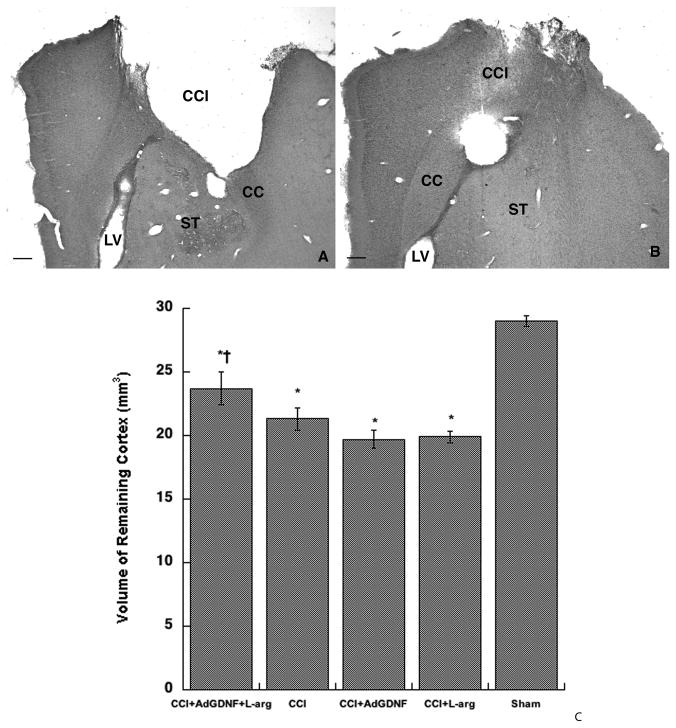
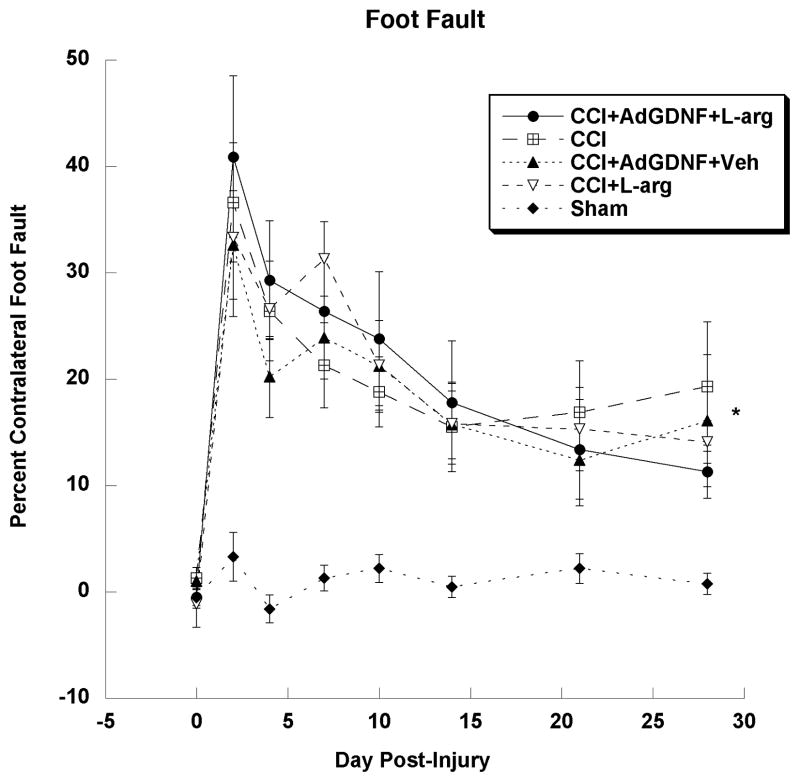
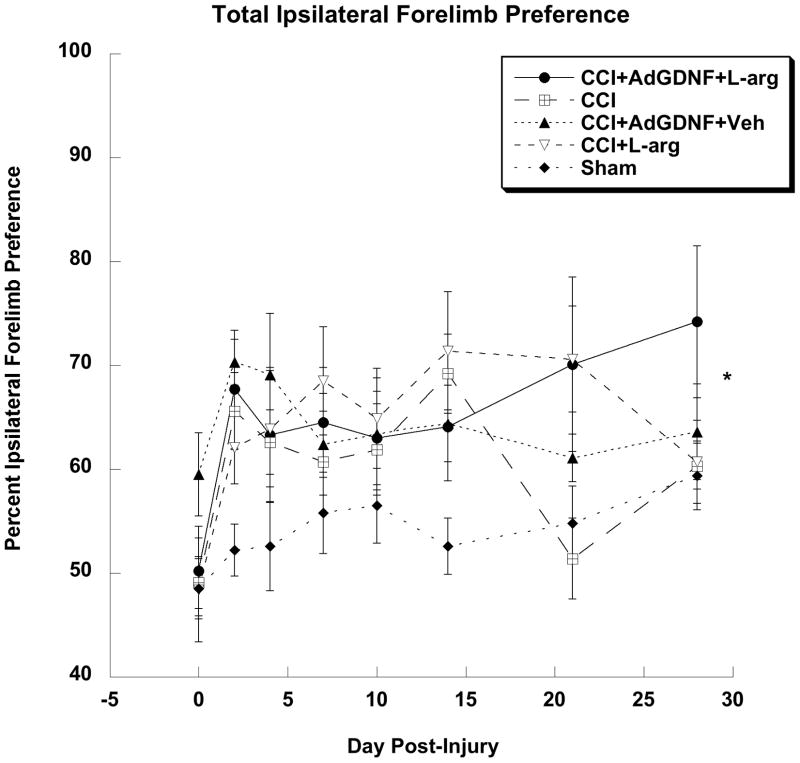
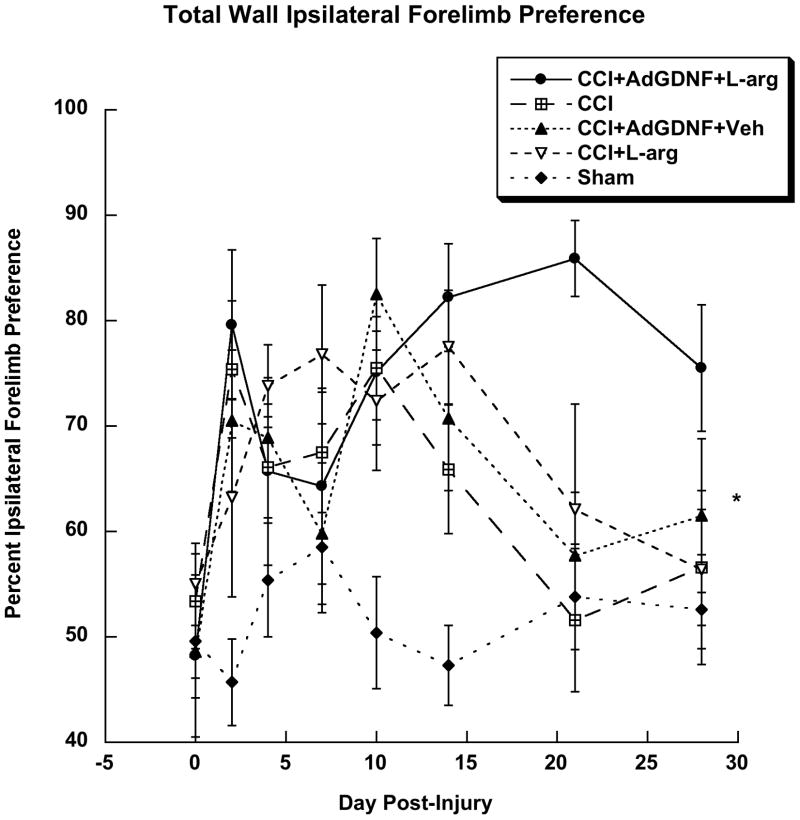
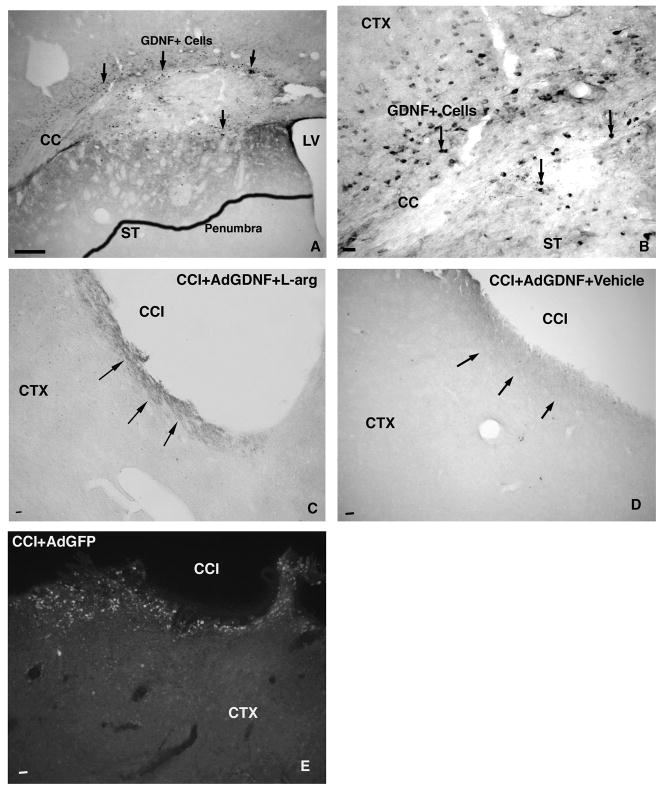
Our laboratory has previously demonstrated that viral administration of glial cell line-derived neurotrophic factor (AdGDNF), one week prior to a controlled cortical impact (CCI) over the forelimb sensorimotor cortex of the rat (FL-SMC) is neuroprotective, but does not significantly enhance recovery of sensorimotor function. One possible explanation for this discrepancy is that although protected, neurons may not have been functional due to enduring metabolic deficiencies. Additionally, metabolic events following TBI may interfere with expression of therapeutic proteins administered to the injured brain via gene therapy. The current study focused on enhancing the metabolic function of the brain by increasing cerebral blood flow (CBF) with l-arginine in conjunction with administration of AdGDNF immediately following CCI. An adenoviral vector harboring human GDNF was injected unilaterally into FL-SMC of the rat immediately following a unilateral CCI over the FL-SMC. Within 30min of the CCI and AdGDNF injections, some animals were injected with l-arginine (i.v.). Tests of forelimb function and asymmetry were administered for 4weeks post-injury. Animals were sacrificed and contusion size and GDNF protein expression measured. This study demonstrated that rats treated with AdGDNF and l-arginine post-CCI had a significantly smaller contusion than injured rats who did not receive any treatment, or injured rats treated with either AdGDNF or l-arginine alone. Nevertheless, no amelioration of behavioral deficits was seen. These findings suggest that AdGDNF alone following a CCI was not therapeutic and although combining it with l-arginine decreased contusion size, it did not enhance behavioral recovery.
Copyright © 2011 Elsevier B.V. All rights reserved.
Figures
References
-
- Abe K, Hayashi T. Expression of the glial cell line-derived neurotrophic factor gene in rat brain after transcient MCA occlusion. Brain Res. 1997;776:230–234. - PubMed
-
- Abe K, Setoguchi Y, Hayashi T, Itoyama Y. In vivo adenovirus-mediated gene transfer and the expression in ischemic and reperfused rat brain. Brain Res. 1997;763:191–201. - PubMed
-
- Abe K, Kitagawa H, Setoguchi Y. Temporal profile of adenovirus-mediated E.. coli lacZ gene expression in normal and post-ischemic gerbil hippocampus and ventricle. Neurol Res. 1998;20:689–696. - PubMed
-
- Bohn MC, Choi-Lundberg DL, Davidson BL, Leranth C, Kozlowski DA, Smith JC, O’Banion MK, Redmond DE. Adenoviral-mediated transgene expression in non-human primate brain. Human Gene Therapy. 1999;10:1175–1184. - PubMed
Publication types
MeSH terms
Substances
Grants and funding
LinkOut - more resources
Full Text Sources
Medical
