


De novo lipogenesis in the differentiating human adipocyte can provide all fatty acids necessary for maturation
- PMID: 21677304
- PMCID: PMC3151688
- DOI: 10.1194/jlr.M012195
De novo lipogenesis in the differentiating human adipocyte can provide all fatty acids necessary for maturation
Abstract
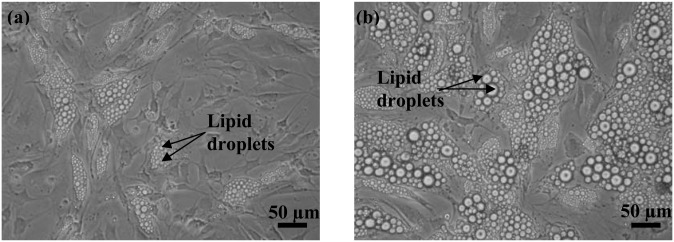
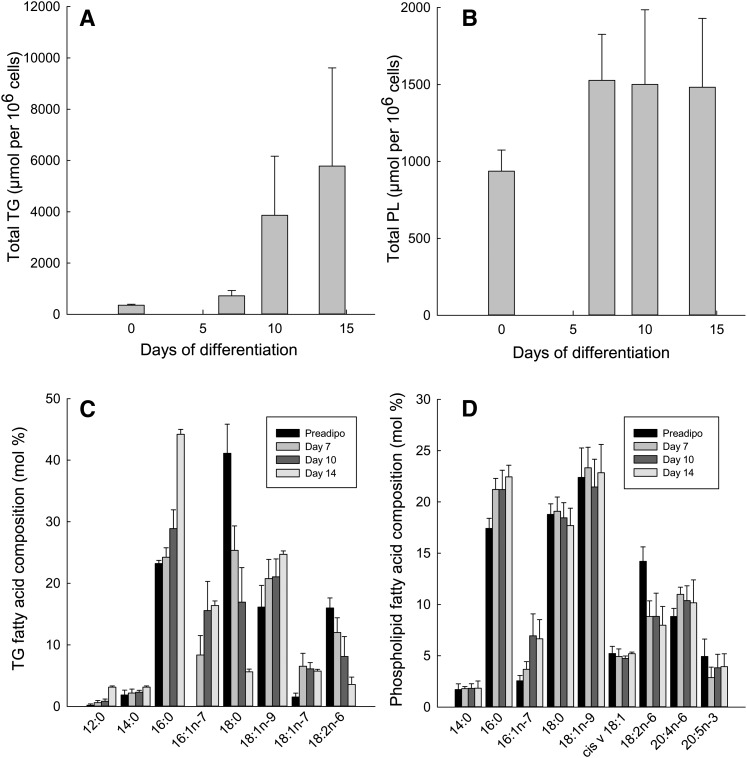
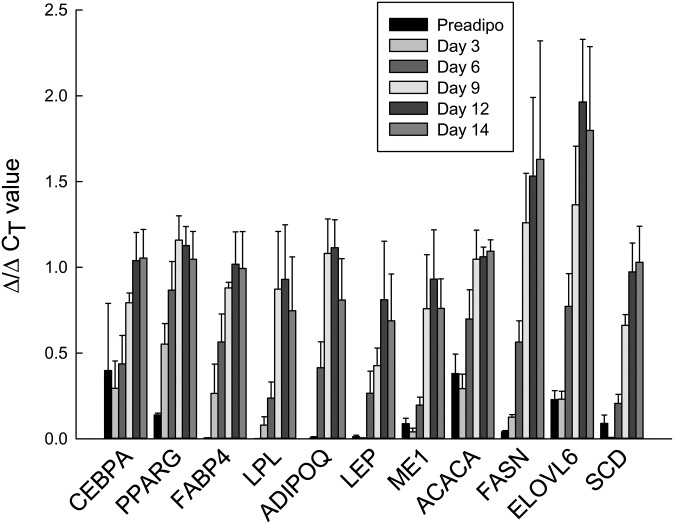
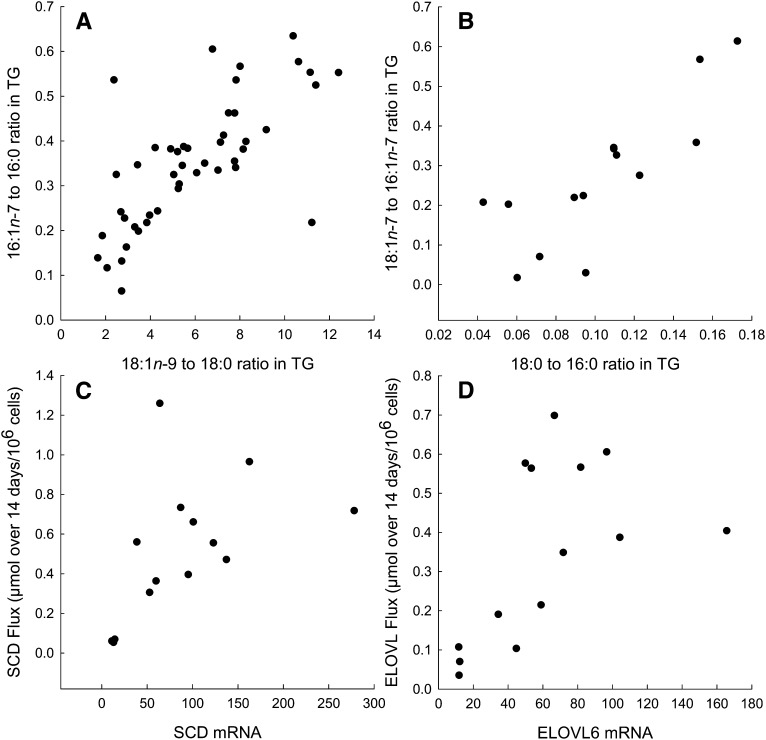
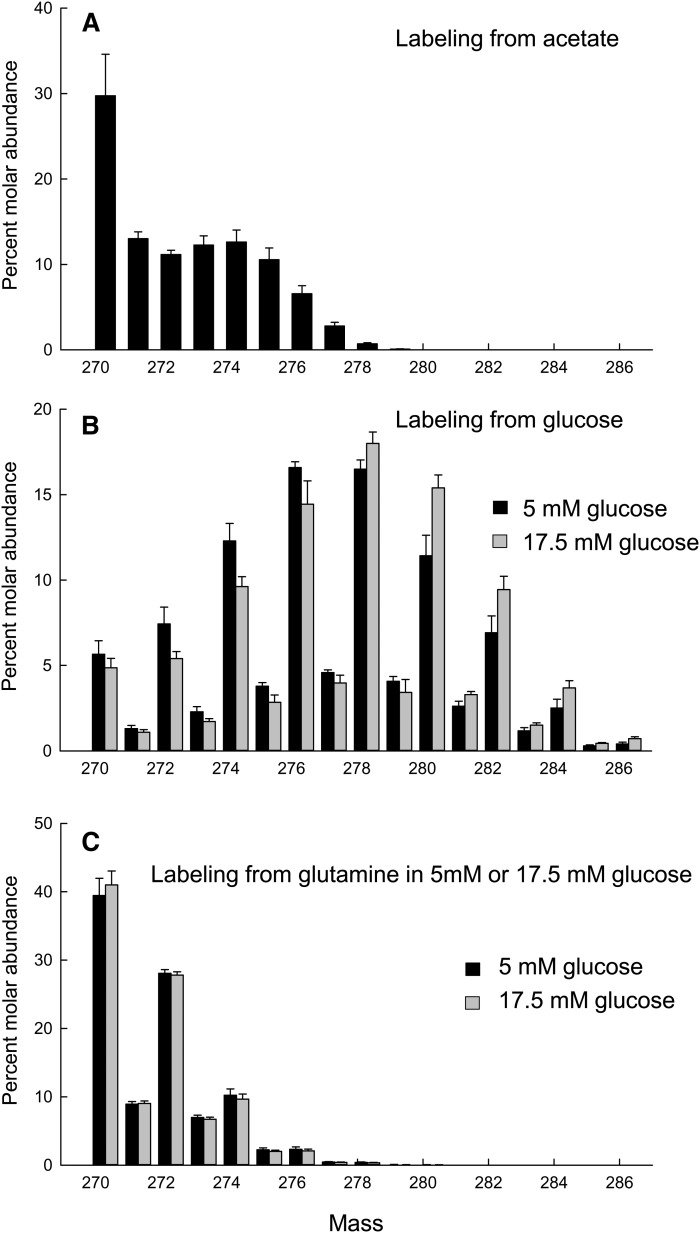
The primary products of de novo lipogenesis (DNL) are saturated fatty acids, which confer adverse cellular effects. Human adipocytes differentiated with no exogenous fat accumulated triacylglycerol (TG) in lipid droplets and differentiated normally. TG composition showed the products of DNL (saturated fatty acids from 12:0 to 18:0) together with unsaturated fatty acids (particularly 16:1n-7 and 18:1n-9) produced by elongation/desaturation. There was parallel upregulation of expression of genes involved in DNL and in fatty acid elongation and desaturation, suggesting coordinated control of expression. Enzyme products (desaturation ratios, elongation ratios, and total pathway flux) were also correlated with mRNA levels. We used (13)C-labeled substrates to study the pathway of DNL. Glucose (5 mM or 17.5 mM in the medium) provided less than half the carbon used for DNL (42% and 47%, respectively). Glutamine (2 mM) provided 9-10%, depending upon glucose concentration. In contrast, glucose provided most (72%) of the carbon of TG-glycerol. Pathway analysis using mass isotopomer distribution analysis (MIDA) revealed that the pathway for conversion of glucose to palmitate is complex. DNL in human fat cells is tightly coupled with further modification of fatty acids to produce a range of saturated and unsaturated fatty acids consistent with normal maturation.
Figures
References
-
- Shrago E., Spennetta T., Gordon E. 1969. Fatty acid synthesis in human adipose tissue. J. Biol. Chem. 244: 2761–2766. - PubMed
-
- Patel M. S., Owen O. E., Goldman L. I., Hanson R. W. 1975. Fatty acid synthesis by human adipose tissue. Metabolism. 24: 161–173. - PubMed
-
- Galton D. J. 1968. Lipogenesis in human adipose tissue. J. Lipid Res. 9: 19–26. - PubMed
-
- Letexier D., Pinteur C., Large V., Fréring V., Beylot M. 2003. Comparison of the expression and activity of the lipogenic pathway in human and rat adipose tissue. J. Lipid Res. 44: 2127–2134. - PubMed
-
- Roberts R., Hodson L., Dennis A. L., Neville M. J., Humphreys S. M., Harnden K. E., Micklem K. J., Frayn K. N. 2009. Markers of de novo lipogenesis in adipose tissue: associations with small adipocytes and insulin sensitivity in humans. Diabetologia. 52: 882–890. - PubMed
Publication types
MeSH terms
Substances
LinkOut - more resources
Full Text Sources
Other Literature Sources
Miscellaneous
