


Prevalence and characteristics of chronic musculoskeletal pain in Japan
- PMID: 21678085
- PMCID: PMC3140943
- DOI: 10.1007/s00776-011-0102-y
Prevalence and characteristics of chronic musculoskeletal pain in Japan
Abstract
Background: This cross-sectional study was conducted to obtain epidemiologic data on chronic musculoskeletal pain in the Japanese people, and with it a better understanding of the actual conditions and problems involved.
Methods: A questionnaire covering basic information, chronic musculoskeletal pain, daily life, quality of life, and social loss was prepared and mailed to 11507 individuals aged 18 years or older. Subjects were selected randomly nationwide in accordance with the demographic composition of Japan.
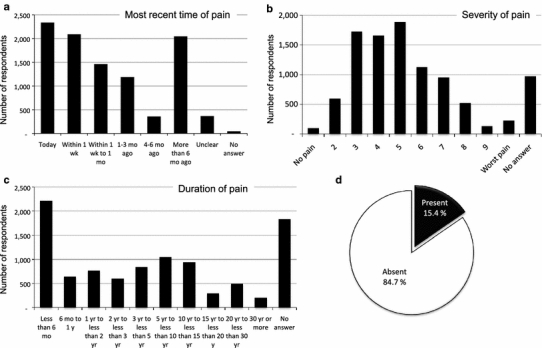
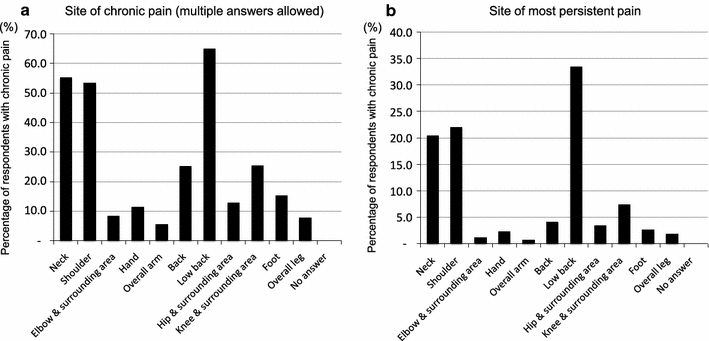
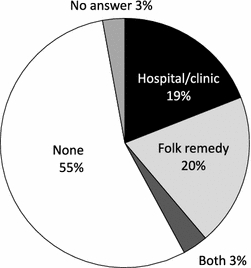
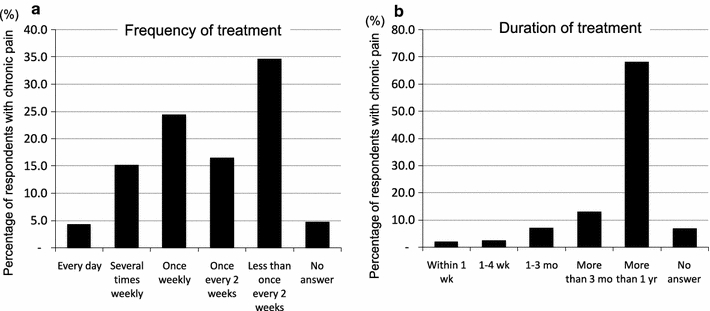
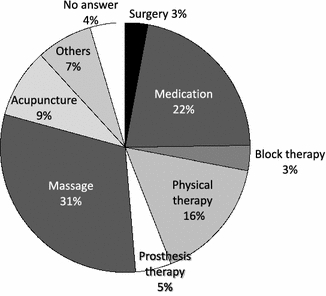
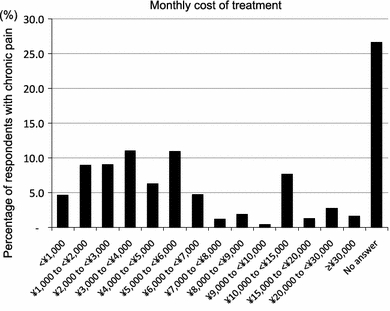
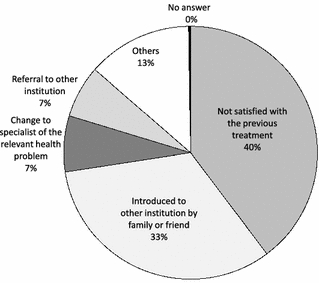
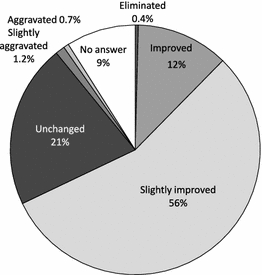
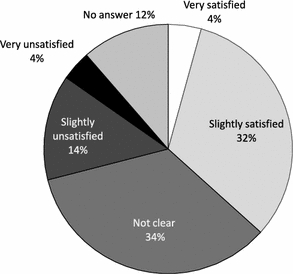
Results: The prevalence of chronic musculoskeletal pain was 15.4%. The prevalence was highest in people in their 30s to 50s. Pain occurred most frequently in the low back, neck, shoulder, and knee. Among symptomatic subjects, 42% sought treatment, by visiting a medical institution (19%), taking folk remedies (20%), or both (3%). Treatment was generally prolonged, with 70% of those treated reporting treatment durations of more than a year. Although 69% reported that their symptoms had improved, 30% reported unchanged or aggravated symptoms and dissatisfaction with treatment. Among symptomatic subjects, a high percentage of both men and women had lost jobs, left school, been absent from work or school, or had changed jobs. Basic activities of daily living (ADL) were disturbed in men, and the instrumental ADL (IADL) score was low in women. SF-36 scale scores were significantly lower in every area for subjects with chronic pain.
Conclusions: Chronic musculoskeletal pain does not necessarily improve even with prolonged treatment. It adversely affects daily life and both physical and mental health. Because those suffering pain often increasingly need assistance in daily activities, people around them are also affected. The therapeutic system and treatment procedures for chronic musculoskeletal pain merit prompt review.
Figures

References
-
- Annual Statistical Report of National Health Conditions. 2010/2011 pp 72–3, Health and Welfare Statistics Association (Japanese).
-
- National Institutes of Health (Internet). NIH guide: new directions in pain research: I. Bethesda, MD: National Institutes of Health. 1998.
Publication types
MeSH terms
LinkOut - more resources
Full Text Sources
Medical
