


Mapping of lymphatic drainage from the prostate using filtered 99mTc-sulfur nanocolloid and SPECT/CT
- PMID: 21680690
- PMCID: PMC3129454
- DOI: 10.2967/jnumed.110.085944
Mapping of lymphatic drainage from the prostate using filtered 99mTc-sulfur nanocolloid and SPECT/CT
Erratum in
- J Nucl Med. 2013 Aug;54(8):1512
Abstract
We have developed a practice procedure for prostate lymphoscintigraphy using SPECT/CT and filtered (99m)Tc-sulfur nanocolloid, as an alternative to the proprietary product (99m)Tc-Nanocoll, which is not approved in the United States.
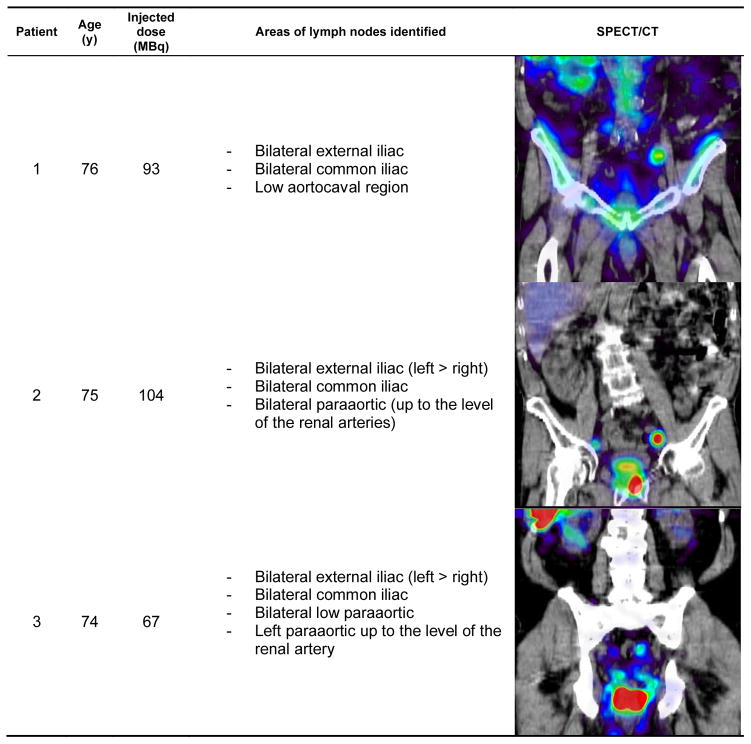
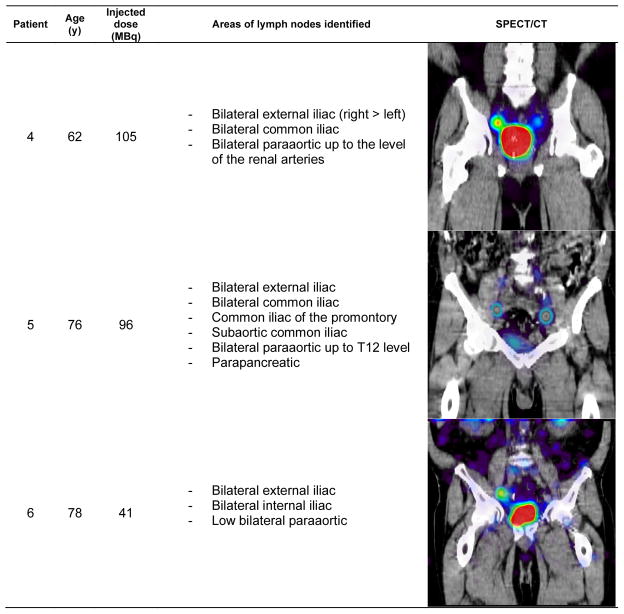
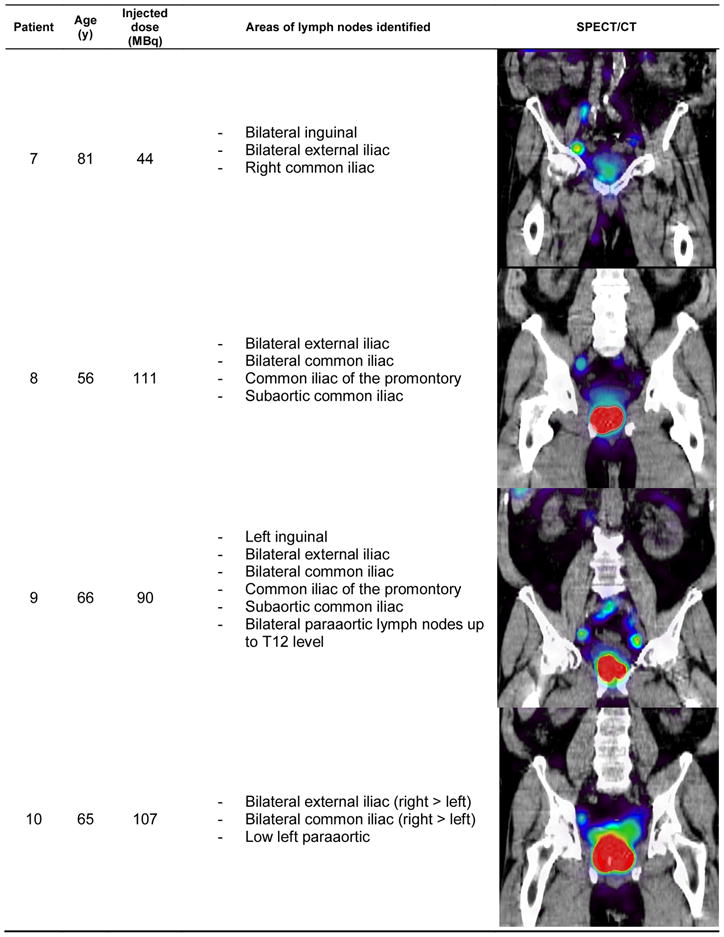
Methods: Ten patients were enrolled for this study, and all received radiotracer prepared using a 100-nm membrane filter at a commercial radiopharmacy. Whole-body scans and SPECT/CT studies were performed within 1.5-3 h after the radiotracer had been administered directly into 6 locations of the prostate gland under transrectal ultrasound guidance. The radiation dose was estimated from the first 3 patients. Lymphatic drainage mapping was performed, and lymph nodes were identified.
Results: The estimated radiation dose ranged from 3.9 to 5.2 mSv/MBq. The locations of lymph nodes draining the prostate gland were similar to those found using the proprietary product.
Conclusion: When the proprietary radiolabeled nanocolloid indicated for lymphoscintigraphy is not available, prostate lymph node mapping and identification are still feasible using filtered (99m)Tc-sulfur nanocolloid.
Figures
References
-
- Spiotto MT, Hancock SL, King CR. Radiotherapy after prostatectomy: improved biochemical relapse-free survival with whole pelvic compared with prostate bed only for high-risk patients. Int J Radiat Oncol Biol Phys. 2007;69:54–61. - PubMed
-
- Weckermann D, Dorn R, Trefz M, Wagner T, Wawroschek F, Harzmann R. Sentinel lymph node dissection for prostate cancer: experience with more than 1,000 patients. J Urol. 2007;177:916–920. - PubMed
-
- Touijer K, Rabbani F, Otero JR, Secin FP, Eastham JA, Scardino PT, Guillonneau B. Standard versus limited pelvic lymph node dissection for prostate cancer in patients with a predicted probability of nodal metastasis greater than 1% J Urol. 2007;178:120–124. - PubMed
-
- Briganti A, Karakiewicz PI, Chun FK, et al. Percentage of positive biopsy cores can improve the ability to predict lymph node invasion in patients undergoing radical prostatectomy and extended pelvic lymph node dissection. Eur Urol. 2007;51:1573–1581. - PubMed
-
- Briganti A, Gallina A, Suardi N, et al. A nomogram is more accurate than a regression tree in predicting lymph node invasion in prostate cancer. BJU Int. 2008;101:556–560. - PubMed
Publication types
MeSH terms
Substances
Grants and funding
LinkOut - more resources
Full Text Sources
Medical
