


The inflammatory preatherosclerotic remodeling induced by intermittent hypoxia is attenuated by RANTES/CCL5 inhibition
- PMID: 21680945
- PMCID: PMC4901161
- DOI: 10.1164/rccm.201012-2033OC
The inflammatory preatherosclerotic remodeling induced by intermittent hypoxia is attenuated by RANTES/CCL5 inhibition
Abstract
Rationale: The highly prevalent obstructive sleep apnea syndrome (OSA) with its main component intermittent hypoxia (IH) is a risk factor for cardiovascular mortality. The poor knowledge of its pathophysiology has limited the development of specific treatments, whereas the gold standard treatment, continuous positive airway pressure, may not fully reverse the chronic consequences of OSA and has limited acceptance in some patients.
Objectives: To examine the contribution of IH-induced inflammation to the cardiovascular complications of OSA.
Methods: We investigated systemic and vascular inflammatory changes in C57BL6 mice exposed to IH (21-5% Fi(O(2)), 60-s cycle) or normoxia 8 hours per day up to 14 days. Vascular alterations were reassessed in mice treated with a blocking antibody of regulated upon activation, normal T-cell expressed and secreted (RANTES)/CC chemokine ligand 5 (CCL5) signaling pathway, or with the IgG isotype control throughout the IH exposure.
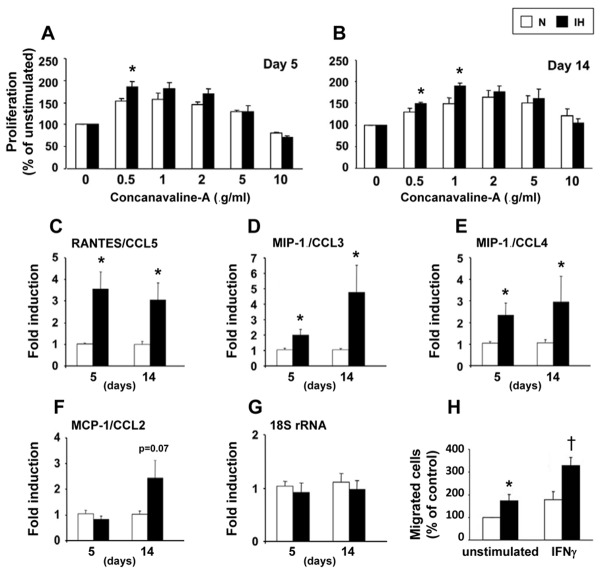
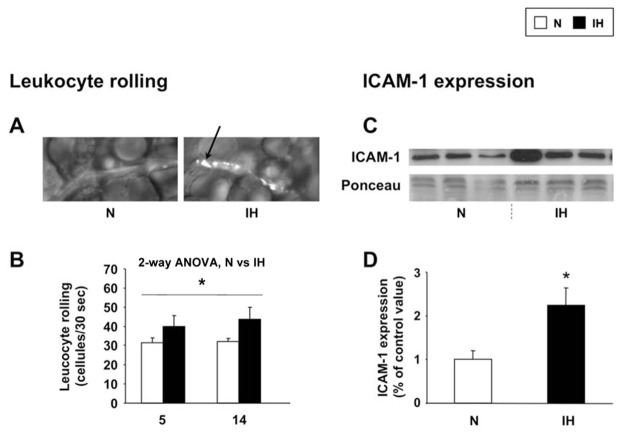
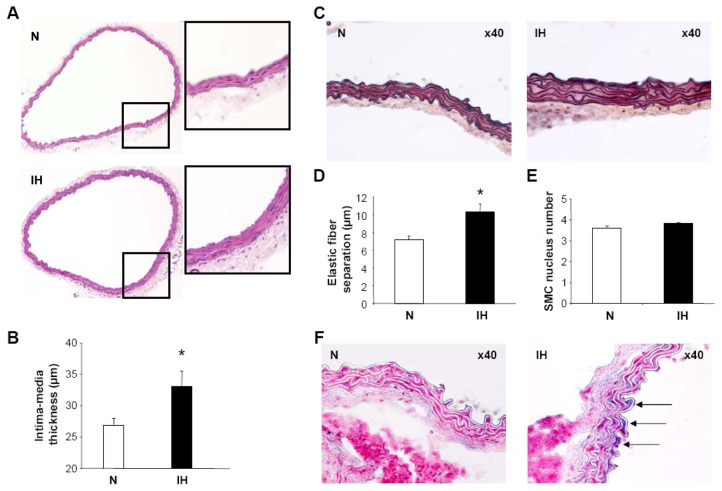
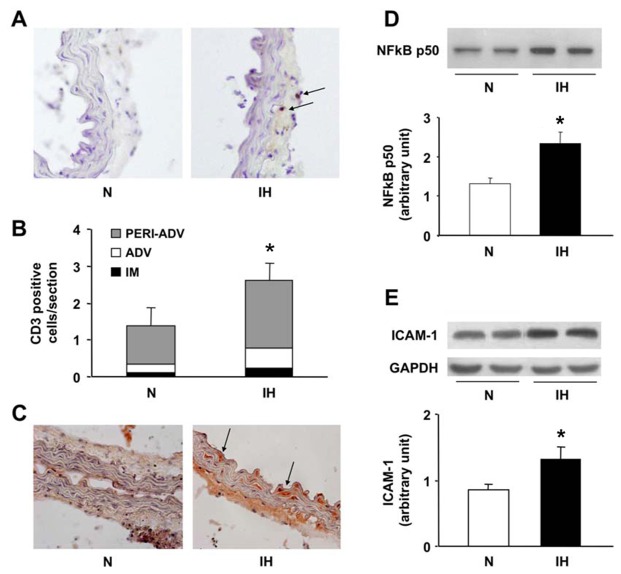
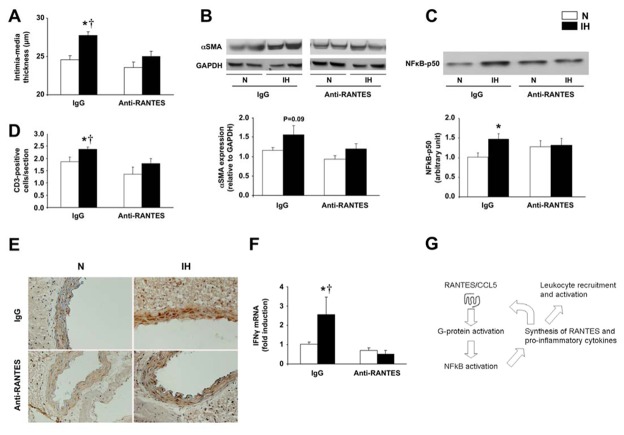
Measurements and main results: IH induced systemic inflammation combining increased splenic lymphocyte proliferation and chemokine expression, with early and predominant RANTES/CCL5 alterations, and enhanced splenocyte migration toward RANTES/CCL5. IH also induced structural and inflammatory vascular alterations. Leukocyte-endothelium adhesive interactions were increased, attested by leukocyte rolling and intercellular adhesion molecule-1 expression in mesenteric vessels. Aortas had increased intima-media thickness with elastic fiber alterations, mucoid depositions, nuclear factor-κB-p50 and intercellular adhesion molecule-1 overexpression, hypertrophy of smooth-muscle cells overexpressing RANTES/CCL5, and adventitial-periadventitial T-lymphocyte infiltration. RANTES/CCL5 neutralization prevented both intima-media thickening and inflammatory alterations, independently of the IH-associated proatherogenic dyslipidemia.
Conclusions: Inflammation is a determinant mechanism for IH-induced preatherosclerotic remodeling involving RANTES/CCL5, a key chemokine in atherogenesis. Characterization of the inflammatory response could allow identifying at-risk patients for complications, and its pharmacologic manipulation may represent a potential complementary treatment of sleep apnea consequences.
Figures
References
-
- Young T, Peppard PE, Gottlieb DJ. Epidemiology of obstructive sleep apnea: a population health perspective. Am J Respir Crit Care Med. 2002;165:1217–1239. - PubMed
-
- Somers VK, White DP, Amin R, Abraham WT, Costa F, Culebras A, Daniels S, Floras JS, Hunt CE, Olson LJ, Pickering TG, Russell R, Woo M, Young T American Heart Association Council for High Blood Pressure Research Professional Education Committee, Council on Clinical Cardiology; American Heart Association Stroke Council; American Heart Association Council on Cardiovascular Nursing; American College of Cardiology Foundation. Sleep apnea and cardiovascular disease: an American Heart Association/American College Of Cardiology Foundation Scientific Statement from the American Heart Association Council for High Blood Pressure Research Professional Education Committee, Council on Clinical Cardiology, Stroke Council, and Council On Cardiovascular Nursing. In collaboration with the National Heart, Lung, and Blood Institute National Center on Sleep Disorders Research (National Institutes of Health) Circulation. 2008;118:1080–1111. - PubMed
-
- Somers VK, White DP, Amin R, Abraham WT, Costa F, Culebras A, Daniels S, Floras JS, Hunt CE, Olson LJ, Pickering TG, Russell R, Woo M, Young T. Sleep apnea and cardiovascular disease: an American Heart Association/American College of Cardiology Foundation Scientific Statement from the American Heart Association Council for High Blood Pressure Research Professional Education Committee, Council on Clinical Cardiology, Stroke Council, and Council on Cardiovascular Nursing. J Am Coll Cardiol. 2008;52:686–717. - PubMed
-
- Barbé F, Durán-Cantolla J, Capote F, de la Peña M, Chiner E, Masa JF, Gonzalez M, Marín JM, Garcia-Rio F, de Atauri JD, Terán J, Mayos M, Monasterio C, del Campo F, Gomez S, de la Torre MS, Martinez M, Montserrat JM Spanish Sleep and Breathing Group. Long-term effect of continuous positive airway pressure in hypertensive patients with sleep apnea. Am J Respir Crit Care Med. 2010;181:718–726. - PubMed
-
- Pépin JL, Tamisier R, Barone-Rochette G, Launois SH, Lévy P, Baguet JP. Comparison of continuous positive airway pressure and valsartan in hypertensive patients with sleep apnea. Am J Respir Crit Care Med. 2010;182:954–960. - PubMed
Publication types
MeSH terms
Substances
LinkOut - more resources
Full Text Sources
Medical
Research Materials
