


Effect of maternal weight on postterm delivery
- PMID: 21681179
- PMCID: PMC3179793
- DOI: 10.1038/jp.2011.63
Effect of maternal weight on postterm delivery
Abstract
Objective: Examine the effect of prepregnancy weight and maternal gestational weight gain on postterm delivery rates.
Study design: This was a retrospective cohort study of term, singleton births (N=375 003). We performed multivariable analyses of the association between postterm pregnancy and both prepregnancy body mass index (BMI) and maternal weight gain.
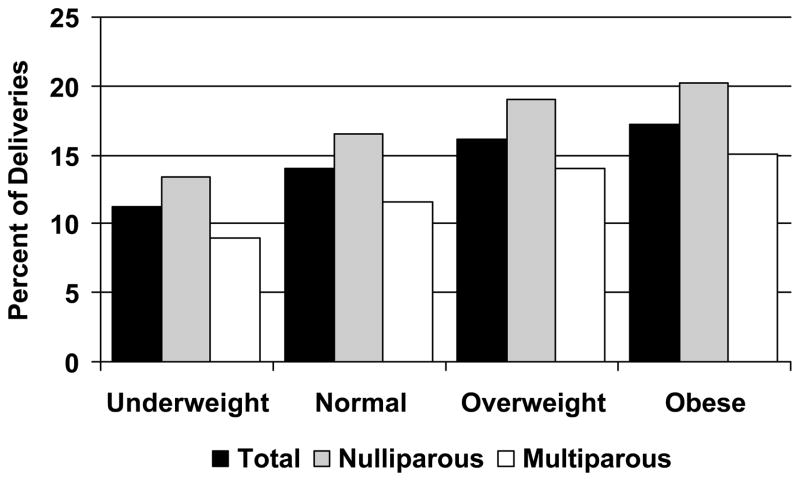
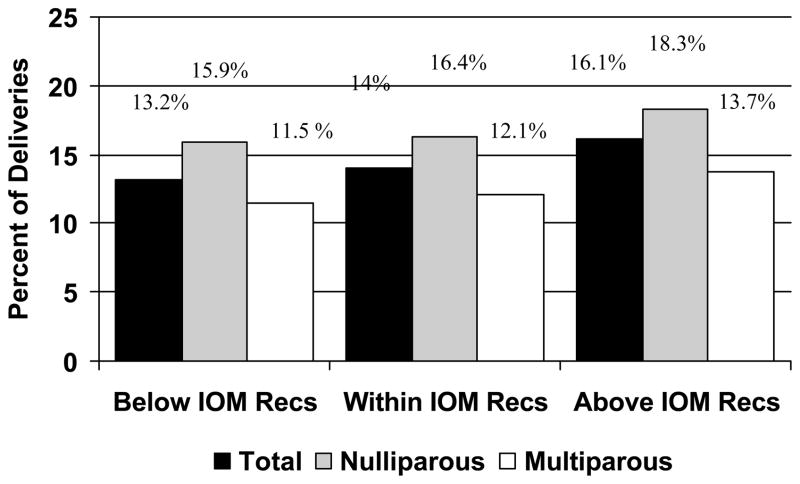
Result: Prolonged or postterm delivery (41 or 42 weeks) was increasingly common with increasing prepregnancy weight (P<0.001) and increasing maternal weight gain (P<0.001). Underweight women were 10% less likely to deliver postterm than normal weight women who gain within the recommendations (adjusted odds ratio 0.90 (95% confidence interval 0.83, 0.97)). Overweight women who gain within or above recommendations were also at increased risk of a 41-week delivery. Finally, obese women were at increased risk of a 41-week delivery with increasing risk with increasing weight (below, within and above recommendations adjusted odds ratios 1.19, 1.21, and 1.27, respectively).
Conclusion: Elevated prepregnancy weight and maternal weight gain both increase the risk of a postterm delivery. Although most women do not receive preconceptional care, restricting weight gain to the within the recommended range can reduce the risk of postterm pregnancy in normal, overweight and obese women.
Figures
References
-
- Lu GC, Rouse DJ, DuBard M, Cliver S, Kimberlin D, Hauth JC. The effect of the increasing prevalence of maternal obesity on perinatal morbidity. Am J Obstet Gynecol. 2001;185(4):845–9. - PubMed
-
- Usha Kiran TS, Hemmadi S, Bethel J, Evans J. Outcome of pregnancy in a woman with an increased body mass index. BJOG. 2005;112(6):768–772. - PubMed
-
- Stotland NE, Washington AE, Caughey AB. Prepregnancy body mass index and the length of gestation at term. Am J Obstet Gynecol. 2007;197(4):378, e1–5. - PubMed
-
- Cedergren MI. Maternal morbid obesity and the risk of adverse pregnancy outcome. Obstet Gynecol. 2004;103(2):219–24. - PubMed
-
- Norwitz ER, Snegovskikh VV, Caughey AB. Prolonged pregnancy. When should we intervene? Clin Obstet Gynceol. 2007;50(2):547. - PubMed
Publication types
MeSH terms
Grants and funding
LinkOut - more resources
Full Text Sources
Medical
