


Physical activity among adult survivors of childhood lower-extremity sarcoma
- PMID: 21681405
- PMCID: PMC3248971
- DOI: 10.1007/s11764-011-0187-5
Physical activity among adult survivors of childhood lower-extremity sarcoma
Abstract
Introduction: Adult survivors of childhood lower-extremity sarcoma are largely physically inactive, a behavior which potentially compounds their health burden. Altering this behavior requires understanding those factors that contribute to their physical inactivity. Therefore, this investigation sought to identify factors associated with inactivity in this subpopulation of cancer survivors.
Methods: Demographic, personal, treatment, and physical activity information from adult survivors of childhood lower-extremity sarcomas was obtained from the Childhood Cancer Survivor Study (CCSS) cohort. Generalized linear models were used to identify variables that best identified those individuals who were physically inactive.
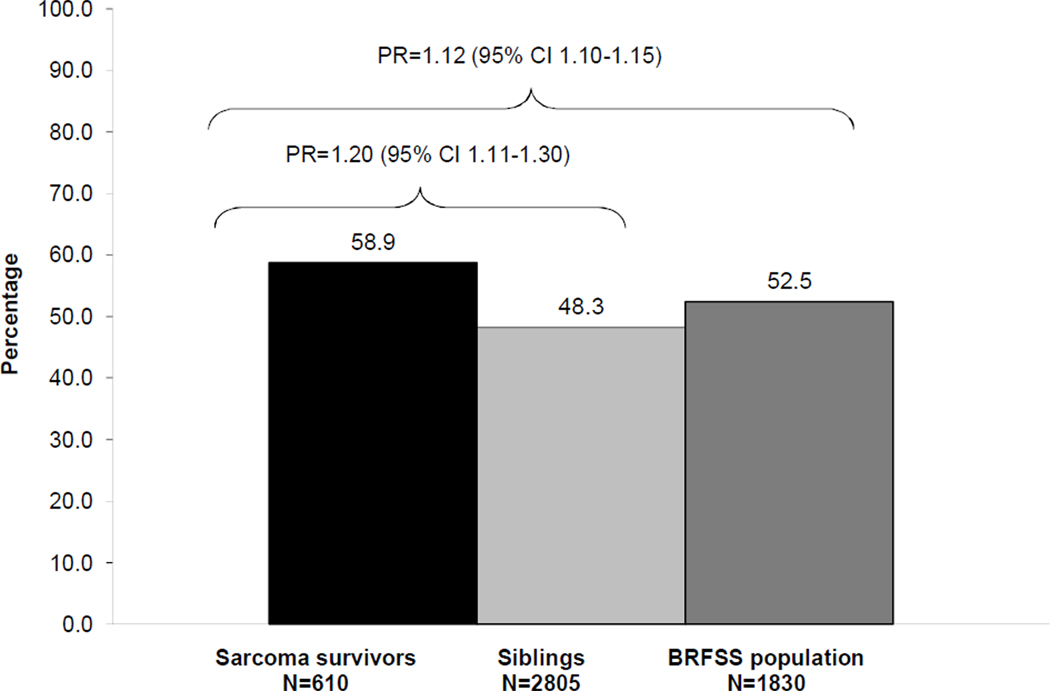
Results: Only 41% of survivors met Center for Disease Control (CDC) activity guidelines. Survivors were 1.20 (95% confidence intervals (CI) 1.11-1.30) more likely compared to CCSS sibling cohort and 1.12 (95% CI 1.10-1.15) times more likely than the general population to fail to meet CDC guidelines. Significant predictors of physical inactivity included female sex, hemipelvectomy surgery, and platinum and vinca alkaloid chemotherapy.
Conclusions: The primary findings of this study are that survivors of childhood onset lower-extremity sarcoma are (1) highly likely to be physically inactive and (2) less likely than their siblings or the general population to regularly exercise. This study has identified treatment-related risk factors associated with inactivity that will help health and wellness practitioners develop successful exercise interventions to help these survivors achieve recommended levels of physical activity for health.
Implications for cancer survivors: These results suggest that physical activity interventions for adult survivors of childhood lower-extremity sarcomas should be sex specific and responsive to unique physical late effects experienced by these survivors.
Figures
References
-
- Heare T, Hensley MA, Dell'Orfano S. Bone tumors: osteosarcoma and Ewing's sarcoma. Curr Opin Pediatr. 2009;21:365–372. - PubMed
-
- Horner MJ, Ries LAG, Krapcho M, Neyman N, Aminou R, Howlader N, et al. SEER Cancer Statistics Review, 1975–2006. Bethesda, MD: National Cancer Institute; 2009. based on November 2008 SEER data submission. [updated 2009; cited 2011 January 17]; Available from: http://seer.cancer.gov/csr/1975_2006/.
-
- Hosalkar HS, Dormans JP. Limb sparing surgery for pediatric musculoskeletal tumors. Pediatr Blood Cancer. 2004;42:295–310. - PubMed
-
- Marina N, Gebhardt M, Teot L, Gorlick R. Biology and therapeutic advances for pediatric osteosarcoma. Oncologist. 2004;9:422–441. - PubMed
-
- Carty CP, Dickinson IC, Watts MC, Crawford RW, Steadman P. Impairment and disability following limb salvage procedures for bone sarcoma. Knee. 2009;16:405–408. - PubMed
Publication types
MeSH terms
Substances
Grants and funding
LinkOut - more resources
Full Text Sources
Medical
Miscellaneous
