


Pediatric and adult sonic hedgehog medulloblastomas are clinically and molecularly distinct
- PMID: 21681522
- PMCID: PMC4538327
- DOI: 10.1007/s00401-011-0846-7
Pediatric and adult sonic hedgehog medulloblastomas are clinically and molecularly distinct
Abstract
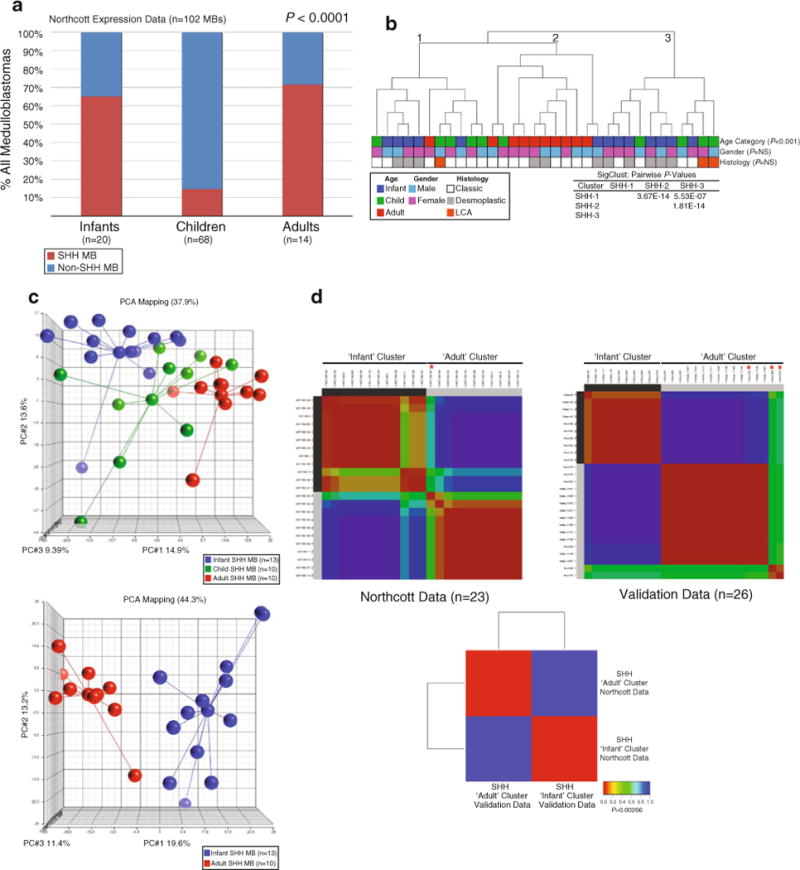
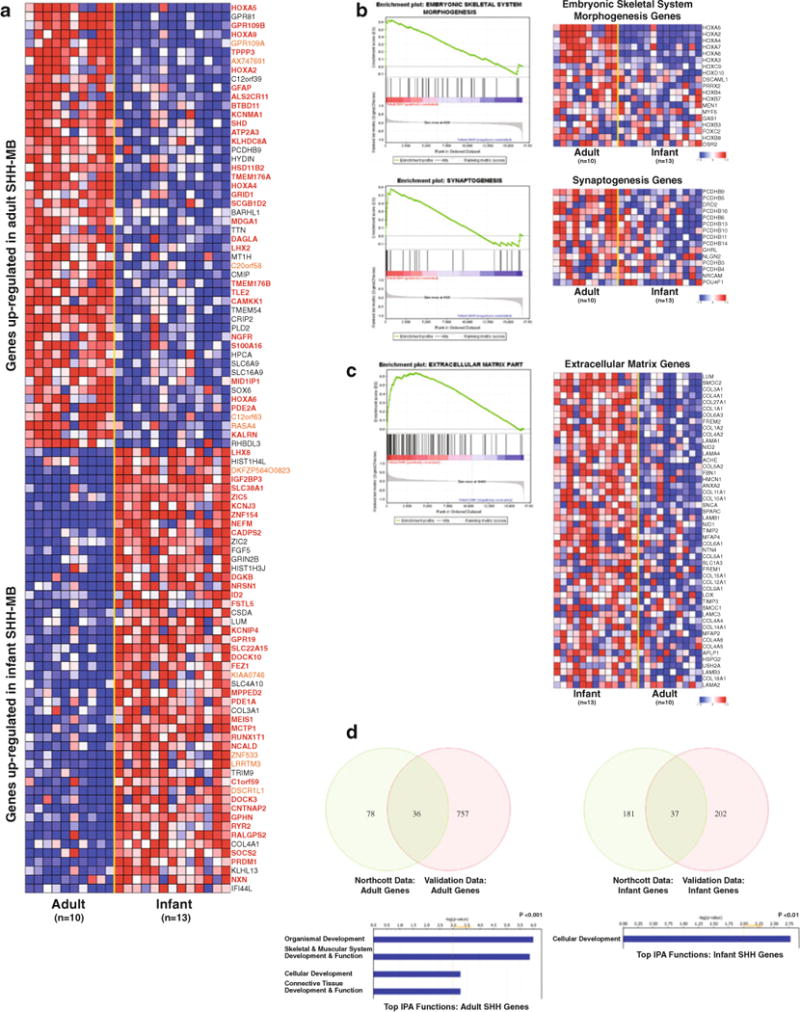
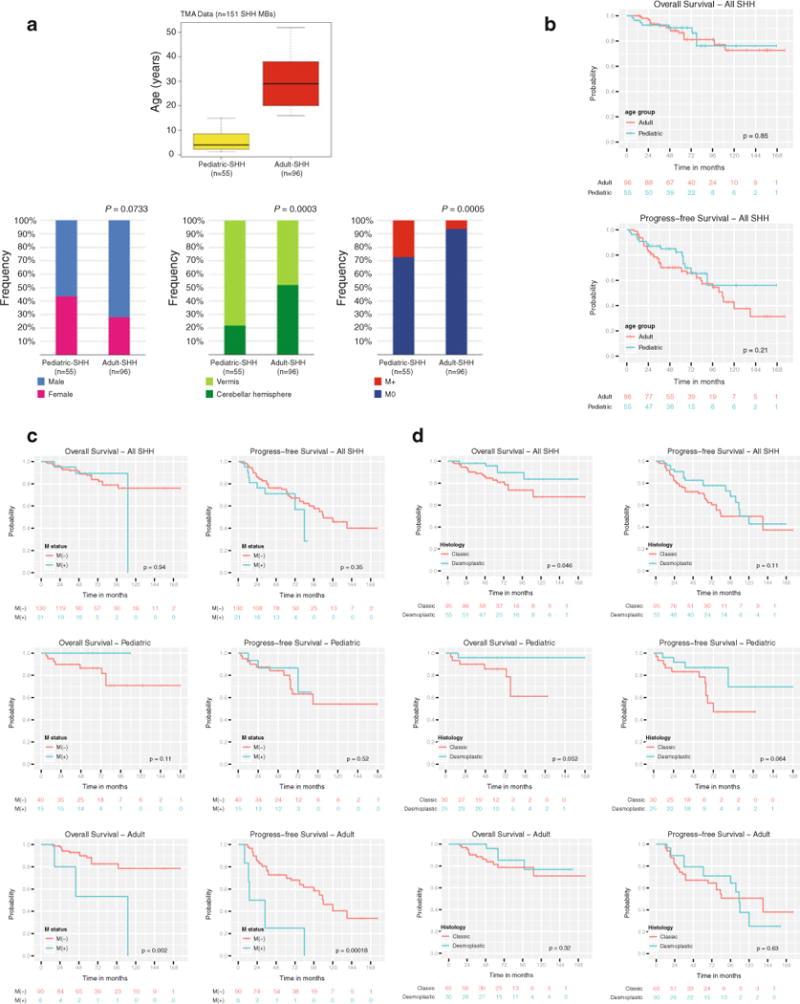
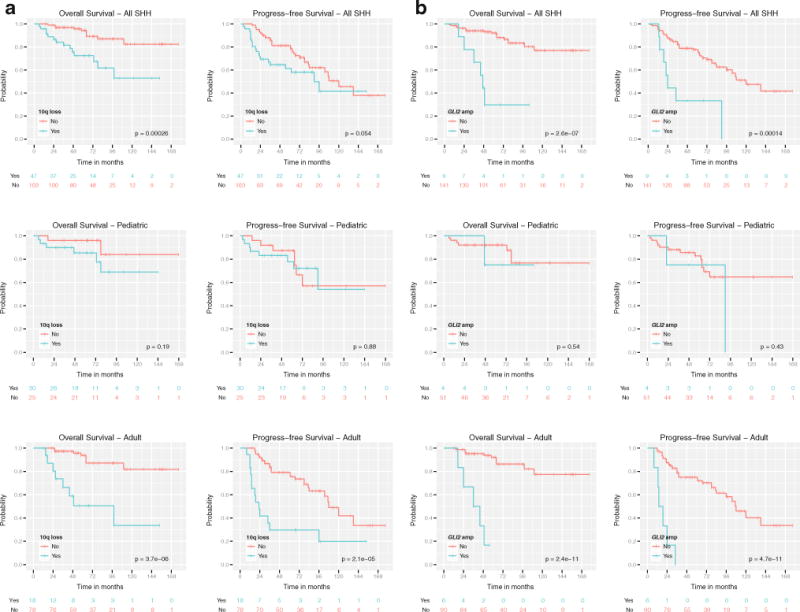
Recent integrative genomic approaches have defined molecular subgroups of medulloblastoma that are genetically and clinically distinct. Sonic hedgehog (Shh) medulloblastomas account for one-third of all cases and comprise the majority of infant and adult medulloblastomas. To discern molecular heterogeneity among Shh-medulloblastomas, we analyzed transcriptional profiles from four independent Shh-medulloblastoma expression datasets (n = 66). Unsupervised clustering analyses demonstrated a clear distinction between infant and adult Shh-medulloblastomas, which was reliably replicated across datasets. Comparison of transcriptomes from infant and adult Shh-medulloblastomas revealed deregulation of multiple gene families, including genes implicated in cellular development, synaptogenesis, and extracellular matrix maintenance. Furthermore, metastatic dissemination is a marker of poor prognosis in adult, but not in pediatric Shh-medulloblastomas. Children with desmoplastic Shh-medulloblastomas have a better prognosis than those with Shh-medulloblastomas and classic histology. Desmoplasia is not prognostic for adult Shh-medulloblastoma. Cytogenetic analysis of a large, non-overlapping cohort of Shh-medulloblastomas (n = 151) revealed significant over-representation of chromosome 10q deletion (P < 0.001) and MYCN amplification (P < 0.05) in pediatric Shh cases compared with adults. Adult Shh-medulloblastomas harboring chromosome 10q deletion, 2 gain, 17p deletion, 17q gain, and/or GLI2 amplification have a much worse prognosis as compared to pediatric cases exhibiting the same aberrations. Collectively, our data demonstrate that pediatric and adult Shh-medulloblastomas are clinically, transcriptionally, genetically, and prognostically distinct.
Figures
References
-
- Al-Halabi H, Nantel A, Klekner A, Guiot MC, Albrecht S, Hauser P, Garami M, Bognar L, Kavan P, Gerges N, Shirinian M, Roberge D, Muanza T, Jabado N. Preponderance of sonic hedgehog pathway activation characterizes adult medulloblastoma. Acta Neuropathol. 2011;121:229–239. - PubMed
-
- Brandes AA, Franceschi E, Tosoni A, Reni M, Gatta G, Vecht C, Kortmann RD. Adult neuroectodermal tumors of posterior fossa (medulloblastoma) and of supratentorial sites (stPNET) Crit Rev Oncol Hematol. 2009;71:165–179. - PubMed
-
- Buonamici S, Williams J, Morrissey M, Wang A, Guo R, Vattay A, Hsiao K, Yuan J, Green J, Ospina B, Yu Q, Ostrom L, Fordjour P, Anderson DL, Monahan JE, Kelleher JF, Peukert S, Pan S, Wu X, Maira SM, Garcia-Echeverria C, Briggs KJ, Watkins DN, Yao YM, Lengauer C, Warmuth M, Sellers WR, Dorsch M. Interfering with resistance to smoothened antagonists by inhibition of the PI3K pathway in medulloblastoma. Sci Transl Med. 2010;2:51ra70. - PMC - PubMed
-
- Cho YJ, Tsherniak A, Tamayo P, Santagata S, Ligon A, Greulich H, Berhoukim R, Amani V, Goumnerova L, Eberhart CG, Lau CC, Olson JM, Gilbertson RJ, Gajjar A, Delattre O, Kool M, Ligon K, Meyerson M, Mesirov JP, Pomeroy SL. Integrative Genomic Analysis of Medulloblastoma Identifies a Molecular Subgroup That Drives Poor Clinical Outcome. J Clin Oncol. 2011;29:1424–1430. - PMC - PubMed
MeSH terms
Substances
Grants and funding
LinkOut - more resources
Full Text Sources
