Review
. 2011 Jul;242(1):128-43.
doi: 10.1111/j.1600-065X.2011.01024.x.

Beyond immediate hypersensitivity: evolving roles for IgE antibodies in immune homeostasis and allergic diseases

Affiliations
Review

Beyond immediate hypersensitivity: evolving roles for IgE antibodies in immune homeostasis and allergic diseases

Oliver T Burton et al. Immunol Rev. 2011 Jul.

Abstract

Immunoglobulin E (IgE) antibodies have long been recognized as the antigen-specific triggers of allergic reactions. This review briefly introduces the established functions of IgE in immediate hypersensitivity and then focuses on emerging evidence from our own investigations as well as those of others that IgE plays important roles in protective immunity against parasites and exerts regulatory influences in the expression of its own receptors, FcεRI and CD23, as well as controlling mast cell homeostasis. We provide an overview of the multifaceted ways in which IgE antibodies contribute to the pathology of food allergy and speculate regarding potential mechanisms of action of IgE blockade.


Figures

Fig. 1
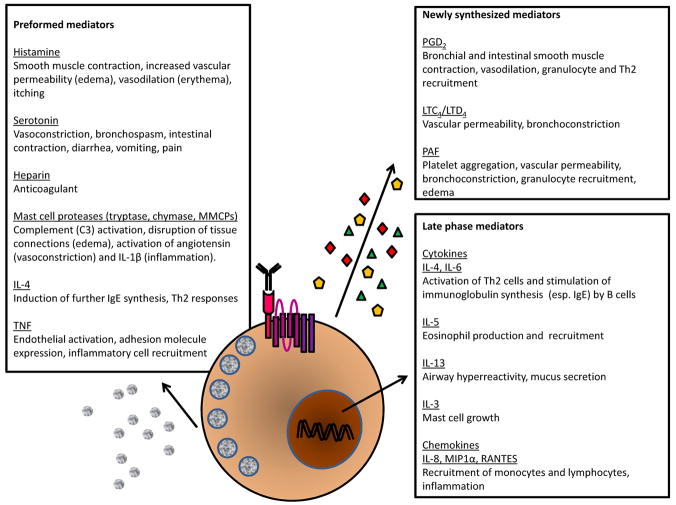
Fig. 1. The actions of mast cell mediators in immediate hypersensitivity
Degranulation of mast cells (and basophils) triggers the secretion of a range of potent molecules that can be broadly divided into three categories: preformed mediators ready for immediate action (e.g. histamine), mediators synthesized within minutes (e.g. LTC4), and factors that require gene transcription and are involved in the late phase response hours later (e.g. cytokines). Fig. 1 summarizes some of the known actions of these mediators in evoking the symptoms of immediate hypersensitivity (138, 139). Abbreviations: PAF, platelet-activating factor; IL, interleukin; LT, leukotriene; PG, prostaglandin; RANTES, regulated upon activation, normal T cell expressed and secreted; MIP1α, macrophage inflammatory protein-1α.
Fig. 2
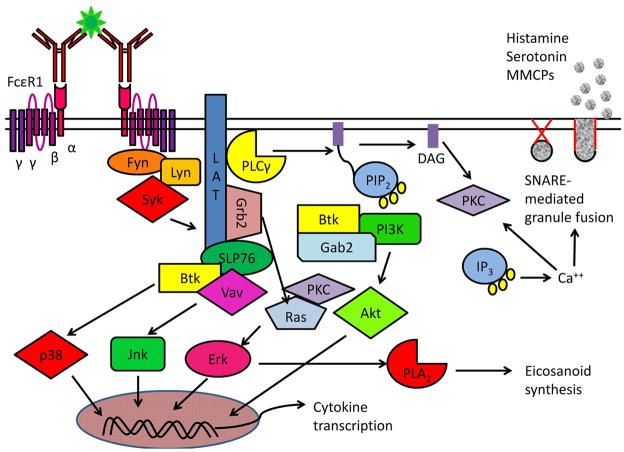
Fig. 2. IgE triggering of immediate hypersensitivity
Complex allergens contain multiple epitopes for IgE binding, prompting the aggregation of IgE:FcεR1and fyn and or lyn-mediated phosphorylation of ITAMs on the clustered β and γ chains. Syk is recruited to the phosphorylated FcεR1γ chain ITAMs and triggers the formation of a signaling complex by phosphorylating LAT, thus creating docking sites for Grb2, PLCγ and Gads/SLP-76. PLCγ is recruited to this membrane associated complex and then cleaves PIP2, creating the messenger molecules DAG and IP3, which drive PKC activation and intracellular calcium release respectively. The combined actions of PKC and calcium-mediated changes in SNARE protein conformations trigger the exocytosis of granules, releasing several mediators of immediate hypersensitivity. Simultaneous activation of the three major MAPK cascades, Erk, Jnk, and p38 MAPK, results in activation of transcription of cytokines and other late phase mediators as well as stimulation of arachadonic acid metabolism and production of prostaglandins and leukotrienes. Significant crosstalk between activation pathways is possible, including DAG-mediated activation of PKC, which can enhance Ras-Erk signaling. Fyn also phosphorylates Gab2, which in turn increases PI3K activity, prompting the conversion of PIP2 to PIP3 and favoring the localization of Btk and Akt to the plasma membrane. Akt contributes to cytokine production as well as inhibiting apoptosis pathways.
Fig. 3
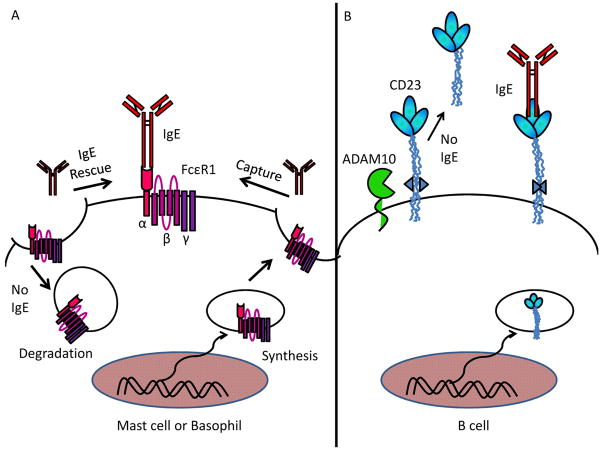
Fig. 3. IgEregulation of its own receptors
(A) Upregulation of FcεR1by IgE occurs through the prevention of receptor internalization and degradation, capture of internal pools of FcεR1 at the cell surface and continued basal transcription. (B) IgE binding to CD23 prevents ADAM10-mediated cleavage of CD23. Transcription of CD23 and FcεR1 is unaffected by IgE binding.
Fig. 4
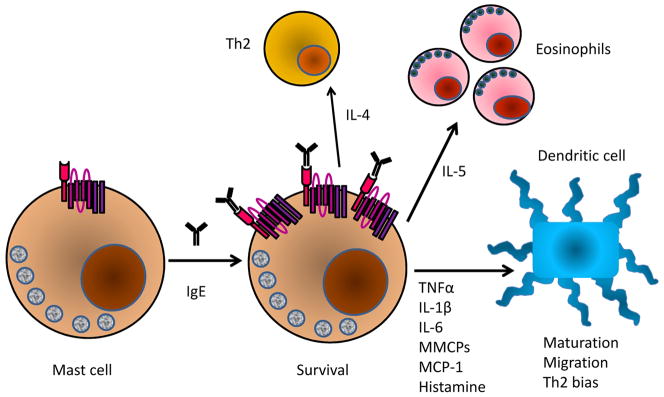
Fig. 4. IgE effects on mast cell function and immune responses
Stimulation of mast cells with IgE enhances FcεR1 levels and the sensitivity to antigen. IgE triggers the secretion of IL-4, which enhances Th2 responses, IL-5, which drives development and recruitment eosinophils, as well as a variety of mediators that alter the maturation, migration, and phenotype of dendritic cells.
Fig. 5
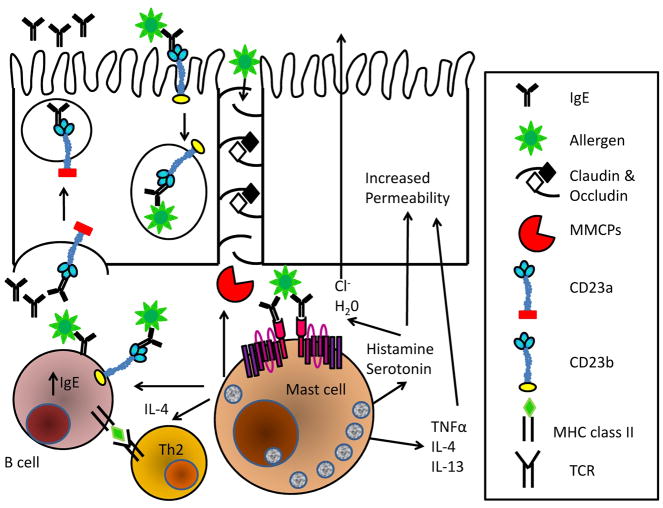
Fig. 5. Actions of IgE in food allergic reactions
IgE secreted by resident B cells is exported to the intestinal lumen via CD23 expressed on epithelial cells. Transcytosis of IgE:Ag viaCD23 facilitates capture of intact antigen to the mucosa where it can trigger the degranulation of mast cells. Released MMCPs digest the tight junction proteins, occuldin and claudin, thus permitting direct passage of intact allergens to the mucosa. Serotonin and histamine promote the secretion of chloride ions, drawing water into the lumen and giving rise to diarrhea. Mast cell cytokine secretion enhances intestinal permeability, drives T cells towards a Th2 phenotype and increases IgE synthesis. Antigen focusing by CD23:IgE dramatically enhances B and T-cell responses to allergens, potentiating responses on future allergen encounter and facilitating allergic epitope spreading.

References

    1. Kubo S, Nakayama T, Matsuoka K, Yonekawa H, Karasuyama H. Long term maintenance of IgE-mediated memory in mast cells in the absence of detectable serum IgE. J Immunol. 2003;170:775–780. - PubMed
    1. Gould HJ, et al. The biology of IGE and the basis of allergic disease. Annual review of immunology. 2003;21:579–628. - PubMed
    1. Stanworth DR. The discovery of IgE. Allergy. 1993;48:67–71. - PubMed
    1. Oettgen HC, Martin TR, Wynshaw-Boris A, Deng C, Drazen JM, Leder P. Active anaphylaxis in IgE-deficient mice. Nature. 1994;370:367–370. - PubMed
    1. Lin S, Cicala C, Scharenberg AM, Kinet JP. The Fc(epsilon)RIbeta subunit functions as an amplifier of Fc(epsilon)RIgamma-mediated cell activation signals. Cell. 1996;85:985–995. - PubMed

Publication types

MeSH terms